The Xamarin.Android prefers that we ship two different `libmonosgen-2.0.so` for each target, e.g. for arm64 we will have:
* `./sdks/out/android-arm64-v8a-release/lib/libmonosgen-2.0.so`
* `./sdks/out/android-interpreter-arm64-v8a-release/lib/libmonosgen-2.0.so`
As the names indicate one has the interpreter enabled.
This is contrary to what we do for Xamarin.iOS. There, `--enable-minimal=interpreter` has the side-effect that the build will produce a `libmono-ee-interp.dylib` that can be linked next to `libmonosgen-2.0.dylib`.
* [interp] reclaim stack fragments when not used.
When a requested frame size doesn't fit in an already allocated stack fragment, we instead allocate another, larger fragment.
When doing this we missed to free the existing stack fragment, and in combination with a second problem (`current->next` not being cleared when unused) it can accumulate to a lot of unused stack fragments and in worst-case to OOM, as it happened on Linux corlib xunit tests.
Thanks to Jay for tracking it down.
* be cautious for GC
* add barrier
When locating AppContext.BaseDirectory on netcore, if APP_CONTEXT_BASE_DIRECTORY is not set we call into the runtime for a fallback location, which checks domain->entry_assembly. On legacy this is fine because we set that property in `prepare_thread_to_exec_main`, but on netcore the new managed assembly loading algorithm will call into managed and check the property before that function is run, which will result in AppContext.BaseDirectory returning an empty string. The solution is to set entry_assembly a bit earlier in initialization. This is the appropriate location because it's what embedding API users will call to run an assembly.
In the process, I got rid of some code that would bypass the usual lookup algorithm unnecessarily.
Fixesdotnet/runtime#31800
Co-authored-by: Ryan Lucia <[email protected]>
The default handlers for SIGTRAP, SIGSYS on macOS and Linux crash the process, so we now have Mono report this.
This patch also changes how the name of the signal is acquired for passing on to the crash reporting functions, allowing code reuse on crashing signals.
[interp] Make call_vararg non-recursive.
[interp] Remove recursion from call_vararg.
This contributes to https://github.com/mono/mono/issues/18646 but is not enough to fix it. The interpreter still recurses a lot.
Calling a method compiled using full AOT from interpreter can lead to
stack corruption if signature include a ValueTuple without fields on
compilers where MONO_ZERO_LEN_ARRAY is not 0 (msvc, clang). This is due
to doing memset on memory allocated using MONO_SIZEOF_GENERIC_INST but
then memset using sizeof (MonoGenericInst). Fix makes sure we allocate
and memset the same size of memory since otherwise it will lead to an
overwrite of allocated memory when type_argc is 0.
Use of `access_token` is now deprecated, switching to HTTP header
```
Please use the Authorization HTTP header instead, as using the `access_token` query parameter is deprecated.
```
1) Delete `src/mono/netcore/corerun/` folder, we can build/use coreclr's corerun (it has `--clr-path`)
2) Add `RunSample` to build & run HelloWorld with mono runtime.
Co-authored-by: Egor Bogatov <[email protected]>
[interp] Remove goto for code_type unknown | interp | compiled.
[interp] Remove goto for code_type unknown | interp | compiled.
The goto kinda implies a loop, but it is really just handling one case
before the other, but the source misorders the checks, perhaps for perf,
which maybe, can be done equivalently with G_UNLIKELY, and also remove
some possible extra memory reads.
[interp][wasm]Use per-call recursive functions in interpreter to aid debugging.
When the interpreter does recurse, use a different function
for each call site, so you can tell from a WebAssembly stack
which case it is. i.e. with function names but no line numbers.
With this, we can see that call_varargs contributes to the problem
here: https://github.com/mono/mono/issues/18646
Also, do not inline the interpreter, it probably/hopefully never was.
* [mini] Add optional method name to --stats (#18387)
* Implement parsing for optional method name to --stats command line argument.
* Implement parsing for optional method name to --stats command line argument.
Co-authored-by: Kyle Markland <[email protected]>
Co-authored-by: Rene Garcia <[email protected]>
* Respond to PR feedback.
* Refactored away helper functions.
* Refactored counter setup into separate function. Moved stats optional method into its own condition.
Co-authored-by: Kyle Markland <[email protected]>
Co-authored-by: Rene Garcia <[email protected]>
* Renamed mono_setup_counters->mono_enable_counters. Restore whitespace to 0a51d89c42
Co-authored-by: Kyle Markland <[email protected]>
Co-authored-by: Rene Garcia <[email protected]>
* [mini] Print header for stats. (#18442)
* Add an enum for dumping stats at points in time. Print header before dumping stats in mini_cleanup.
* Make print_stats_header private.
* Remove unused variable.
* Refactored print_stats_header to better accomodate optional methods for stats
* Change printf calls to g_printf in response to feedback.
* Undo changes in response to @CoffeeFlux 's feedback. Add g_printf calls to mini_cleanup
* Avoid always printing stats at shutdown.
* Condition on `mono_stats` instead of `mono_jit_stats`.
* [mini] Global JIT Stats Printing (#18483)
* Make print_jit_stats global to enable interp and JIT-triggered stat dumps.
* Rename some functions for consistency.
* Add a comment to clarify the necessary locking in different contexts.
* Rename mono_print_jit_stats to mono_runtime_print_stats and make it more generic.
* Rename runtime_cleanup_stats back to jit_stats_cleanup.
* Fix a line that was indented with spaces.
* [mini] parse fully qualified method name using mono_method_desc_new (#18499)
* Make print_jit_stats global to enable interp and JIT-triggered stat dumps.
* Rename some functions for consistency.
* Add a comment to clarify the necessary locking in different contexts.
* Use MonoMethodDesc struct and associated helpers to parse from command
line args. Remove unused stats_method_name and setter function.
Squashed commit of the following:
commit de7410696dab10723c76f545076522daa17e85d1
Author: Rene Garcia <[email protected]>
Date: Thu Jan 16 23:01:23 2020 -0500
Utilize new stats printing function.
commit 1e5038adfec06c670dbaced771a8ff9344502d17
Author: Rene Garcia <[email protected]>
Date: Thu Jan 16 22:37:53 2020 -0500
Remove unused stats_method_name and setter function. Use mono_method_desc_full_match instead of mono_method_desc_match.
commit 04f86c66c139e064bc35738f955f960232eb6cbb
Author: Rene Garcia <[email protected]>
Date: Thu Jan 16 18:11:37 2020 -0500
Modify mono_method_desc_match to actually match namespace and class. Add global MonoMethodDesc, and parse it from command line args. Leave TODO print statement in mono_jit_compile_method_inner.
* Move mono_method_desc to mini-runtime header. Fix whitespace.
* Cherry pick @KyleMarkland 's changes, and resolve merge conflicts.
* Fix leak. Give better error message when parsing empty method name.
* Move freeing of mono_stats_method_desc.
Co-authored-by: KyleMarkland <[email protected]>
* Add a conditional to transform.c to enable stat dumping from the interpreter. (#18540)
* [mini] Use g_printerr instead of g_printf before exiting (#18574)
* Rename g_printf -> g_print
* Use g_printerr on errors instead of g_printf.
* Pass NULL to mono_counters_dump. Revert g_printf to g_print.
* Update manpage
* Feedback
Co-authored-by: rgarc <[email protected]>
Co-authored-by: KyleMarkland <[email protected]>
I fear this causing packaging problems, but as-is we require Python 3 for most of our Python files but don't actually check for that in configure. We should be consistent about this. Some projects (notably wasm) also use the Python version detected here, so bumping this will also bump the version used in those cases (a good thing, since there are some known bugs when using the scripts with Python 2).
The original fix back at #18554 did not work quite right, which was missed for lack of CI.
Reworked this check to instead test for `-mminimal-toc` on all powerpc hosts, and to only do the ELF version check on FreeBSD.
Fixes#18554#18578 current CI build failures on AIX
* [aot] Handle '|' during symbol mangling.
* [aot] Clean up the construction of the linker command line.
* [aot] Pass -Wl,-install_name to the linker on osx, otherwise the shared object will be named based on the output file name i.e. <assembly>.dylib.tmp.
* [llvm] Pass the MonoAotFileInfo pointer to the init functions, not used yet.
* [jit] Add support for direct calls between methods in different AOT images in LLVM mode.
* Add a 'direct-extern-calls' AOT option.
* Initialize the PLT/GOT during method initialization,
this normally happens in load_method () but that is
not called when a method is directly called.
* Add self initialization support for JITted methods, they can be
called directly since they are fallbacks if LLVM fails.
* Fix the build.
* Avoid calling BeginInvoke etc. directly, its implemented by the runtime.
* Unify some cases.
* Init PLT at image load time since directly called methods without initializers might make calls through it.
* Fix a startup problem.
* Make the mono_is_corlib_image () check for during startup.
* Check for is_inited in the init icall wrappers, since they might be called from JITted code which doesn't check it.
* Address review comments.
When calling a generic class we need to make sure it has been inited.
This is done by calling generic_class_init. Since this call happens
frequently, but will only run once, it should be put out of line, assisting
branch predictor, preventing misspredictions (in all places but the first).
Currently this is not the case, since we will generate code like this:
0000000000000484: cmp byte ptr [rcx+2Dh],0
0000000000000488: jne 000000000000048F
000000000000048A: call p_3_plt_EmptyGame__jit_icall_mono_generic_class_init_llvm
000000000000048F: mov rax,qword ptr [mono_aot_EmptyGame_llvm_got+0C8h]
Where we will always (except for first call) take the forward branch.
Instead we should mark the call to the method as out of line, at least
giving the code generator the information so it can move it out of line
and preventing a jmp, unless when it needs to init, the slow path. Doing
that will generate the following code:
0000000000000484: cmp byte ptr [rcx+2Dh],0
0000000000000488: je 00000000000004C1
000000000000048A: mov rax,qword ptr [mono_aot_EmptyGame_llvm_got+0C8h]
...
00000000000004C1: call p_3_plt_EmptyGame__jit_icall_mono_generic_class_init_llvm
00000000000004C6: jmp 000000000000048A
decode_patch_info () would not decode patches if their corresponding GOT entry
was already set, causing half initialized MonoJumpInfo entries to be returned
to callers. Set the type of the MonoJumpInfo entry to MONO_PATCH_INFO_NONE
in these cases, and have the callers handle it.
Co-authored-by: Zoltan Varga <[email protected]>
When stepping out of a c# breakpoint into the runtime (or JS... Not sure if that's accurate),
multiple single step requests can be created when the breakpoint is hit again. In order to handle this scenario for wasm,
we just cancel the existing one.
NOTE: The debugger args addition seemed a better way to handle this than outright canceling in debugger-engine. If there
are implications to doing this, I can take it out.
Use -j with all example make invocations, mention Ninja dependency, mention raising ulimit, recommend py3 for running the server (when using py2, the port isn't properly released).
* [merp] MONO_DEBUG=no-gdb-stacktrace shouldn't disable MERP
Only prevent `gdb` or `lldb` from being invoked.
MERP is controlled by separate mechanisms --- configure flags for crash
reporting and an explicit opt-in icall.
The existing code collects crashed process data in-process, but it writes the
data out (using mono_merp_invoke) in the forked child process. This is a bit
surprising, but in the interest of not disturbing the code too much, this PR
doesn't change that. We should revisit `dump_native_stacktrace` again in the
future and rationalize these decisions.
Addresses https://github.com/mono/mono/issues/18565
* [interp] Enable virtual calls to compiled code
If we have an aot-ed version of a method we should always go through it, because the IL for that method could be stripped.
* [interp] Disable jit call for wrappers
Some generic wrappers don't seem to work in mixed mode, probably due to the fact that the transition already reuses a gshared wrapper.
Assume we have the following form `MyForm`:
```
using System;
using System.Drawing;
using System.Windows.Forms;
namespace test_TreeView
{
public class MyForm : Form
{
TreeView treeView = new TreeView()
public MyForm()
{
treeView.Nodes.Add("root node");
treeView.Nodes[0].Nodes.Add("first child node");
treeView.BackColor = Color.Gray;
treeView.LineColor = Color.Yellow;
treeView.DrawMode = TreeViewDrawMode.OwnerDrawText;
treeView.DrawNode += treeView_DrawNode;
Controls.Add(treeView);
}
private void treeView_DrawNode(object sender, DrawTreeNodeEventArgs e)
{
var brush = new SolidBrush(Color.FromArgb(100, 255, 0, 0));
e.Graphics.FillRectangle(brush, e.Bounds);
}
}
}
```
The displayed result is
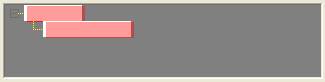
One can see couple drawing issues:
* White rectangles under each `TreeNode`.
* The area of custom drawing (red rectangles) is shifted with respect to this white rectangles.
Current PR proposes the fix of this issues.
Co-authored-by: monojenkins <[email protected]>
* Fix Return handling. Ensure correct ClientSize.
When pressing Return / Enter, ensure any target button is both visible
and enabled.
In CreateHandle(), ensure the ClientSize is correct if set. If not,
update it to make it right. Suspend layout while changing it so that
child controls with anchors other than Top Left are not moved.
* Select active control. PerformLayout after updating for client size.
Select the active control with SendControlFocus to avoid upsetting what
is currently selected.
* Improve Form window decoration adjustment handling
Reverts the incorrect attempted fix contained in previous commits.
Basically, when a property is changed that affects window decorations,
ensure the client size stays the same.
* Use UpdateFormStyles on FormBorderStyle too.
When the user types a letter or digit, KeySearch looks for and selects
an item starting with that character. However, it should not if
SelectionMode is None.
* [WinForms] Make `ContextMenuStrip` behavior closer to the reference one
* Bump API snapshot submodule
Co-authored-by: monojenkins <[email protected]>
I've implemented a heap of missing RTF and RichTextBox stuff, and also made some improvements or fixes to various aspects of it. I'm sorry this is so big...
To give an overview of the changes, here's a list:
- Removed the RTF Charcode / Charset handling that wasn't actually used, had a lot of missing functionality and was basically reimplementing character encoding handling, and replaced it with ensuring the correct character encoding is being used (changing when needed).
- Improved RTF handling of objects with object results (process the given object result). Sometimes pictures can be like this.
- Improved line wrapping and alignment
- Added or greatly improved support for:
- paragraph spacing
- line spacing
- paragraph indents (left, right, hanging)
- tabstops (left, centre, right, decimal)
- text background colour (like highlighting)
- superscript / subscript
- character offset (vertical)
- text visibility
- Significantly improved RichTextBox RTF generation
- Cache DPI, rather than doing `CreateGraphics()` every time it is needed
- A variety of other fixes and improvements, with a few I can think of relating to:
- caret position
- replacing text
- invalidation and drawing
- when tags are added or deleted
BreakpointRequest commands can come out of order and before the runtime is ready (RuntimeReady). A null check for the DebugStore was added to guard against this since these requests seem to be for JS breakpoints. These seem to be able to be safely ignored.
Fixes https://github.com/mono/mono/issues/18584
Current versions of the mono return a null pointer as address of the first
element for empty arrays, i.e.
fixed (byte* ptr = new byte[0]) Console.WriteLine (ptr == null);
will print "true". This causes a problem in the UnixEncoding class where it
triggers a check for null pointers. Fix this by allowing null pointers when
the number of elements is zero.
Whenever mono opens an X11 window, the application opens a tcp socket for controlling the (non-tcp)-connection to X11. This is bad practice, as a tcp socket is not needed.
This pull request cleans the logic, by replacing the tcp socket with a fifo. That way this loopback connection is not visible from outside the .NET application, and all logic surrounding it should remain unchanged.
The real change here is, in `XplatUIX11.SetWindowPos()`, simply moving the `SendMessage` call to the end instead of earlier. The problem with it earlier is that any change in bounds from any of the bounds-related events (OnLocationChanged / OnMove, OnSizeChanged / OnResize, OnLayout, OnClientSizeChanged) will be overridden. When `SendMessage` is called, `UpdateBounds` is run, and that raises those events as relevant. After those events finish, `SetWindowPos` continues with setting the size of the window to the value originally specified – which is now potentially wrong. So send the message later on.
There is also no point that I can see in writing the values to `hwnd` twice, because as far as I can see the only one that can be changed is `hwnd.ClientRect` (set by `PerformNCCalc`).
Fixes#18524
The `tt.xml` and `tt_RU.xml` files were added in CLDR 34: http://cldr.unicode.org/index/downloads/cldr-34
Upgrading to v34 (or the latest v36) introduced a larger number of new cultures. I went with the smallest change possible to have Tatar added.
Fixes#18554 by making autoconf actually check if `-mminimal-toc` works instead of assuming on powerpc. Tested with FreeBSD 12.x and 13.x on powerpc64 ELFv2.
While we are in here, also enable BTLS which has passed testing.
* Validate the address that came from IDE using PointerValue. The IDE can send an invalid address and it was crashing mono.
Fixes#18191Fixes#15612
Co-authored-by: Aleksey Kliger (λgeek) <[email protected]>
* [wasm] Fix netcore build.
Add a DOTNET_REPO_DIR variable to Make.config which should point to the dotnet/runtime repo. Compile
the netcore runtime and corelib from this repo.
* Disable wasm+netcore on CI.
compile-runtime-tests is looking for python3, but $(env python3) will return error (no `/usr/local/bin/python3`); if this is the case, create a symlink from 3.6 or 3.7 to /usr/local/bin/python3 so it works. We already have this listed in `SHEBANG_FILES` for the port.
Found more occurrences of the typos in dotnet/runtime#2061
The work done here is made by simple search & replace.
I'll point to replaces that needs attention in a review.
Co-authored-by: Youssef Victor <[email protected]>
- roslyn's shared compiler server hashes it's pipename on the path to
the assembly.
- On macOS, this looks like `/Library/Frameworks/Mono.framework/Versions/6.8.0/lib/mono/msbuild/Current/bin/Roslyn/VBCSCompiler.exe`
- When installing a new mono, with that same `x.y.z` version, this
process will effectively be out of sync with the new updated
mono/msbuild/roslyn
- This manifests as:
```
Using shared compilation with compiler from directory: /Library/Frameworks/Mono.framework/Versions/6.8.0/lib/mono/msbuild/Current/bin/Roslyn
/Library/Frameworks/Mono.framework/Versions/6.8.0/lib/mono/msbuild/Current/bin/Roslyn/Microsoft.CSharp.Core.targets(59,5): error : Roslyn compiler server reports different hash version than build task. [/Users/builder/azdo/_work/3/s/xamarin-android/build-tools/xaprepare/xaprepare/xaprepare.csproj]
```
- See https://github.com/xamarin/xamarin-android/pull/4108
- So, we kill any running roslyn shared compiler servers
* If a thread was suspended and doesn't have any managed stack, it was considered as terminated, but it wasn't really terminated because it can execute managed code again, and stop in a breakpoint so if the execution arrives in debugger_agent_breakpoint_from_context we reset the flag terminated to FALSE.
* Adding terminated = FALSE in single_step_from_context.
This causes an additional dependency of mono on libintl which we didn't have before.
Reported by a user on gitter, it's problematic on macOS since it makes the mono binary depend on the libintl we ship in the Mono .pkg.
It was introduced in Mono 6.6 by https://github.com/mono/mono/commit/18e0ebfe89be0a175d2f904b9bb1ec6816daa318
[prof] remove wrong cast for format string
Fixes this warning:
```
CC mprof-report.o
mprof-report.c:408:62: warning: format specifies type 'char *' but the argument has type 'guint64' (aka 'unsigned long long') [-Wformat]
snprintf (format, sizeof (format), "%s : %%" PRIu64 "\n", (guint64)key_format);
~~ ^~~~~~~~~~~~~~~~~~~
%llu
/Applications/Xcode112.app/Contents/Developer/Platforms/MacOSX.platform/Developer/SDKs/MacOSX.sdk/usr/include/secure/_stdio.h:57:62: note: expanded from macro
'snprintf'
__builtin___snprintf_chk (str, len, 0, __darwin_obsz(str), __VA_ARGS__)
^~~~~~~~~~~
```
mistake in refactoring commit https://github.com/mono/mono/commit/07402062541fa9555bef99dbaac84cfb587926cd#diff-c825627ea9ddb3fa753fa3617eaec7c8R408
* [aot] fix warnings on linux (gcc 8.3.0)
Fixes these warnings:
```
aot-compiler.c: In function ‘emit_trampolines’:
aot-compiler.c:7675:28: warning: ‘_e’ directive writing 2 bytes into a region of size between 1 and 256 [-Wformat-overflow=]
sprintf (end_symbol, "%s_e", symbol);
^~
aot-compiler.c:7675:4: note: ‘sprintf’ output between 3 and 258 bytes into a destination of size 256
sprintf (end_symbol, "%s_e", symbol);
^~~~~~~~~~~~~~~~~~~~~~~~~~~~~~~~~~~~
At top level:
aot-compiler.c:753:1: warning: ‘link_shared_library’ defined but not used [-Wunused-function]
link_shared_library (MonoAotCompile *acfg)
^~~~~~~~~~~~~~~~~~~
aot-compiler.c:558:1: warning: ‘mangle_symbol_alloc’ defined but not used [-Wunused-function]
mangle_symbol_alloc (const char * symbol)
^~~~~~~~~~~~~~~~~~~
aot-compiler.c:535:1: warning: ‘mangle_symbol’ defined but not used [-Wunused-function]
mangle_symbol (const char * symbol, char * mangled_symbol, gsize length)
^~~~~~~~~~~~~~~~~~~
```
* [amd64] fix warnings on linux (gcc 8.3.0)
Fixes this warning:
```
tramp-amd64.c: In function ‘mono_arch_create_generic_trampoline’:
tramp-amd64.c:242:65: warning: variable ‘ex_offset’ set but not used [-Wunused-but-set-variable]
int i, lmf_offset, offset, res_offset, arg_offset, rax_offset, ex_offset, tramp_offset, ctx_offset, saved_regs_offset;
^~~~~~~~~
```
* [lldb] fix warnings on linux (gcc 8.3.0)
Fixes these warnings:
```
lldb.c:243:1: warning: ‘buffer_add_buffer’ defined but not used [-Wunused-function]
buffer_add_buffer (Buffer *buf, Buffer *data)
^~~~~~~~~~~~~~~~~
lldb.c:215:1: warning: ‘buffer_add_id’ defined but not used [-Wunused-function]
buffer_add_id (Buffer *buf, int id)
^~~~~~~~~~~~~
lldb.c:208:1: warning: ‘buffer_add_long’ defined but not used [-Wunused-function]
buffer_add_long (Buffer *buf, guint64 l)
^~~~~~~~~~~~~~~
lldb.c:188:1: warning: ‘buffer_add_short’ defined but not used [-Wunused-function]
buffer_add_short (Buffer *buf, guint32 val)
^~~~~~~~~~~~~~~~
```
* [interp] fix warnings on linux (gcc 8.3.0)
Fixes these warnings:
```
interp/interp.c:3425:1: warning: ‘g_error_xsx’ defined but not used [-Wunused-function]
g_error_xsx (const char *format, int x1, const char *s, int x2)
^~~~~~~~~~~
CC interp/libmono_ee_interp_la-mintops.lo
CC interp/libmono_ee_interp_la-transform.lo
CCLD libmono-ee-interp.la
ar: `u' modifier ignored since `D' is the default (see `U')
CC libmono_dbg_la-debugger-agent.lo
CC libmono_dbg_la-debugger-state-machine.lo
CC libmono_dbg_la-debugger-engine.lo
CCLD libmono-dbg.la
ar: `u' modifier ignored since `D' is the default (see `U')
CCLD mono-sgen
AR libmain.a
ar: `u' modifier ignored since `D' is the default (see `U')
CC interp/libmaintest_a-whitebox.o
In file included from interp/whitebox.c:3:
interp/transform.h:163:12: warning: ‘stack_type’ defined but not used [-Wunused-variable]
static int stack_type [] = {
^~~~~~~~~~
interp/transform.h:155:20: warning: ‘stack_type_string’ defined but not used [-Wunused-variable]
static const char *stack_type_string [] = { "I4", "I8", "R4", "R8", "O ", "VT", "MP", "F " };
^~~~~~~~~~~~~~~~~
```
* [thread state] fix warnings on linux (gcc 8.3.0)
Fixes these warnings:
```
CC libmonoutils_la-mono-threads-state-machine.lo
mono-threads-state-machine.c:33:1: warning: ‘get_thread_no_safepoints’ defined but not used [-Wunused-function]
get_thread_no_safepoints (int thread_state)
^~~~~~~~~~~~~~~~~~~~~~~~
mono-threads-state-machine.c:26:1: warning: ‘get_thread_suspend_count’ defined but not used [-Wunused-function]
get_thread_suspend_count (int thread_state)
^~~~~~~~~~~~~~~~~~~~~~~~
```
* [domain] fix warnings on linux (gcc 8.3.0)
Fixes these warnings:
```
appdomain.c:2415:1: warning: ‘get_app_context_base_directory’ defined but not used [-Wunused-function]
get_app_context_base_directory (MonoError *error)
^~~~~~~~~~~~~~~~~~~~~~~~~~~~~~
CC libmonoruntimesgen_la-assembly-load-context.lo
CC libmonoruntimesgen_la-domain.lo
domain.c:135:1: warning: ‘mono_domain_alcs_lock’ declared ‘static’ but never defined [-Wunused-function]
mono_domain_alcs_lock (MonoDomain *domain);
^~~~~~~~~~~~~~~~~~~~~
domain.c:138:1: warning: ‘mono_domain_alcs_unlock’ declared ‘static’ but never defined [-Wunused-function]
mono_domain_alcs_unlock (MonoDomain *domain);
^~~~~~~~~~~~~~~~~~~~~~~
domain.c:2129:1: warning: ‘mono_alc_free’ defined but not used [-Wunused-function]
mono_alc_free (MonoAssemblyLoadContext *alc)
^~~~~~~~~~~~~
domain.c:2108:1: warning: ‘mono_domain_create_default_alc’ defined but not used [-Wunused-function]
mono_domain_create_default_alc (MonoDomain *domain)
^~~~~~~~~~~~~~~~~~~~~~~~~~~~~~
domain.c:2084:1: warning: ‘create_alc’ defined but not used [-Wunused-function]
create_alc (MonoDomain *domain, gboolean is_default)
^~~~~~~~~~
```
* [native library] fix warnings on linux (gcc 8.3.0)
Fixes this warning:
```
CC libmonoruntimesgen_la-native-library.lo
native-library.c:295:1: warning: ‘mono_loader_register_module_locking’ defined but not used [-Wunused-function]
mono_loader_register_module_locking (const char *name, MonoDl *module)
^~~~~~~~~~~~~~~~~~~~~~~~~~~~~~~~~~~
```
* [sample] fix warnings on linux (gcc 8.3.0)
Fixes this warning:
```
CC libtestlib_la-test-mono-embed.lo
In file included from test-mono-embed.c:7:
../../samples/embed/teste.c:20:1: warning: function declaration isn’t a prototype [-Wstrict-prototypes]
gimme () {
^~~~~
```
* fix for checked builds
* [runtime] NOHANDLES for ves_icall_System_Threading_Thread_GetCurrentThread
This function (and its call to mono_handle_new) was showing up in the
flamegraph for some async-heavy benchmarks
HashTableTests.Ctor_Int_Int_GenerateNewPrime and BitConverterTests.ToString_ByteArrayTooLong_Throws allocate a lot of memory and this causes issues on Windows i386 and other platforms.
* Do not `printf` `long long` or `unsigned long long`.
*Do* printf `gint64` or `guint64`.
Do not printf %ll.
Do not printf %z.
gint64 == int64_t, which could be long, or long long, or maybe other
guint64 == uint64_t, ditto
For printing gint64/guint64, use PRId64, PRIx64, etc.
For printing gsize/gssize, use `G_GSIZE_FORMAT` (seems like excess `G`).
%z definitely would warn for every single use, with Mingw.
And %ll might also, since on 64bit platforms, gint64 tends to be
long, not long long, and would merit %l not %ll.
(No matter that %ll is merited on 32bit, and the behavior
would then be correct on both.).
If there becomes a system w/o PRId64 etc., and it is a 64bit system,
then we could use %l under a portable name.
Or %I64. This appears unlikely (unless reach is extended to older Windows runtime).
Note that PRIxPTR for gsize/intptr_t may be a good idea too.
CoreCLR has a managed cache surrounding this, but for the moment the naive implementation will suffice. We can later move their managed cache to shared on top of this PR with minimal trouble.
We can't guarantee the id will be [0..CpuCount) for a variety of reasons, and a followup PR to the dotnet docs will clarify this. I've chosen not to intentionally add an offset, but no one should be relying on that behavior, and if someone thinks adding an offset would drive the point home the perf cost is irrelevant.
* [sgen] Don't subtract twice the nursery size from max_heap_size
We were subtracting the nursery size when initializing max_heap_size as well as adding it to the allocated_heap when allocating the nursery (alloc_nursery).
* [sgen] Trigger collection if failing to allocate los section
If the memory governor says we are exceeding the max_heap_size by allocating a los section (1MB) for a new los object, attempt to clear some space by triggering a major collection, before completely bailing out.
There are pluses and minuses here:
+ Minimize externC.
+ Maximimze typesafe linkage.
- Minimize configuration-sensitivity.
- Maximize commonality across all configurations, so that
success in one configuration maximally but not 100% implies
success in others (which is why to avoid `#if` in general,
to contribute toward compilation success).
+ Use higher level macros to explain reason.
Even if ICALL_EXTERN_C was always externC (presently not),
using it instead of plain G_EXTERN_C offers a builtin comment.
Add mono_gc_thread_detach callback for Boehm
Use under Boehm to detach without threads lock as Boehm will take it's own lock internally.
Note in `on_gc_notification` we take threads lock after Boehm already has it's own lock. For consistency and to prevent deadlocks always take lock ordering of Boehm then threads lock.
* [cxx] dlmalloc remove extern "C" and remove NO_MALLINFO.
* [cxx] Move CallInst bitfields to the end to minimize padding for alignment
and fix an unexplained LLVM problem.
1. Update `build.sh` to use `--enable-checked-build=private_types` which forces the use of getter methods to access `MonoClass` fields.
2. Fix up some places that were accessing MonoClass directly.
3. Get rid of a spurious comma operator usage from an earlier refactoring:
```c
z = a, b, c;
```
is the same as
```c
z = a; b; c;
```
which is the same as just `z = a;` if `b` and `c` have no side-effects.
GroupBox's GetPreferredSize() is not great. I've simply copied the code from Panel, and used that. It uses LayoutEngine.GetPreferredSize(), which does things a lot better than the code this used.
Previously, if the Label wasn't quite high enough nothing would be drawn as the line didn't quite fit. It should draw the line anyway, clipped if necessary.
- Ignore key events with vkey == 0. They won't match a real key code so don't try. Besides, trying can cause segfaults on ChromeOS Linux mode.
- Check special-case keys (numpad) before looping to get them. No point leaving them for afterwards...
- Make the state of Control.CanSelect depend on whether the control is visible and enabled.
- When setting Control.Visible to false, if this control is focused, move the focus to the next control.
Fixes https://xamarin.github.io/bugzilla-archives/20/20233/bug.html
Previously, on Linux, setting Control.Region just set the clipping for painting, but didn't influence the visibility of other controls behind the one it was set on. This implements this correctly via X11 Shape extension.
Two small fixes to X11 keyboard handling here:
- For Xutf8LookupString, use the actual buffer size rather than the starting buffer size. Using the previous fixed size made the buffer overflow handing code immediately after the change pointless.
- For XLookupString, handle similar to Xutf8LookupString, getting a byte array. The old was sometimes causing problems where input on the numeric keypad didn't enter text. I believe using a StringBuilder similar to how it was _should_ work, but for some reason I could not get it to work reliably. So I changed it to this, which seems to work well for me. The only question I have is whether it should be Encoding.ASCII like I used, Encoding.Default, or another specific encoding.
- Use alternative names as a fallback if present.
- Use the untagged name (\fname, name that doesn't
identify charset ) if present.
- Use font codepage or charset correctly to get the correct encoding.
Rip out the old nonfunctional RTF charset handling.
This was not used, and furthermore was fundamentally flawed.
I have replaced it by simply using the correct text Encoding, mentioned
above.
CharCount / length was inconsistent about counting line endings. Fixed
to include them all, as that was much easier than the other way.
When shortening a wrapped line, it is necessary to start the recalculate
at the previous line, in case the wrap point has changed.
In CharIndexToLineTag, if there is a line boundary at the specified
index, return the line starting at the index.
Fixed a few other things too.
RTF paragraph controls override earlier instructions, rather than
keeping the maximum.
Emit \nosupersub between superscript and subscript text. Missing it out
technically gives a superscript (or subscript) of the subscript (or
superscript), which is not what we want.
rather than keeping the maximum.
* RTF.cs: Add support for JPEG and EMF pictures.
Allow for attribute etc. groups inside the picture group.
* Line.cs: In InsertString, ensure that the tag passed in is currently
in the line – not necessarily valid when the passed tag is the
cursor, for instance.
* LineTag.cs: Only break tags for formatting when needed.
* TextControl.cs: Fix invalidating text that isn't left-aligned.
Fix caret stuff:
Positioning after the line ending no longer happens
Up and down when not left-aligned
Tag used when moving left to start of line
Page up / down
Remove empty tags when navigating away from them
Change tag background draw location – I think it is a correction!
When inserting at a position without being given the tag, choose an
empty tag at that position if one exists.
Change ReplaceSelection order back (corrected some formatting and
similar stuff), and format the new text to match the tag.
Change IncrementLines to transverse the tree (using a new function)
rather than repeatedly call GetLine.
* RichTextBox.cs: Don't streamline the line in case it removes tags we
want to keep – we'll skip them ourselves instead.
Emit pictures.
* TextBoxBase.cs: Remove redundant check – a previous check means
value != acutal_border_style, therefore at least one of them !=
BorderStyle.Fixed3D, therefore the if condition was always true.
The dpi isn't likely to change during the lifetime of the object, so is relatively safe to cache.
Creating a Graphics object each time the dpi is wanted when reading RTF is also rather silly performance-wise.
Even worse, when generating RTF it can cause a recalc, which can mean that some lines <= end_line don't exist.
In GenerateRTF, check tag != null before trying to generate anything based on it. Not sure
why it hasn't been a problem before, but either way I was getting NullReferenceExceptions
because of it today.
Run ContentSizeChanged() when either width or height changes, irrespective of Multiline status.
This fixes various problems with stuff jumping around vertically.
Correct ContentSizeChanged to consider the left and right margins instead of the left margin twice.
Was probably a typo at an earlier stage, otherwise would have been a * 2.
* LineTag.cs: Added support for visibility. Corrected handling of tabs
and added tabstop support.
* RichTextBox.cs: Added support for text visibility, indents,
tabstops.
* TextControl.cs: Make invisible text work correctly. Fixed a bug with
tag backcolor. Added support for indents.
Native methods can be run in gc safe mode, meaning we can be in gc safe mode while setting/getting the arguments for a native transition. Call context computation requires us to be in unsafe mode.
Fixes https://github.com/mono/mono/issues/16969
[memory barrier] use pagesize determined by helper
`limits.h` doesn't always define `PAGESIZE` properly (e.g. iOS), so it would fall back to `0x1000` (4096) but it's really `0x4000` (16384) on iOS. We already have a helper in the runtime to determine the pagesize, so let's use that instead.
Fixes https://github.com/mono/mono/issues/18273
This was prompted by https://github.com/mono/mono/issues/18339, which seems to be failing to locate a native library and then hitting an assertion. We should propagate the error instead, so that if others run into something similar they can see what's actually going wrong instead of just getting a runtime crash.
The base image appears to have perl5.26 which conflicts with perl5-5.30, resulting in the /usr/local/bin/perl binary not being placed by perl5-5.30, which results in failed builds. The `perl5.26` appears to be part of the base image and has no packages actually dependent on it.
* [sgen] Include also derived classes as bridges
When using `MONO_GC_DEBUG=bridge=` debug option
* [sgen] Fix xref computation with tarjan bridge
Between C# and java (on android) there are objects that live on both worlds. This means that there exists a C# object with a corresponding java object. The relationship between them is strong, meaning if C# object is alive then java object must stay alive, and vice-versa. We keep java bridge objects always alive through a GCHandle (on the java gc). When doing a C# collection we select all bridge objects that appear to be dead on the C# side. These objects are candidates for collection, assuming the java side has nothing against it. Before triggering a collection on the java side (following the mono gc) we switch all the strong gchandles to the java objects to be weak (for these objects that are candidate to be collected) and we recreate the reference graph from the C# side to the java side (if C# Bridge1 can reference C# Bridge2 then, on the java side, we add a reference from Java Bridge1 to Java Bridge2; this is done by adding to an array of references inside Java Bridge1). In order to minimize the amount of work that needs to be done on the java side, we compute the minimal amount of references that need to be added, by computing the strongly connected components of the object graph.
An optimized way to construct the SCCs and the xrefs is by using the tarjan algorithm (https://en.wikipedia.org/wiki/Tarjan%27s_strongly_connected_components_algorithm). Our algorithm is non recursive (scan_stack emulates the recursive order of traversal in a dfs algorithm, while loop_stack is the stack used by the algorithm). A color represents an SCC. We have some optimizations in place where we might merge colors if they don't contain bridges, since the client only cares about SCCs containing bridge objects and the links between them. color_merge_array is used to keep track of all neighbors of a node until we are creating the scc for that node. It is populated when scanning all the refs inside an object (compute_low). All the colors in the color_merge_array will be cross references with that scc.
Before this commit we were only clearing the color_merge_array when creating an SCC. This is problematic because we could end up with xrefs inside of an SCC that belong to another SCC. Consider the simple graph of nodes 0,1,2,3 where 0 <=> 2, 0->1, 2->3. Assume we start scanning with node 0. When creating the SCC for node 3 the followed path is 0 -> 2 -> 3, while the loop stack will contain (0,1,2,3). After creating SCC for node 3, we will finish scanning node 2 which would detect the xref to Bridge3, which would have been added to the color_merge_array. Because node 2 is not the root of the SCC it belongs to (its lowlink points towards node 0 which has a lower index), we are not creating an SCC with it, and the link to node 3 remains in color_merge_array. Because the next node from the scan_stack is node 1, which is also the root of the SCC that it belongs to, we will create an SCC for it and wrongly add the node 3 reference from color_merge_array to it. In order to fix this issue, we will always clear the color_merge_array once we finished scanning the xrefs for a node. If the node in question is not the root of an scc, then we will remember them as xrefs pointing out from this object. When we finally reach node 0 (which will be the root of the SCC containing nodes 0 and 2), we will then know that all xrefs for this color are the union of the xrefs of all objects belonging to this color (which represents the objects that we are popping from the loop_stack until we encounter the root node).
Even though this change adds required bookeeping for xrefs, I didn't notice any change in performance on the bridge tests that we have in mono/tests.
* [sgen] Some logging improvements in tarjan bridge
* [sgen] Disable optimization when comparing bridge outputs
When this optimization is enabled, the tarjan bridge will create more SCCs in order to reduce amount of xrefs in the graph. This would render the `bridge-compare-to` debug flag unusable with tarjan bridge.
* Set thread pool thread name just based on string pointer check.
When the generation-based solution went in, there were not
yet constant thread names, so a pointer based approach could fail
due to reuse. We can do slightly simpler now.
* Remove the generation field which is no longer needed.
Remove the duplicated knowledge of how to set a constant and put
it behind a funny sounding but perhaps reasonable flag.
Revise corlib version.
* Add SignedCms to the typeforwards in the System.Security.Cryptography.Pkcs facade
* Added additional missing types from System.Security.Cryptography.Pkcs.
* It would be nice if the files I added had namespaces ;-)
* Bump API snapshot submodule
* [csproj] Update project files
Co-authored-by: monojenkins <[email protected]>
Fixes https://github.com/mono/mono/issues/18323
* [System.Private.CoreLib] Cleanup intrinsic tracking
1. Removed icalls where intrinsic version for the method exists
2. Add [Intrinsic] attribute to methods which have runtime intrinsic
to make them easier to track and to tell linker not to analyze them
3. Use recursive syntax for any intrinsic which can be called via
reflection to correctly apply the intrinsic when invoked.
```c#
public static bool IsSupported { get => IsSupported; }
```
When one calls X86.IsSupported, the call gets replaced by an
intrinsics. When one calls it with an Invoke, the body of IsSupported
gets replaced by intrinsics. It's just a hack to get Invoke support for free.
* [interp] implement System.Type::op_Equality
* Undo changes which are not yet supported by interpreter
* [interp] Implement System.Runtime.CompilerServices.RuntimeHelpers::OffsetToStringData
Co-authored-by: Bernhard Urban-Forster <[email protected]>
* [jit] Avoid passing a vtable argument to DIM methods when making calls out of gsharedvt methods.
Fixes https://github.com/mono/mono/issues/18276.
* Fix compilation with mcs.
* [metadata] Size 0 Blob heap is ok when resolving assembly refs
Sometimes ILasm can produce images with a Blob heap of size 0. In cases where
we're loading assembly references from such an image, the hash (which is
optional) can be at index = 0 and the Blob heap size is also 0.
Also: add the hash value to the output of `monodis --assemblyref`
* [metadata] Add a separate assertion for the index == size == 0 case
And a comment explaining how it is likely to be triggered. If the assembly is
reasonable the caller of mono_metadata_blob_heap should be updated to use
mono_metadata_blob_heap_null_ok instead
* [bcl] Allow Mono's ILASM to produce a size 0 Blob heap
ECMA 335 II.24.2.4 says that the user string and blob heaps should have an
entry at index 0 consisting of the single byte 0. However .NET Framework (and
.NET Core) ilasm will entirely omit the Blob heap (that is, create a blob heap
entry of size 0) if it is not needed. This PR changes Mono's ILASM to emit the
initial byte on demand only if one of the MetaDataStream.Add() methods is
called. Otherwise we will also emit a stream of size 0.
This is needed to compile some test cases.
* [tests] Add regression test for loading assemblies with size 0 Blob heap
Depends on ILASM that can emit a size 0 Blob heap
* [loader] Rename assembly name check strictness flag
* [loader] Add predicate for assembly name matching on netcore
* [loader] Enable LoadInDefaultContext test
* Make mono_assembly_names_equal external, change flags in domain search
* Move ifdef inside mono_loader_get_strict_assembly_name_check
* Fix pedump
* No reason to make this external
* Feedback
-> throw in a async task with a try catch in the caller -> don't stop
-> throw in a new thread with a try catch in the caller -> stop
-> throw in the main thread without any try catch -> stop
Including a new test to test the fix of #17601.
Fixing #16588, create a while 1 to stops the program execution when an exception is thrown and no try catch is found and MONO_DEBUG=suspend-on-unhandled.
Fixes#17601Fixes#16588
Also when iterating over the runtimes, actually look at the current element,
not the first element.
Also mention the unsupported runtime version in the warning message when it is
passed to mono_init_internal.
Fixes https://github.com/mono/mono/issues/17916
They cannot deal with large test assemblies so we need to split them.
We're doing this by introducing a new `#skip <PROFILE>` directive in the .sources format which defines where to split the assembly.
The logic is very simple: files up until the first `#skip` are common files which get included in each part, subsequent files are only in the respective part assembly.
Fixes https://github.com/mono/mono/issues/18213
This assert fails when the trampoline code size worst case is realized.
Observed on a Android device with HWASan [1] enabled, where heap
addresses have a non-zero tag in the most significant byte, and thus
require 4 instructions to materialize in emit_imm64.
[1] https://source.android.com/devices/tech/debug/hwasan
Remove handles/MonoError from some marshal icall functions.
This does some small other things.
In particular, if a function is not static for some platforms, make it not static for all.
static historically was valuable, because of default linker semantics around visibility.
I believe it is less important now, since visibility is default constrained.
Also being consistent across platforms seems good.
Maybe split off a separate PR for that.
* [Wasm] Enable dynamic runtime tests
- Add dynamic runtime browser tests in CI
- Change `release-dynamic` to `dynamic-release` to align with other runtimes
- Add `-dynamic-runtime` flag for packager.exe
- Add debug configuration for dynamic runtime
- Fix invalid MAIN_MODULE=2 flag, which forces the emscripten linker to pass even on exported functions.
Fix locating Python interpreter when it isn't "python"
The "python" interpreter is specified by PEP-394. In it, an OS
can decide not to ship a "python" executable, and instead only
ship python2/3, providing some ambiguity for scripts that are
version-neutral, like the one Mono uses.
This uses an automake macro to locate a suitable Python, and
changes the makefile to use the located Python, whatever it may be.
A compiler barrier generates no code.
It "only" inhibits certain compiler optimizations, which I do not consider
particularly worrisome, as most code is "fully" optimized, and
compiler barriers are relatively rare.
It could be a concern in code paths that greatly benefit
from compiler optimizations and for which barriers greatly
inhibits the compiler.
I would further suggest, though it is not here, that any compiler
half barrier (read, write) be a compiler full barrier instead,
as they sound pretty cheap, so simplify.
Similar cannot be said about CPU barriers.
They do not always generate code, but when they do, it can cost.
This is follow-up from https://github.com/mono/mono/pull/17849#issuecomment-556273801https://github.com/mono/mono/pull/17849#issuecomment-557661604.
* [cominterop][test] Calling QueryInterface from an unattached thread asserts
If we pass a managed COM object to native code and the native code calls one of
the IUnknown methods, we assert because the thread is not attached but we want
to enter GC Unsafe mode.
* [cominterop] Attach to runtime from IUnkown and IDispatch methods
If the COM objects for a managed object is passed to a thread that hasn't
interacted with Mono before, we need to attach before doing GC thread state
transitions.
Addresses https://github.com/mono/mono/issues/18137
* [test] Call managed method through COM wrapper from unattached thread
This works, but I don't think we had a test previously. Call a managed method
via a COM interface from a thread that is not attached to the runtime, to
ensure that it is attached.
* Relax faultcode parsing for Soap11 message errors.
The mono implementation was reading the faultcode content as an XmlQualifiedName, which applied the rule where you could not
start a name with a number. This caused interoperability problems with the .net framework because their parsing just looks
for <namespace>:<name>, where name can be any string.
Example:
<faultcode>s:1</faultcode>
On mono, a soap response that contains a fault code name of 1 will throw an error. If you run the same code on the .net framework, it will not.
Fixes https://github.com/mono/mono/issues/12995
* [csproj] Update project files
* [wasm] Add linker substitutions in netcore mode.
* Enable non-netcore mode as well.
* Disable conditionals which are not true in threaded mode for now.
I don't remember why this wasn't enabled originally, but it seems to be passing now. I probably accidentally fixed it back when I made changes to our assembly name parsing.
Also partial undo recent and append _icall to end.
This is verbose, but maybe worthwhile to aid search.
This is extracted from https://github.com/mono/mono/pull/17978.
On Linux, neither flag being specified will result in a default of RTLD_LOCAL. Unfortunately, on MacOS it's the opposite - the default is RTLD_GLOBAL. This means currently there is no way to set RTLD_LOCAL on Macs, so despite the potential for this to break someone it directly contradicts our documentation and needs to be changed.
After https://github.com/mono/mono/pull/18040 we now have InternalsVisibleTo for the Mono.Android assembly.
This exposed the internal LogLevel enum in BCLDebug which causes an issue when consumed in XA:
```
Java.Lang/Object.cs(119,18): error CS0104: 'LogLevel' is an ambiguous reference between 'Android.Runtime.LogLevel' and 'System.LogLevel'
```
To fix this we rename the internal enum in corlib since it's not really used.
This can lead to problems on big endian.
```
result.i = (int) 1;
--> 0x0000_0001_XXXX_XXXX;
result.l = (long) 1;
--> 0x0000_0000_0000_0001;
```
On little endian it's always `0x0000_0000_0000_0001`, so it doesn't matter.
* [utils] Make mono_dl_open default to RTLD_LOCAL
The exception is for fallback handlers added via the embedding API, in which case we convert the flags over to preserve legacy behavior
* Convert flags properly for embedding API use
* Changes
* Turn off -fvisibility=hidden temporarily
TESTING
* Undo some previous crimes, maybe fix failure
* Leave legacy mono unchanged, defaulting to RTLD_GLOBAL
* [mini] Fix delegate trampoline virtual call via delgate Invoke
If we need to jit the Invoke method of a delegate, we get tramp_info with a
NULL method.
Background: normally when we create a delegate around a virtual method,
handle_delegate_ctor will just create a virtual invoke trampoline with
mono_arch_get_delegate_virtual_invoke_impl which doesn't get here. But if
we're asked to compile the delegate's Invoke method, then compile_special ()
will create a tramp_info with a null method, and return a delegate trampoline.
That's the case here - we had
var del = SomeDelegate(obj.VirtualMethod);
var invoke_method = del.GetType().GetMethod ("Invoke");
invoke_method.Invoke (del, args);
or
var del = SomeDelegate(obj.VirtualMethod);
var another_del = OtherDelegate (del.Invoke);
another_del (args);
in both cases, we end up in mono_delegate_trampoline with tramp_info->method ==
NULL.
in the second case the IL is like this:
newobj instance void Derived::'.ctor'
ldvirtftn instance void class Base::VirtualMethod()
newobj instance void class SomeDelegate::'.ctor'(object, native int)
So delegate->target is a derived instance but delegate->method is some base
class method.
Addresses https://github.com/mono/mono/issues/17718
* [tests] Add tests for compiling delegate's Invoke method
Where the delegate calls a virtual method
* [WinForms] Fix wrong behavior when calling ComboBox.Items.RemoteAt() with index equals to SelectedIndex
* [WinForms] Fix#10643 No event should be triggered when calling ComboBox.Items.RemoteAt()
Fixes#10643
Add the ability to initialize a `WebAssembly.Net.WebSockets::ClientWebSocket` from `System.Net.WebSockets.ClientWebSocket`.
`System.Net.WebSockets.ClientWebSocket` will delegate all calls to the WebAssembly ClientWebSocket.
- Add support for marshaling `Uri` class correctly. This was a cause of failures.
- Add bindings tests for `Uri` marhaling.
* Add some missing barriers when dealing with global caches
accessed from multiple threads without locks.
This is based on earlier PR https://github.com/mono/mono/pull/17849.
Read-side barriers are removed.
More analysis is needed to determine if they are needed (which pointer
read vs. written).
Write-side barriers are compiler barrier + store-release instead of full barrier.
Note all candidates are converted to new form yet.
Cases that do motivate read-wide barriers are skipped.
e.g.
`mono_arch_start_dyn_call`
`get_agent_domain_info`
`init_jit_info_dbg_attrs`
* PR: Remove 'Try one more time..'
* [utils] Add back mono_threads_attach_tools_thread
In https://github.com/mono/mono/commit/a5da7b21f4b6dbc5eaa09c2addee91b84dc1dbd5
we got rid of "tools" threads internally to the runtime.
However since the API was previously marked with MONO_API it was an internal
API that some embedders depended on.
This PR adds back an (external-only) limited form of tools thread.
The runtime is aware of the Tools thread in that FOREACH_THREAD_* macros will
iterate over them, and the thread has a coop thread state machine. (That is,
mono_thread_info_current() and GC Safe and GC Unsafe transitions all work.)
However the thread is:
1. Not stopped by the GC
2. Is not interrupted by profiler sampling.
3. Does not have a "current domain"
4. (As a consequence of the above) cannot call managed methods or touch managed
objects.
Such threads are useful for low-level interaction with the runtime such as
querying metadata, the JIT state and other coordination.
mono_threads_attach_tools_thread should be called no more than once. It should
not be called on a thread that is already attached with mono_thread_atach, and
vice versa.
Addresses https://github.com/mono/mono/issues/18011
* [threads] Make mono_threads_attach_tools_thread into a public API
[cxx] Remove use of register keyword.
https://jenkins.mono-project.com/job/test-mono-pull-request-wasm/19408/parsed_console/log_content.html
```
/mnt/jenkins/workspace/test-mono-pull-request-wasm/mono/utils/mono-md5.c:259:2: warning: 'register' storage class specifier is deprecated and incompatible with C++17 [-Wdeprecated-register]
register guint32 a, b, c, d;
^~~~~~~~~
/mnt/jenkins/workspace/test-mono-pull-request-wasm/mono/utils/mono-md5.c:259:2: warning: 'register' storage class specifier is deprecated and incompatible with C++17 [-Wdeprecated-register]
register guint32 a, b, c, d;
^~~~~~~~~
/mnt/jenkins/workspace/test-mono-pull-request-wasm/mono/utils/mono-md5.c:259:2: warning: 'register' storage class specifier is deprecated and incompatible with C++17 [-Wdeprecated-register]
register guint32 a, b, c, d;
^~~~~~~~~
/mnt/jenkins/workspace/test-mono-pull-request-wasm/mono/utils/mono-md5.c:259:2: warning: 'register' storage class specifier is deprecated and incompatible with C++17 [-Wdeprecated-register]
register guint32 a, b, c, d;
^~~~~~~~~
4 warnings generated.
```
Remove handles/MonoError from two socket icalls.
Ongoing removal of handles() icalls.
This is small, to pause and remove `mono_class_get_field_from_name_full` from w32socket.c.
* [netcore] Remove ves_icall_System_Runtime_InteropServices_Marshal_PtrToStringUni and _len icalls.
They are implemented in C#.
The C# is equivalent to the C, and could be used for classic runtime, except for the treatment of large/negative lengths.
* Remove a few more icalls.
Instead of ifdef and leaving them uncompiled when compiling netcore,
declare them and put asserts in them.
* [amd64] align application stack pointer in signal handler
16byte stack pointer alignment is only required in certain places by the ABI, so the assumption that it holds all the time is wrong (though, it passed CI 😅). We have to setup the frame properly, i.e. we have to ensure the stack pointer is properly aligned. That's what we have done previously too.
Regression of https://github.com/mono/mono/pull/17922
Fixes https://github.com/mono/mono/issues/18006
* add ALIGN_DOWN_TO macro
* remove unnecessary ifndefs
Otherwise we'll run into issues because in configure.ac we update submodules _after_ we try to call external/bdwgc/configure (which won't be there if autogen.sh didn't run).
This would manifest itself as `*** No rule to make target 'all'.` in external/bdwgc when you build as there's no Makefile.
* [corlib] add InternalsVisibleTo for Mono.Android
Context: https://github.com/xamarin/xamarin-android/pull/3991
In Xamarin.Android, we have a bit of System.Reflection usage on
startup:
https://github.com/xamarin/xamarin-android/blob/bbbe2ed36e6eeb7cce0905dcbfdaeaa30754070f/src/Mono.Android/Android.Runtime/UncaughtExceptionHandler.cs#L47-L67
These methods are in `mscorlib.dll` and `internal`. If we had
`[assembly: InternalsVisibleTo ("Mono.Android")]` we could avoid the
System.Reflection.
This is already done for `Xamarin.iOS`, `Xamarin.Mac`, etc. so
hopefully it's OK to add one more?
We could then, just call these methods directly:
* `System.Diagnostics.Debugger.Mono_UnhandledException`
* `AppDomain.CurrentDomain.DoUnhandledException`
The results are possibly a 100-250ms improvement to startup:
Before:
12-03 14:27:51.450 1876 1898 I ActivityManager: Displayed Xamarin.Forms_Performance_Integration/xamarin.forms.performance.integration.MainActivity: +3s727ms
12-03 14:27:57.310 1876 1898 I ActivityManager: Displayed Xamarin.Forms_Performance_Integration/xamarin.forms.performance.integration.MainActivity: +3s723ms
12-03 14:28:03.216 1876 1898 I ActivityManager: Displayed Xamarin.Forms_Performance_Integration/xamarin.forms.performance.integration.MainActivity: +3s703ms
12-03 14:28:09.054 1876 1898 I ActivityManager: Displayed Xamarin.Forms_Performance_Integration/xamarin.forms.performance.integration.MainActivity: +3s679ms
12-03 14:28:14.953 1876 1898 I ActivityManager: Displayed Xamarin.Forms_Performance_Integration/xamarin.forms.performance.integration.MainActivity: +3s711ms
After:
12-04 09:13:18.248 1876 1898 I ActivityManager: Displayed Xamarin.Forms_Performance_Integration/xamarin.forms.performance.integration.MainActivity: +3s608ms
12-04 09:13:24.087 1876 1898 I ActivityManager: Displayed Xamarin.Forms_Performance_Integration/xamarin.forms.performance.integration.MainActivity: +3s570ms
12-04 09:13:29.997 1876 1898 I ActivityManager: Displayed Xamarin.Forms_Performance_Integration/xamarin.forms.performance.integration.MainActivity: +3s566ms
12-04 09:13:35.805 1876 1898 I ActivityManager: Displayed Xamarin.Forms_Performance_Integration/xamarin.forms.performance.integration.MainActivity: +3s498ms
12-04 09:13:41.670 1876 1898 I ActivityManager: Displayed Xamarin.Forms_Performance_Integration/xamarin.forms.performance.integration.MainActivity: +3s475ms
This was the Xamarin.Forms integration project in xamarin-android.
Running a `Debug` build on a HAXM x86 emulator on Windows.
https://github.com/xamarin/xamarin-android/tree/master/tests/Xamarin.Forms-Performance-Integration
* Bump API snapshot submodule
* [wasm] Modify to use -s USE_ZLIB=1 instead of zlib support headers
- This will remove the dependency on the mono zlib header files.
- Moves the zlibtest.cs to tests/src directory to help clean up the main directory.
* [wasm][packager] Remove the zlib headers from the zlib build
- use `-s USE_ZLIB=1` instead when building.
* [android] don't probe directories for .config files
In Xamarin.Android, on startup we see logging like this for every .NET
assembly:
12-03 14:27:42.104 26842 26842 D Mono : Prepared to set up assembly 'FormsViewGroup' (/storage/emulated/0/Android/data/Xamarin.Forms_Performance_Integration/files/.__override__/FormsViewGroup.dll)
12-03 14:27:42.104 26842 26842 D Mono : Assembly FormsViewGroup[0xebcee9c0] added to domain RootDomain, ref_count=1
12-03 14:27:42.104 26842 26842 D Mono : Assembly Loader loaded assembly from location: '/storage/emulated/0/Android/data/Xamarin.Forms_Performance_Integration/files/.__override__/FormsViewGroup.dll'.
12-03 14:27:42.104 26842 26842 D Mono : Config attempting to parse: '/storage/emulated/0/Android/data/Xamarin.Forms_Performance_Integration/files/.__override__/FormsViewGroup.dll.config'.
12-03 14:27:42.104 26842 26842 D Mono : Config attempting to parse: '/Users/builder/jenkins/workspace/archive-mono/2019-10/android/release/sdks/out/android-x86-release/etc/mono/assemblies/FormsViewGroup/FormsViewGroup.config'.
In most cases, no `.dll.config` file exists and so it probes this
macOS-looking path:
/Users/builder/jenkins/workspace/archive-mono/2019-10/android/release/sdks/out/android-x86-release/etc/mono/assemblies/FormsViewGroup/FormsViewGroup.config
It looks like this is happening because nothing in Xamarin.Android
calls `mono_set_dirs` or `mono_set_config_dir` and so it falls back to
using `MONO_CFG_DIR`. `MONO_CFG_DIR` is set to a path on the build
machine.
Even if Xamarin.Android *did* call `mono_set_config_dir`, the code
appends `mono/assemblies`:
cfg = g_build_filename (cfg_dir, "mono", "assemblies", aname, cfg_name, (const char*)NULL);
So it doesn't seem useful to use this fallback at all, there would
never be a file found.
I wrapped the appropriate code in `#ifndef TARGET_ANDROID` blocks.
I was able to see a minor *maybe* ~20ms performance improvement on
startup:
Before:
12-03 14:27:48.494 26903 26903 I monodroid-timing: Runtime.init: end, total time; elapsed: 0s:601::443900
12-03 14:27:54.356 26963 26963 I monodroid-timing: Runtime.init: end, total time; elapsed: 0s:587::495400
12-03 14:28:00.263 27021 27021 I monodroid-timing: Runtime.init: end, total time; elapsed: 0s:586::147100
12-03 14:28:06.135 27074 27074 I monodroid-timing: Runtime.init: end, total time; elapsed: 0s:593::639100
12-03 14:28:11.988 27129 27129 I monodroid-timing: Runtime.init: end, total time; elapsed: 0s:571::194900
After:
12-03 14:46:50.590 27737 27737 I monodroid-timing: Runtime.init: end, total time; elapsed: 0s:503::918700
12-03 14:46:56.517 27794 27794 I monodroid-timing: Runtime.init: end, total time; elapsed: 0s:570::533600
12-03 14:47:02.368 27850 27850 I monodroid-timing: Runtime.init: end, total time; elapsed: 0s:537::435000
12-03 14:47:08.289 27904 27904 I monodroid-timing: Runtime.init: end, total time; elapsed: 0s:587::830900
12-03 14:47:14.130 27965 27965 I monodroid-timing: Runtime.init: end, total time; elapsed: 0s:555::593400
This was the Xamarin.Forms integration project in xamarin-android.
Running a `Debug` build on a HAXM x86 emulator on Windows.
https://github.com/xamarin/xamarin-android/tree/master/tests/Xamarin.Forms-Performance-Integration
* Add --enable-minimal=cfgdir_config
* This also defines `DISABLE_CFGDIR_CONFIG`
* Used this setting for android
* Added Obsolete to AppDomain.CreateDomain for monodroid. The intent is to be helpful for when .NET 5 comes along
* Changed AssemblyLoadContext link to a better doc
* Bump API snapshot submodule
Fix security identifier parsing error with the following SDDL:
```
O:S-1-5-21-1356517589-3987021482-2501375073-1001G:S-1-5-21-1356517589-3987021482-2501375073-513D:(A;;FA;;;SY)(A;;FA;;;BA)(A;;FA;;;S-1-5-21-1356517589-3987021482-2501375073-1001)
```
Allocation of thread objects usese the mono_object_new_mature API. These objects are allocated before the thread is finished attaching to the runtime. This means that a collection can happen on an unattached thread as well as all its callbacks, which is a counter-intuitive behavior.
On android this is problematic because at the end of the SGen collection we need to call the java collection, which needs to have the thread attached. This could probably be fixed instead from the Xamarin.Android side, but this approach seems simpler and saner.
Fixes https://github.com/mono/mono/issues/17878
* [WinForms] Fix#17980 Prevent from crashing when DataGridView is null.
Reproducer:
DataGridViewLinkColumn links = new DataGridViewLinkColumn();
links.UseColumnTextForLinkValue = true;
* [WinForms] Fix#17980 The field useColumnTextForLinkValue of DataGridViewLinkCell was not cloned.
* [WinForms] Fix#17980 the Text property was not set for every cell in the column when UseColumnTextForLinkValue is true
Fixes#17980
The only difference in the copies, was that one had an infinite timeout
so implied TRUE result unless interrupted.
Where the other copy had a timeout and could return FALSE as a result.
They both used the same underlying, with timeout, so it wasn't really an optimization,
just duplicated code.
Also there is subtelty around having a return value or an out parameter.
That is carefully preserved.
Also, coop is fixed, by creating a frame only in a slow path.
Presumably creating a thread is quick and stateless enough such that this
is not too late.
Hangs runtime; prevents CI from completing run. (Another test can
also hang the runtime, but is hard to reproduce and inconsistent
about that.)
This should be fixed eventually, but...
* [jit] Implement beginnings of SIMD support for WASM.
* [wasm] Add a DISABLE_WASM_NO_NETCORE Make.local conditional to disable non-netcore builds during development.
* [wasm] Add a --simd argument to the packager.
* Remove some duplicate defines.
* Fix an windows assertion.
[interp] track valuetype stack for CEE_RET too
Usually the stack depth is determined via basic block predecessors, but that only works for forward branches.
Fixes https://github.com/mono/mono/issues/17924
* [wasm] Handle more exceptions in the xunit runner.
* [wasm] Add more corefx test suites.
* Add more icall signatures.
* Add support for running the System.Compression test suites.
use `objdump` arguments to reduce verbosity (no raw bytes, etc) and make the dasm more diff-friendly.
On Linux all functions have a random prefix (address) - replace it with `0xD1FFAB1E` constant). On macOS it's fine by default.
Also, allow to generate diffs for a single assembly via `dump-asm-lib` rule.
There is a race condition on Safari as a result of using TaskCompletionSource that causes a stack exceeded error being thrown during Blazor startup.
Safari throws the following error:
```
[Error] Unhandled Promise Rejection: RangeError: Maximum call stack size exceeded.
step (blazor.webassembly.js:2530)
fulfilled (blazor.webassembly.js:2500)
promiseReactionJob
```
- Modify `WebAssemblyHttpMessageHandler.cs` to create the TaskCompletionSource to run continuations asynchronously.
- `TaskCompletionSource<HttpResponseMessage>(TaskCreationOptions.RunContinuationsAsynchronously);`
- There is a second part to this on AspNetCore in `Renderer.cs` to process it's pending startup tasks to run continuations asynchronously to compliment the TaskCompetionSource of the Http response message.
The following link discusses the potential stack/race problem that can occur when using TaskCompletionSource: https://devblogs.microsoft.com/premier-developer/the-danger-of-taskcompletionsourcet-class/
This is optional.
The real problem was -enable-cxx not actually compiling some files as C++.
This is still reasonable, to ward off the danger of that occuring again.
If `byte[] data` has additional data at the end `Decode` will try to parse it and will generate incorrect tags or throw an exception. This fix makes `Decode` to use only `nLength` bytes from `byte[] data`.
[threadpool] Decrement max_working when worker times out
The corresponding code in CoreCLR:
https://github.com/dotnet/runtime/blob/bf88f146412d1e2d41779422337184a802f186c9/src/coreclr/src/vm/win32threadpool.cpp#L2156-L2164
The issue is that counter._.max_working is only ever changed by:
1. the monitor_thread when it detects starvation (increment by 1).
2. the hill climbing algorithm (increment or decrement).
Creating a periodic load of creating many workers at once followed by a minute
or more of quiescence increases the variable worker.counters._.max_working in
monitor_thread(). Once that counter matches worker.limit_worker_max,
monitor_thread() keeps looping without unparking or creating a thread, even
though the actual number of threads/workers is small. If the existing threads
are all waiting on work that needs a new thread, then a deadlock occurs.
With this change, when a parked worker times out, it will lower max_working to
the number of active (working + parked + starting) threads minus itself (but no
less than limit_worker_min). As a result, monitor_thread will only increment
max_working as long as none of the already running workers are timing out.
Attempt to address https://github.com/mono/mono/issues/17833
---
Also allow monitor_thread to start workers if there aren't enough active, even if the max worker limit has been reached.
Work around a pathological condition where the work_item_count is non-zero, and
the max_working limit has been reached, but the number of active threads is
still below the max. In that case, unpark some workers and start some new
threads.
May address http://work.azdo.io/827206
The method InstalledInputLanguages() always returned InvariantCulture. Now, installed input languages are detected properly on Windows.
Reproducer:
`Console.WriteLine(InputLanguage.CurrentInputLanguage.Culture.TwoLetterISOLanguageName.ToUpper());`
Related issue: #13552
## Background
In Mono 5 and earlier, the active GTK or KDE theme would be sourced for system colors, allowing dark themes to be obeyed:
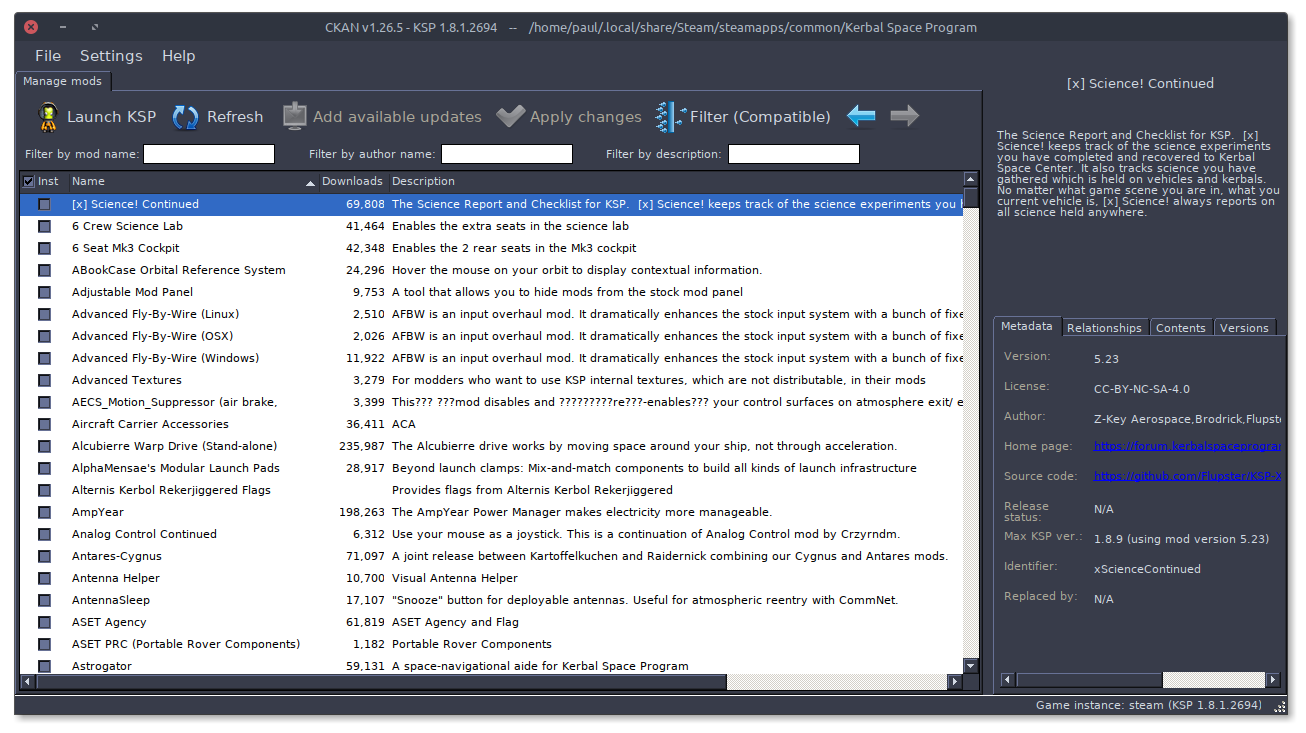
This allowed WinForms apps to blend in and look more like native apps.
## Problem
In Mono 6, this capability was lost (as noted in passing in #14325). WinForms apps now only look like this, regardless of the system color settings:
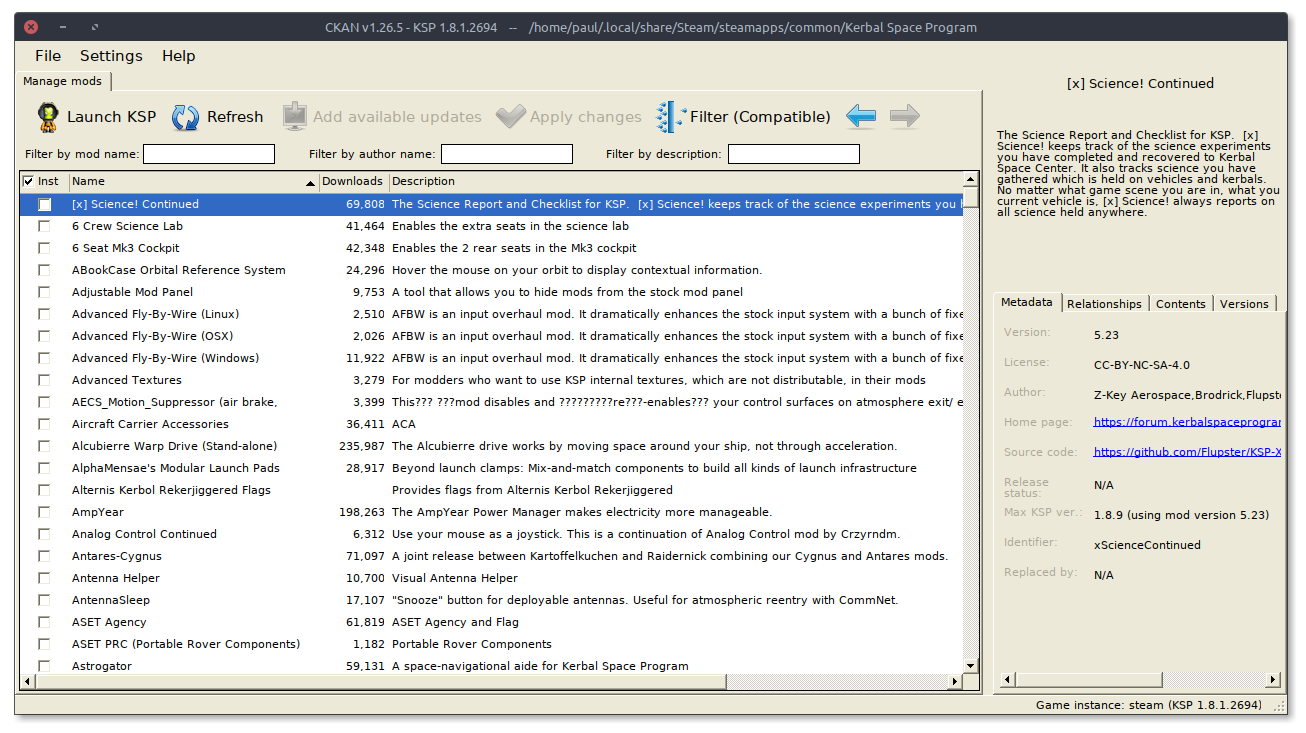
This looks somewhat jarring and worse than previous Mono releases, for users with a dark system theme.
## Cause
During load of the system settings (in the static constructor of `X11DesktopColors`), `Theme.SetSystemColors` passes system color data to `System.Drawing.KnownColors.Update`, which populates them into `System.Drawing.KnownColors.ArgbValues`. In Mono 5 and earlier, this flowed through to the visible UI.
It seems that as of Mono 6, this table no longer affects the visible WinForms UI (although it is still being updated!). Instead, a same-but-different table in `System.Drawing.KnownColorTable` drives the system colors now. I was not able to identify the commit in which this change was made.
## Changes
Now `Theme.SetSystemColors` accesses `System.Drawing.KnownColorTable.s_colorTable` instead, and WinForms apps once again obey GTK and KDE themes:

FixesKSP-CKAN/CKAN#2881.
These runtimes are configured with `--with-lazy-gc-thread-creation=yes` so they don't start a GC finalizer threads by themselves.
XI does this because they want to delay creating that thread for some time after startup.
We can just do it immediately, the important part is that it _does_ exist.
We need to check whether the assembly name passed to us already contains .exe/.dll and append it otherwise.
Fixes loading of assemblies via the hook, we were falling back to the usual path resolving logic (which doesn't work in netcore mode).
[arm] if mtriple is provided, do not set -march
E.g. when passing `-march=arm -mtriple=armv7s-ios`, `-march` will win and thus ignore `armv7s`.
Fixes https://github.com/mono/mono/issues/17931
* Caused by 5e318afd2e
* Related with 4cd5068230
* Almost fixed by e431093f73
Hopefully we are done with it.
### Backstory
This test is failing in the interpreter (ONLY on Debian9/amd64. Not Ubuntu/amd64. Not macOS/amd64):
https://github.com/mono/mono/blob/0fed03ed63ed4ea742c4511d8edc3bc1c6f4044f/mcs/class/Mono.Debugger.Soft/Test/dtest.cs#L2484-L2499
Where the debuggee is just some unsafe code that tries to read from unmapped memory, thus causing a segfault.
So the test expects the runtime to send a CRASH event via the managed debugger interface. This happens very late in the crash handling machinery:
https://github.com/mono/mono/blob/0fed03ed63ed4ea742c4511d8edc3bc1c6f4044f/mono/mini/mini-posix.c#L1105
However, the runtime would never reach that, because it silently crashes when calling `backtrace`:
https://github.com/mono/mono/blob/0fed03ed63ed4ea742c4511d8edc3bc1c6f4044f/mono/mini/mini-posix.c#L939
At the point where the SIGSEGV happens, the native stack trace looks like this:
```
Thread 1 "mono-sgen" received signal SIGSEGV, Segmentation fault.
interp_exec_method_full (frame=0x555555c51f18, context=0x555555c38350, clause_args=clause_args@entry=0x0, error=0x555555c53f18, error@entry=0x7fffffffd8b0) at interp/interp.c:4463
4463 sp[-1].data.i = *(gint32*)sp[-1].data.p;
(gdb) bt
%0 interp_exec_method_full (frame=0x555555c51f18, context=0x555555c38350, clause_args=clause_args@entry=0x0, error=0x555555c53f18, error@entry=0x7fffffffd8b0) at interp/interp.c:4463
%1 0x000055555569237a in interp_runtime_invoke (method=<optimized out>, obj=<optimized out>, params=<optimized out>, exc=0x0, error=0x7fffffffd8b0) at interp/interp.c:1900
%2 0x0000555555590745 in mono_jit_runtime_invoke (method=0x555555bfdc38, obj=<optimized out>, params=0x7fffffffd858, exc=0x0, error=0x7fffffffd8b0) at mini-runtime.c:3001
%3 0x0000555555778c4c in do_runtime_invoke (method=0x555555bfdc38, obj=<optimized out>, params=<optimized out>, exc=<optimized out>, error=0x7fffffffd8b0) at object.c:3052
%4 0x000055555577b7d0 in do_exec_main_checked (method=0x555555bfdc38, args=<optimized out>, error=0x7fffffffd8b0) at object.c:5184
%5 0x000055555559a2aa in mono_jit_exec_internal (argv=0x7fffffffdcb8, argc=1, assembly=0x0, domain=0x555555bf9d40) at driver.c:1320
%6 mono_jit_exec (domain=domain@entry=0x555555bf9d40, assembly=assembly@entry=0x555555c66ae0, argc=argc@entry=1, argv=argv@entry=0x7fffffffdcb8) at driver.c:1265
%7 0x000055555559b8e2 in main_thread_handler (user_data=<synthetic pointer>) at driver.c:1402
%8 mono_main (argc=<optimized out>, argv=<optimized out>) at driver.c:2622
%9 0x000055555558b757 in mono_main_with_options (argv=<optimized out>, argc=<optimized out>) at main.c:52
%10 main (argc=<optimized out>, argv=<optimized out>) at main.c:434
```
Stepping into the crash handling machinery, the picture looks a bit different:
```
Thread 1 "mono-sgen" hit Breakpoint 1, altstack_handle_and_restore (ctx=0x7fffffffd2d0, obj=0x0, flags=0) at exceptions-amd64.c:871
871 {
(gdb) bt
%0 altstack_handle_and_restore (ctx=0x7fffffffd2d0, obj=0x0, flags=0) at exceptions-amd64.c:871
%1 0x00005555556957de in interp_exec_method_full (frame=0x555555c53f08, context=0x555555c38350, clause_args=0x0, error=0x555555c53f18) at interp/interp.c:4461
%2 0x0000000000000000 in ?? ()
```
So it looks like we messed up in the transition from altstack back to the program stack.
### The fix
The problem is that `backtrace` consults the unwind information emitted at the point where SIGSEGV happens in `interp_exec_method_full ()`. However at that given program code, there is no function call that allocates space to pass arguments on the stack. Still, we massage the stack to do that in the signal handler, which does not add up with the emitted unwind information by the C compiler.
Note that without the fix, crashing in `backtrace` is the worst case. In other cases we might (1) get still a correct stack trace, or (2) we get a wrong stack trace, and `backtrace` will not crash. So this PR might improve the crash experience overall.
This also reverts commit cff400f3fae9775ac734f8a691339e59a272872c.
* Aling alloca_size to 8.
* Prevent some false pinning in the monitor-resurrection.cs test when using the non-recursive interpreter.
* [runtime] Add a mono_compiler_barrier () function.
* Add a MONO_GET_SP opcode to pass to enter/exit_gc_safe_region, ldloca might not return a native stack address with the interpreter.
* Add an interpreter/gc callback to mark the interpreter stack.
* Copy only an integer in ENDFILTER.
* Add a native_stack_addr field to InterpFrame so the EH code has something to compare against native stack addresses.
* Add a FrameStack structure to allow allocation of InterpFrame structures and stack data outside the native stack.
* Allocate InterpFrames/stack data from a frame stack instead of the native stack.
* Make some calls non-recursive.
* Remove an assert.
* Use non-recursive calls in CALLVIRT_FAST as well.
* Fix stack size allocation for vararg calls.
* Add some micro optimizations to the calling code.
* Add more micro optimizations.
* [dtest] disable Crash test on interpreter
* Add some implicit conversions to STSFLD to fix a corefx test failure.
* Disable the new test.
Fix BinaryReader on BE
The ints passed into the int array ctor needed to be endian swapped.
Interestingly, the BinaryWriter implementation currently being used
(not refsrc AFAIK) does this on write just fine.
Fixes ReadDecimal test on AIX, and adds another test to ensure that
Write(decimal) can be read back by ReadDecimal in case.
After https://github.com/mono/mono/pull/16832 was merged the run-msbuild.bat
script has an additional required parameter for specifying the GC.
However the script only passed the MONO_TARGET_GC property to msbuild
if the script had no additional parameters which doesn't make sense.
Always pass the parameter, this should fix the boehm build on Windows i386.
Mono SDB's debugger agent takes a `host:port` parameter to specify the host and
port on which to listen for debugger connection. `host` is passed, via
`mono_get_address_info`, to the `getaddrinfo(3)` standard library call which
does the job of translating the name to the IP address. However, there's no
special treatment for situations when `host` is already an IP address. In this
case `getaddrinfo` takes a lot of time to perform at least two DNS lookups (if
there's just a single DNS server configured) which will time out as the IP
address in `host` will not be resolved by any of the servers.
`getaddrinfo` takes a "hints" parameter where caller can specify some
information about the `host:port` pair to make the lookup faster/easier.
However, Mono doesn't specify the address family in the `hints` parameter, thus
forcing the slow path of DNS lookups on `getaddrinfo`.
This commit adds a new hint named `MONO_HINT_NUMERIC_HOST` (which maps to
`AI_NUMERICHOST` for `getaddrinfo`) which will allow, if set, `getaddrinfo` to
take a faster route in address discovery. Debugger agent will, in most cases,
get an IP address to instead of host name so we call `mono_get_address_info` up
to 3 times (IPv4, IPv6 and unspecified) in order to make the lookup faster.
Fix flawed BufferTest on big-endian
Test ignored byte order when considering integer comparison. This
tests different cases for each endian, and explains why the byte
order is different.
* Implement validation for signature and argument count consistency.
- throw error `Parameter count mismatch.` when arguments and signature counts are not consistent.
* Fix tests that have Parameter count mismatch.
* Add browser binding tests for `Parameter count mismatch
* Allow runtime to be built with C++ on AIX
Many AIX/PPC/BE specific codepaths didn't do casting properly,
since C++ is much stricter than C about pointer typing.
Also specify the C99 format macros early as possible, since
inttypes may get included before eglib gets a chance to set the
macros.
Also explicitly use -pthread, since not using it is the cause of
many libstdc++ crashes on AIX.
* Oops, should have been that define instead
* Suggested changes from Jay on style
* Remove unneeded cast
It's used for the zlib compression helpers used by System.IO.Compression in the old Mono BCL.
On corefx this is handled differently so we don't need it there.
To avoid automake complaining about missing files we include the .c files directly instead of in the Makefile.
Those folders won't be present in the dotnet/runtime repository.
We need to factor out AC_OUTPUT into a separate file so we can continue
to share configure.ac but not the list of files in AC_OUTPUT since
autotools doesn't support variables there.
* [runtime] Treat calling a non-virtual method through an open delegate the same as the normal case instead of the OPEN_VIRTUAL case.
* [amd64] Fix the return value mapping in gsharedvt calls, the return address might be in different registers in the caller and callee.
* [runtime] Always initialize del->method_ptr even if interp_method is set, JITted code makes calls through it in mixed mode.
* Add a test for open delegates and gsharedvt.
* Increase nrgctx trampoline count, its needed by dynamic-method-churn.exe in full-aot-interp mode.
* Initial commit to migrate libgc to bdwgc.
* Fix submodule url
* Don't force Boehm as runtime wrapper. Was just for testing locally.
* Build bdwgc as single object file. Helps with performance.
* Bump bdwgc submodule.
* Attempt to fix windows MSVC based build.
* Remove any references to GC_INSIDE_DLL as we manually managed threads on Windows.
* Allow building boehm on Windows amd64.
* Allow building boehm with msvc.
* Bump bdwgc to fix line endings
* Use LF for sh, am, m4, and ac files in bdwgc
* Bump bdwgc & libatomic_ops with fix for cygwin
* Bump bdwgc to fix mono-boehm being generated as libtool wrapper script.
* Link the static boehm library.
* Revert "Link the static boehm library."
This reverts commit 1f90d81d08308a61c890743cd79d8f6bb791bc99.
* Use --export-all-symbols on cygwin/mingw to fix issues with boehm causing mono symbols not to be exported.
* Fix
* [wasm] Compile corelib as 32 bit.
* [wasm] Add a netcore cross compiler.
* [wasm] Add netcore+aot support.
* [aot] Load the dedup module lazily instead of at startup.
The previous version didn't work on netcore because it couldn't resolve references to corlib etc.
since they were not yet registered in the root domain at the time of loading.
* Add more icall trampoline signatures.
* Add more netcore pinvokes.
* Fix the build.
* Add more icall trampoline signatures.
* Add an --embed-file option to the packager.
* Add more netcore pinvokes.
* [interp] Return FALSE for IsDynamicCodeCompiled.
* Add a netcore project and targets for running BenchmarkDotNet.
* Fix pinvoke tables.
* Add missing files.
* Fix make clean.
* Add a comment.
* Revert "Fix pinvoke tables."
This reverts commit 998065e77614b7e621d2873510aabc3930669ca9.
* Make xunit-runner into a dotnet project. Add a netcore version.
[interp] fix array_element_size intrinsic
`mono_class_array_element_size` gives us the size of the provided MonoClass if it would be an array element. But here we want the element size of a given array's MonoClass. That's what `mono_array_element_size` is returning.
This leads to all kind of weird crashes otherwise, specifically here:
https://github.com/mono/mono/blob/2c20649539ac16e069a65f2a750c793eb341e50f/netcore/System.Private.CoreLib/src/System/Array.Mono.cs#L64
Which is then used later to compute the size to memset in order to clear the content of an array. If it's larger than it should be, then this will cause memory corruption. For example this would crash eventually:
```csharp
using System;
using System.Collections.Generic;
namespace HelloWorld {
class Program {
static void Main(string[] args) {
for (int j = 0; j < 0x1000; j++) {
var d = new Dictionary<string, string> ();
for (int i = 0; i < 197; i++)
d.Add (i + "", i + "foo");
d.Clear ();
}
}
}
}
```
Thanks to @EgorBo for reporting.
`remove_gc_finalizing` wasn't initialized so its value is undefined.
The `count_thread_check_gc_finalizer()` function only sets it in some cases so we could end up with the variable having an undefined (and probably not 0) value.
This resulted in the returned thread count from the debuggee being wrong because we'd decrement `count` even though we shouldn't.
Regression from https://github.com/mono/mono/pull/15618
It looks like the mirror didn't fully quiesce prior to snapping coreclr/corefx for the runtime consolidation. As a result the libraries build is breaking.
Signed-off-by: dotnet-bot <[email protected]>
* Forced filesystem creation
* [Wasm] Added new hello-io sample
- Goal is testing file preloading through System.IO
- Filesystem is now always forced to support later file preloading
- build-io-sample target showcases such
* Added --enable-fs flag to packager.exe
* Update packager.md
Fix NetStandard issue in System.IO.FileSystem.AccessControl
We built the fix incorrectly so that it would only apply for netcoreapp3.0 but customer needs it on netstandard2.0 (desktop + core). Customer impact is that they’ll see a PlatformNotSupported exception rather than the new API.
Signed-off-by: dotnet-bot <[email protected]>
* Updating Vector128.AsVector3 to have a functioning implementation
* Adding test template metadata covering the new methods for converting between S.Numerics and S.R.Intrinsics
* Regenerating the existing tests
* Generating the new Vector conversion tests
Signed-off-by: dotnet-bot <[email protected]>
* Add span-based CopyTo and CopyToAsync methods
* Update according to feedback
* Add span-based CopyTo overrides for MemoryStream
* Improve span-based CopyTo arguments validation
To avoid code duplication
* Update according to second review
Stream API is changed
* Resolve InternalReadSpan/Memory inlining
* Refactor ValidateCopyToArgs
* Update according to third review
* Update after fourth review
* Override span CopyTo for UnmanagedMemoryStream
* Apply suggestions from code review
Co-Authored-By: Stephen Toub <[email protected]>
* Update after fifth review
* Add cross sync/async support for span-based CopyTo
* Call sync action directly in async context
* Rework cross sync/async support for span-based CopyTo
Co-Authored-By: Stephen Toub <[email protected]>
Signed-off-by: dotnet-bot <[email protected]>
* Method Add(ref BigInteger lhs, uint value, ref BigInteger result) would store most of the result blocks into lhs instead of result.
* Method ShiftLeft(ulong input, uint shift, ref BigInteger output) with a shift argument exceeding 32 would generally compute the higher blocks incorrectly.
* Multiply(ref BigInteger lhs, uint value, ref BigInteger result) would not set result._length in some cases.
* IsZero() would incorrectly return false for non-canonical zeros with _length > 0.
Fix:
* Inline Add(ref BigInteger, uint, ref BigInteger) into Add(uint).
* Inline ShiftLeft(ulong, uint, ref BigInteger) into Pow2.
* Inline ExtendBlock and ExtendBlocks into Pow2.
* Properly handle 0 in SetUInt32 and SetUInt64.
Signed-off-by: dotnet-bot <[email protected]>
FileStream has two modes, decided upon at construction time. When it's created in non-async mode, the Read/WriteAsync methods end up queueing work items to invoke the synchronous Read/Write methods. To do this, the base methods on Stream delegate to Begin/EndRead/Write (since they were around first) and then the resulting IAsyncResult is wrapped. However, Stream has an optimization that checks to see whether the derived stream actually overrides Begin/EndXx, and if it doesn't, then it skips using those and goes straight to queueing a work item to Read/Write. However, FileStream does override those, but when it delegates to the base implementation because it's in non-async mode (rather than because it's a type derived from FileStream), going through Begin/EndXx is just unnecessary overhead. So, in the right circumstances, we can call to Stream's special helper instead.
Signed-off-by: dotnet-bot <[email protected]>
* When we try to call a method to get the async_id to do an async debug and we are trying to do this in a generic method like this:
async Task<T> ExecuteAsync_Broken<T>()
{
await Task.Delay(2);
return default;
}
We need to inflate the generic type before call the method or we will get the error: Could not execute the method because the containing type 'System.Runtime.CompilerServices.AsyncTaskMethodBuilder1[T_REF]’, is not fully instantiated.
Fixes#17549Fixes#17569
* [llvm] Use explicit null checks with LLVM.
When the LLVM backend is used for a method, explicit null checks will
unconditionally be used at the mini IR level. We had previously used
implicit null checks at the mini IR level combined with llvm-volatile
loads and stores to avoid mis-optimization of the generated code.
During AOT compilation, LLVM's `ImplicitNullChecks` pass is enabled.
This conservatively elides these explicit null checks. This pass only
modifies branches tagged with `make.implicit` metadata.
Null check branches are now tagged with `make.implicit` metadata, with
three exceptions:
1. For platforms with backends that do not support zero page fault
handling, null check branches are not tagged with `make.implicit`.
2. This commit also adds a `MONO_DEBUG` option:
`llvm-disable-implicit-null-checks`. When it is enabled, null check
branches are not tagged with `make.implicit`.
3. This commit alters the behavior of the `explicit-null-checks`
`MONO_DEBUG` option. Enabling `explicit-null-checks` also implies
`llvm-disable-implicit-null-checks`, because this option is documented
(e.g. in https://www.mono-project.com/docs/debug+profile/debug/) to
completely disable signal/seh-based null checks.
* Add llvm-disable-implicit-null-checks to the MONO_DEBUG help string.
* Add llvm-disable-implicit-null-checks to mono.1.
* Don't tag null checks in EH regions with `make.implicit`.
This relocates the logic formerly used to guard individual LLVM-level
loads and stores with explicit null checks inside EH regions.
* Use atomic/volatile loads and stores for the terimation flag in thread-suspend-suspended.
LLVM was hoisting the load of and branch against `finished` out of
thread t1's loop, resulting in an infinite spin.
* Use ImplicitNullChecks with LLVM JIT.
* Suppress emission of the .llvm_faultmaps section.
Bump external/llvm to release_60
(7a8dc89adbe7e123220e070a527e096ee91e66d5).
* [ci] use LLVM built from repository
* [wasm] Change netcore support to use a prebuilt corefx runtime.
* [wasm] Build and test netcore support on CI.
* [wasm] Disable netcore tests on CI for now.
* [wasm] Add an error check.
* [wasm] Add a linker exclusion.
* [wasm] Add netcore runtimes to the nupkg.
* Rewrite the rest of the array non-generic fast paths in C# (#27703)
* Rewrite the rest of the array non-generic fast paths in C#
* Add missing resource string
* Use CorElementType and handle native ints to match the unmanaged implementation
* Avoid try pattern for Sort and Reverse
* Match the native implementation more closely
Signed-off-by: dotnet-bot <[email protected]>
* Rewrite Enum.CompareTo in C# (dotnet/coreclr#27792)
* Rewrite Enum.CompareTo in C#
* Handle floating point too for match the existing native implementation
Signed-off-by: dotnet-bot <[email protected]>
* Remove unused argument from GetRegionDisplayName (dotnet/coreclr#27806)
* Remove unused argument from GetRegionDisplayName
* Address race conditions in CultureData
While most of the race conditions in this file are benign, in these cases, a thread could end up returning an intermediate value due to multiple potential writes to the same field.
Signed-off-by: dotnet-bot <[email protected]>
* Fix StyleCop rule SA1129 ("Do not use default value type constructor") (#27716)
Will enable the rule in corefx once these changes have propagated.
Signed-off-by: dotnet-bot <[email protected]>
* Remove non-shared Enum.CompareTo/InternalCompareTo implementation, add new Array icalls used by shared code
This has the following benefits:
* Clearer structure for mirroring
* Slight build time improvement on bundled zlib use (as it only builds once)
* Removes pages of subdir-objects spew from autogen
[WinForms] Fix#10559 In MaskedTextBox wrong Lines value when Mask se…
<!--
Thank you for your Pull Request!
If you are new to contributing to Mono, please try to do your best at conforming to our coding guidelines http://www.mono-project.com/community/contributing/coding-guidelines/ but don't worry if you get something wrong. One of the project members will help you to get things landed.
Does your pull request fix any of the existing issues? Please use the following format: Fixes #issue-number
-->
* [WinForms] Fix#12249 scroll orientation was not defined in ScrollEventArgs of ScrollBar.cs
* [WinForms] Fix 12249 scroll orientation was not defined in ScrollEventArgs of DataGridView.cs
It tried to use dynamic codegen which is not available in FullAOT.
We can use the `RuntimeFeature.IsDynamicCodeSupported` to check for this, added a JIT intrinsic which returns false in FullAOT.
Used a linker friendly way to check for TypeBuilder by adding an `internal virtual IsTypeBuilder` method in the `Type` class which returns false, and overwrote it in `TypeBuilder`.
* [wasm] Bump emscipten to 1.39.2.
* Disable some code in libtest.c which causes emscripten to fail.
* [wasm] Source emscripten env before make install as well.
* Add EventWaitHandle creation extension method that takes an ACL (#42213)
* Add EventWaitHandle creation extension method that takes an ACL
* Call OpenExisting, add basic unit tests, move MAX_PATH in csproj for all Windows platforms, ensure same exceptions are thrown in both netcore and netfx.
* Address suggestions: using for the created handle, simplify try finally, merge methods, remove an unnecessary Debug.Assert
* simplify using, reorganize PInvokes a bit, let VS format resx as it expects it, remove BOM from csproj
* Add more unit tests
* Save basic access rights in a constant, generate name randomly
* Use FullControl (EVENT_ALL_ACCESS); update unit tests to use EventWaitHandleRights
* Apply suggestion of creating an EWH, then replacing its SWH.
* Remove using causing chaos, add more unit tests, remove null string unit test.
* spacing
* Address comments
* Remove unnecessary checks/exceptions, update unit tests
* Fix netfx x86 ut failure - different exception for mode validation.
* Small documentation fix
* Remove documentation for exception thrown with null security
* more documentation fixes
* New file for unit tests
* Dispose and remove windows only attributes in tests
* suggestion to not use var
* Remove duplicate resx after merge
* Readd cs files lost during merge
* Remove resx modification since it was untouched for this PR
* Address test comments
Signed-off-by: dotnet-bot <[email protected]>
* Move NativeLibrary.Free null check to managed (dotnet/coreclr#27744)
Signed-off-by: dotnet-bot <[email protected]>
* Arm64: Add S.P.CoreLib instrinsics UnzipEven and UnzipOdd (#27731)
Signed-off-by: dotnet-bot <[email protected]>
Approved API Proposal: #41662
Description
We don't currently have a way to create a Semaphore with a given ACL in .NET Core. We can modify the ACL, but it would be more secure to have the proper ACL on the object from the start.
Customer impact
Before this change, customers had to create a Semaphore, then set its ACLs. This presents a few problems:
- Potential security hole as semaphores can be accessed between creation and modification.
- Porting difficulties as there isn't a 1-1 API replacement
This change addresses those problems by adding a new extension method that allows creating a Semaphore and ensuring the provided ACLs are set during creation.
Signed-off-by: dotnet-bot <[email protected]>
* [reflection] Pass assembly load context through mono_reflection_get_type_with_rootimage
The entry points are mono_reflection_type_from_name_checked and
mono_reflection_get_type_checked which for now pass in an ambient ALC, but
should be updated to take an ALC argument.
Internally mono_reflection_get_type_with_rootimage is recursive through a half
dozen helper functions which all get an ALC argument too.
The principle place where the ALC is used is in
_mono_reflection_get_type_from_info which passes it to
mono_assembly_loaded_internal and to replace the call to mono_assembly_load by
a direct call to mono_assembly_request_byname with an explicit ALC set in the
request.
* Mark mono_assembly_load as external only
* Pass an alc through non-static reflection functions
* Fix usage in wasm debugger
* Relax assertions due to wasm
- Allows the on-device runner to work with the xunit framework in preparation for netcore.
- Added a simple UI to show the test run progress
- Report the test result XML back to the host so we can process it on Jenkins/AzDO
* [profiler] Add test case for pinvokes and reverse pinvokes
* [profiler] Fix crash in native to managed wrappers
When we call back to managed from a pinvoke, we're in GC Safe mode and the
profiler instrumentation is inserted in the wrapper before it does the
transition to GC Unsafe. So we need an extra transition before the profiler
calls its locking functions
Fixes https://github.com/mono/mono/issues/17687
* [coop] Mark internal GC Unsafe functions with MONO_PROFILER_API
Allow the profiler to transition to GC Unsafe mode
* [profiler] ptestrunner.pl fix profiler modules directory
we used to specify mono/mini/.libs but that's not where the profiler plugins live, they're in mono/profiler/.libs. We probably picked up the profiler plugins from the system Mono install.
Approved API Proposal: #41662
Description
We don't currently have a way to create a Mutex with a given ACL in .NET Core. We can modify the ACL, but it would be more secure to have the proper ACL on the object from the start.
Customer impact
Before this change, customers had to create a Mutex, then set its ACLs. This presents a few problems:
Potential security hole as mutexes can be accessed between creation and modification.
Porting difficulties as there isn't a 1-1 API replacement
This change addresses those problems by adding a new extension method that allows creating a Mutex and ensuring the provided ACLs are set during creation.
Signed-off-by: dotnet-bot <[email protected]>
Running Start-Process, Wait-Process on msbuild.exe have showed a couple
of hangs in the build script. This is most likely due to msbuild.exe
spawned child processes (like compile servers) running longer than
spawned msbuild.exe process. Since there is no specific requirements
when spawning the process from build.ps1, switch to regular process
exec and LastExitCode.
* Add Span<T>.Sort
Shares existing Array-based implementation by changing that implementation to be span based.
* Additional work to enable span-based sorts
- Cleans up changes from the previous commit, e.g. corrects nullable annotations, removes TODOs, using GetRawSzArrayData instead of GetRawArrayData, etc.
- Passes spans around rather than spans+lo+hi.
- Deletes the native TrySZSort, preferring to use the managed implementation in all cases.
Signed-off-by: dotnet-bot <[email protected]>
* Prevent DivideByZeroException in EventCounter.ToString()
Maybe it should print something other than 0. Maybe "Mean" should be excluded. But at least with this it doesn't divide by zero. Ternary operator in interpolated string is not super readable; didn't know if making the code more descriptive would have performance implications.
* Update src/System.Private.CoreLib/shared/System/Diagnostics/Tracing/EventCounter.cs
Co-Authored-By: Stephen Toub <[email protected]>
Signed-off-by: dotnet-bot <[email protected]>
* [mini] Fix Coverity CID 1455161 & 1455162
> Null-checking "ji" suggests that it may be null, but it has already been dereferenced on all paths leading to the check.
* do not rely on assert to guard ji-nullness. refactor a bit
* Fix correct accumulated time for parallelized jobs in SGEN.
Current implementation incorrectly accumulate time for scan jobs for
the follow metrics when running parallel minor GC:
time_minor_scan_major_blocks,
time_minor_scan_los,
time_major_scan_mod_union_blocks,
time_major_scan_mod_union_los
Commit fix so updates are atomic making sure values are correct in cases
where parallel minor GC is used.
* Implement 64-bit atommic add fallback in SGEN.
We didn't do this because it had some issues when GetType was invoked through reflection. This issue would also be present with jit but, because jit doesn't use direct wrappers, the GetType call can't be intrinsified in that scenario. See https://github.com/mono/mono/pull/5350 for the context of the issue.
Discovered by Coverity:
```
>>> CID 1455205: (CONSTANT_EXPRESSION_RESULT)
>>> The expression "flag && 2" is suspicious because it performs a
Boolean operation on a constant other than 0 or 1.
```
Support for Windows Mono NetCore build/test wihtout any need for
cygwin/wsl/automake just MSBuild and MSVC. Windows build support mirror
technologies used by coreclr/aracade builds msbuild + powershell.
Windows only Mono NetCore build, makes a port of existing build.sh and
Makefile, implementing a build.ps1 and build.targets. So far full build
support + execution of corefx test suite is implemented. Other make file
rules can be added when needed.
MSVC build runtime seems to hits a couple of additional test failures
in corefx test suite that needs to be investigated further.
Building NetCore Mono on Windows can now be done without cygwin or wsl.
Build depends on regular VS install (or build tools), if xunit summary
is requested, python needs to be installed.
Move MonoError from managed wrappers to native wrappers.
Move MonoError from managed wrappers (ilgen) to native wrappers (C preprocessor).
Alternative to https://github.com/mono/mono/pull/15869.
Which says: Previously, we would emit a call to memset
since the struct is large (> 100 bytes). Only the error code
field needs to be initialized.
Which that PR and this PR both fix, in different ways.
In the past:
- This did not work due to a possible dependency on precise GC,
interacting with what gets zeroed or not here.
That is why I put it on the managed side.
We'll see if that reproduces.
(https://github.com/mono/mono/pull/11294/files#diff-efe0070415f3f0c0f24ed0221aa1962aR339
external/coreclr/tests/src/CoreMangLib/cti/system/weakreference/weakreferenceisaliveb.exe.)
- Some indication that embedding API should expose MonoError
and not set_pending_exception. This does not seem relevant
presently, and the code seems better structured and
more efficient this way. It can revisited if/when new public API
is the dominant concern, or do it this way for these functions,
and another way for actual public functions.
(https://github.com/mono/mono/pull/11294#issuecomment-432443485)
* [netcore] Remove the type_info field from RuntimeType, extend the TypeCache structure instead.
* [netcore] Remove some linker exclusions which are not needed.
Doing this we avoid using slow ldrmfld in the common case of loading fields from instance methods, when we execute on the real object. We could do this also for strmfld but we need to track on the stack if the instance object is this, which is not worth the trouble.
* [interp] Optimize void calls
By avoiding setting of retval
* [interp] Avoid computing param count for every call
* [interp] Remove wrong profiler check
From the times when interp had its own EH mechanism. We raise this event from mono_handle_exception_internal for interp.
* [interp] Remove profiling check code from method exit
We emit MINT_PROF_EXIT opcode when under profiler. Unify profiling enter/exit with tracing enter/exit since they are very similar.
* Modify run-jenkins.sh to adapt wasm build for the OSX CI lane
* Round 2... Go
* Make ENABLE_WASM_DYNAMIC_RUNTIME conditional on non-OSX
* Add runtime-threads target
* Ignore 'multiple rules generate' on osx
* Fix typo
* Remove blank line
* Exclude CoreXml.Test.XLinq.FunctionalTests.EventsTests.EventsReplaceNodes.XElementReplaceNodes
* Revert "Ignore 'multiple rules generate' on osx"
This reverts commit 5010721bd710d6955aaee47aa7f49ad7845763fc.
* Check if OSX lane can follow general build flow
On top of https://github.com/mono/corefx/pull/369 this improves the execution time of `System.Core-xunit` on Linux/ARM64 by 2x, so from:
```console
$ make -C mcs/class/System.Core run-xunit-test
[...]
=== TEST EXECUTION SUMMARY ===
net_4_x_System.Core_xunit-test Total: 48774, Errors: 0, Failed: 0, Skipped: 6, Time: 131.143s
```
to
```console
$ make -C mcs/class/System.Core run-xunit-test
[...]
=== TEST EXECUTION SUMMARY ===
net_4_x_System.Core_xunit-test Total: 48774, Errors: 0, Failed: 0, Skipped: 6, Time: 74.636s
```
This is only relevant for non-netcore. The CoreCLR folks just recently fixed something similar (thanks to Marek sharing this link): https://github.com/dotnet/coreclr/pull/27543
* [wasm] Error out on duplicate assemblies in the packager.
* [wasm] Switch search path order to avoid duplicate references to assemblies.
* Copy all xunit binaries to test_lib_dir.
* Revert "Copy all xunit binaries to test_lib_dir."
This reverts commit b15b03c16b508c04dc6121196fddca0e6d949e2f.
* [interp] Don't print NOPs during cprop
They can become numerous and distracting.
* [interp] Fix mono_interp_print_code
Regressed after code_size was changed to byte count instead of short count.
The default behavior on .NET Framework is _HotkeyPrefix.None_ when creating a _TabControl_ element (ampersands not escaped).
If an user wants to override this behavior, he has to declare a _DrawItemEventHandler_ (with _DrawMode = OwnerDrawFixed_).
Fixes#16206
- Use string.IndexOf rather than an open-coded, unsafe loop.
- Avoid an unnecessary SequenceEquals at the end: we're only at this point if a `%` was found highlighting that something escaped was found.
- Use stack memory for smaller inputs if possible, to avoid unnecessary ArrayPool interaction
- Remove an unnecessary argument to a helper function.
- Fix ValueStringBuilder.Grow to only copy the contained data.
Signed-off-by: dotnet-bot <[email protected]>
* [netcore] Move corlib around to match CoreCLR directory layout better
This is a prerequisite to making a sane migration of this whole
directory from mono.git to coreclr.git
* Revert removal of SuppressGCTransition from SystemNative_GetTimestamp() (#27473)
* Revert removal of SuppressGCTransition from SystemNative_GetTimestamp()
* Insert GC_POLL before statement with unmanaged call.
* JIT test for insertion of GCPoll
Signed-off-by: dotnet-bot <[email protected]>
* Add file creation method that takes an ACL (dotnet/corefx#42099)
Approved API Proposal: #41614
Related change for directory creation method that takes an ACL: #41834 -merged and ported to 3.1 Prev2
Description
We have extension methods in System.IO.FileSystem.AclExtensions that let the user get and set ACLs for existing files, but we do not have methods that create files with predefined ACLs.
.NET ACL (Access Control List) support is Windows specific. This change will reside inside the System.IO.FileSystem.AccessControl assembly.
Customer impact
Before this change, customers had to create a file or filestream, then set its ACLs. This presents a few problems:
Potential security hole as files can be accessed between creation and modification.
Porting difficulties as there isn't a 1-1 API replacement
Stability issues with background processes (file filters) can prevent modifying ACLs right after creation (typically surfaces as a security exception).
This change addresses those problems by adding a new extension method that allows creating a file and ensuring the provided ACLs are set during creation.
This change is expected to be backported to 3.1.
Signed-off-by: dotnet-bot <[email protected]>
* [runtime] Add a stub for MacOsIPInterfaceProperties::ParseRouteInfo icall on non-osx platforms to fix the wasm aot build.
* [wasm] Avoid generating invalid ninja build files if an assembly is specified on the command line and its also an implicit reference.
* Put back and ifdef.
* Fix the windows build.
1. Fix NullReferenceException. When the filter args exceeded the
hard-coded size limit GetDataFromController would return data = null.
The code previously asserted that data was not null and triggered NRE
when it was. The fix correctly null checks the value instead of
asserting and uses an empty args dictionary in this case, the same as if
filter args had been empty to begin with.
2. ETW has always limited filter args to 1024 bytes but EventPipe has no
such restriction. When using DiagnosticSourceEventSource it can be
useful to specify a larger filter arg blob. I can't do anything about
ETW's restriction but there is no need for the runtime to force
EventPipe to be equally limited. The larger size also reduces the chance
that we need to hit the fallback path above causing filter args to be
ignored.
Signed-off-by: dotnet-bot <[email protected]>
ReadAsyncInternal is correctly passing its token into the two call sites where it delegates directly to the underlying stream, but in one place it calls through ReadBufferAsync, which is currently not defined to take a token. Fix that, and pass the token through.
Signed-off-by: dotnet-bot <[email protected]>
The stubbed out SecurityElement implementation does not support extensibility that ISecurityElementFactory was designed for.
Signed-off-by: dotnet-bot <[email protected]>
[mini] Initial tiered compilation work
Enable it with `./autogen.sh --enable-experiment=tiered`.
Let's consider `Simple.cs`:
```csharp
using System.Runtime.CompilerServices;
using System;
public class Simple {
public static void Main (string []args) {
HotMethod ();
Console.WriteLine ("cnt: " + cnt);
HotMethod ();
Console.WriteLine ("cnt: " + cnt);
}
static int cnt = 0;
[MethodImplAttribute (MethodImplOptions.NoInlining)]
public static void HotMethod () {
for (int i = 0; i <= 1000; i++)
cnt += i;
}
}
```
```console
$ csc Simple.cs
$ MONO_LOG_LEVEL=debug MONO_LOG_MASK=tiered ./mono/mini/mono-sgen --trace=M:Simple:HotMethod --interp=-all Simple.exe
[0x10ec275c0: 0.00000 0] ENTER:i Simple:HotMethod ()()
Mono: tiered: queued Simple:HotMethod ()
[0x10ec275c0: 0.00010 0] LEAVE:i Simple:HotMethod ()(
Mono: tiered: patching 0x7fe855803224 with patch_kind=INTERP @ tier_level=0
Mono: -> caller= Simple:Main (string[]) [{0x7fe85420df88} + 0x34 interp] (0x7fe8558031f0 0x7fe855803258) [0x7fe85420c880 - Simple.exe]
Mono: -> callee=Simple:HotMethod ()
Mono: tiered: patching 0x7fe8558031f2 with patch_kind=INTERP @ tier_level=0
Mono: -> caller= Simple:Main (string[]) [{0x7fe85420df88} + 0x2 interp] (0x7fe8558031f0 0x7fe855803258) [0x7fe85420c880 - Simple.exe]
Mono: -> callee=Simple:HotMethod ()
cnt: 500500
[0x10ec275c0: 0.04093 0] ENTER:c Simple:HotMethod ()()
[0x10ec275c0: 0.04095 0] LEAVE:c Simple:HotMethod ()(
cnt: 1001000
```
Note the suffix after `ENTER:`
* `i` indicates it's executed by the interpreter
* `c` indicates it's a compiled method (JIT)
Another example:
```console
$ make -C mono/mini gshared.exe
$ ./mono/mini/mono-sgen --interp=-all --stats ./mono/mini/gshared.exe
Regression tests: 84 ran, 0 failed in Tests
[...]
Tiered statistics
Methods promoted : 68
```
It's a basic proof-of-concept for now. An incomplete list of future work items:
* Right now it only works for direct calls, need to expand it to virtual/interface calls.
* Calls of the JIT leading into the interpreter again can't be patched yet.
* Kind of related, no concept of versioning compiled methods does exist yet. The interpreter maintains its own table of "transformed" methods, however, when doing the transition from JIT->interpreter, the wrapper+interpmethod will end up in the JIT table. We need a way to have multiple JIT compilation results for the same MonoMethod exist.
* Investigate actual performance. We might have to optimize the interp<>JIT transition.
* Patching is racy. Need to make that atomic.
* All the FIXMEs in this PR
<!--
Thank you for your Pull Request!
If you are new to contributing to Mono, please try to do your best at conforming to our coding guidelines http://www.mono-project.com/community/contributing/coding-guidelines/ but don't worry if you get something wrong. One of the project members will help you to get things landed.
Does your pull request fix any of the existing issues? Please use the following format: Fixes #issue-number
-->
* Add newLine parameter to StringCoda methods
* Update Options.cs to handle both kinds of newlines
* Add test to OptionSetTest
* Directly handle \r\n instead of using the TextWriter.NewLine
* Additional and adjusted logging for parallel minor GC.
When running parallel minor GC we currently get incorrect timing
on several loggings and counters due to work being put on thread pool
and accumulated. This commit fix so that the logging is accurate
when running with and without parallelization. In parallel mode a new
logging is also added to show the accumulated split between major and los
remset scan jobs.
The counters time_minor_scan_remsets and time_minor_scan_roots are only
updated when not running parallel GC since they are not correct when
running parallel GC.
* Fix WASM build error.
The offsets-tool.py uses some magic to map `typename` to `<underscore>typename` for looking up runtime types.
This caused issues on netcore because we aliased it to a different name.
To fix this let's keep the `_MonoInternalThread` name instead and just fix the one location where `_MonoThread` is used.
* dump_native_stacktrace should always register the sigterm handler.
Cherry picked from the https://github.com/mono/mono/pull/17310
* [merp] Introduce a new 'dump mode' that allows different signal behavior when dumping
The primary reason for this is gaining the ability to interpret SIGTERM properly as a crashing signal when outside of 'dump mode', and as a utility signal during the 'thread summarizer' dumping process.
When embedders call mono_runtime_quit or mono_jit_cleanup, we need to do unbalanced transitions to GC Unsafe, because after mini_cleanup runs we don't have GC thread states anymore and MONO_EXIT_GC_UNSAFE will assert.
* [runtime] Do an unbalanced GC Unsafe transition in mono_jit_cleanup
After mini_cleanup, we don't have GC thread states anymore because all that
stuff was cleaned up, so MONO_EXIT_GC_UNSAFE would assert
* [runtime] Mark mono_runtime_quit external only.
Runtime should use mono_runtime_quit_internal.
After we call the quit_function (aka mini_cleanup) we don't have any GC thread
states anymore because all that stuff got cleaned up. So MONO_EXIT_GC_UNSAFE
can't work.
- The code passed to `CompileFunction` is not a function definition. Instead it must create and return a function instance.
- Solves the problem of accessing `Node.js` functionality as defining a JavaScript function executes in the global space and does not get `Node.js` access.
- Returning a function instance allows the function to initialize and maintain encapsulated state.
* [interp] Optimize stelem instructions
* [intepr] Optimize stelem_ref and slowpath casts
mono_object_isinst_checked uses coop handles and is very slow. Attempt to use the straightforward mono_class_is_assignable_from_checked.
Makes stelem_ref 5x faster.
* always use -place-safepoints pass in JIT mode
* ignore loaded llvm
* remove gc.safepoint_poll after optimizations
* fix typo
* cleanup
* cleanup
* cleanup
* cleanup
* Do not emit safepoints on entry thus simple functions (without calls and loops) won't have them at all
* Undo -spp-no-entry=true
* fix failing tests
* do not emit sp in Allocators
* Fix `System.Diagnostics.Trace.TraceError` crash.
- WASM does not have access to the command line arguments through the browser so the length is 0 causing index out of range error.
- The zero index of the command line arguments is what decides the `AppName` so under WASM the AppName will be blanks.
* Address review comments
* Remove #ifdef for WASM only.
- Addresses review note.
- As per channel discussion some embedding scenarios might be the same.
Some of the includes already were unconditional, including both on Win32 and Unix.
It is part of ANSI C 89, albeit in a reduced form compared to typical Unix (no sigaction).
Remove configuration of MSG_NOSIGNAL which has no other uses.
Preserve configuration of signal.h temporarily due to other uses of ifdef HAVE_SIGNAL_H.
i.e. LLVM?
* [cxx][x86] Another int/ptr cast.
* More casts. Notice these are under
`#if defined (MONO_ARCH_USE_SIGACTION) && !defined (MONO_CROSS_COMPILE)`
which would explain them not showing up.
* use GC.AllocateUninitializedArray for allocating internal char buffers
* force inlining of AllocateUninitializedArray to have no perf hit on the small buffers hot path
* insrease the threshold from 256 to 2048 bytes
* use Unsafe.As instead of a cast
* remove the size precondition from AllocateNewArray method, the called AllocateSzArray is responsible for handling negative size
Signed-off-by: dotnet-bot <[email protected]>
* Updating S.P.Corelib to start building Vector2/3/4 and supporting types
* Removing HAS_INTRINSICS usages from Matrix4x4
Signed-off-by: dotnet-bot <[email protected]>
### Overview
After the removal of the Legacy TLS Provider, we can make some cleanups and improvements to the `SslStream` class. Since both the remaining providers use the internal `MobileAuthenticatedStream` and support Task-async code, we can get rid of some of the Begin/End async logic and the the underlying
`Stream` class handle it instead.
This also fixes a nasty issue with some of those task objects leaking unobserved exceptions. The problem was that `SslStream.Dispose()` needs to clear out all resources, but in doing so also nulls out the `Impl` handle to the `MobileAuthenticatedStream` - so a subsequent `End*()` call will not reach it's corresponding `TaskToApm.End()` method.
There are also some cleanups in the internal APIs that were only ever used internally and not intended for public consumption.
### Mono.Security.dll
* `Mono.Security.Interface`: removed internal `ICertificateValidator2` interface.
* `Mono.Security.Interface.IMonoSslStream`: this internal interface is only used by the web-tests, which only use it as a way to get the `SslStream` instance, so all those `Begin/End` async methods are now gone.
* `Mono.Security.Interface.IMonoSslStream2`: removed another internal interface.
* `Mono.Security.Interface.MonoTlsProvider`: removed some `internal abstract` methods; these have been moved into a new `Mono.Net.Security.MobileTlsProvider` inside `System.dll`.
### System.dll
* `Mono.Net.Security.MobileTlsProvider`:
New abstract internal base class, which received the aforementioned abstract internal methods. The naming is such to make it consistent with the already existing `MobileTlsContext` and `MobileAuthenticatedStream`.
Since both `AppleTlsProvider` and `BtlsProvider` now have an abstract internal base class inside `System.dll`, they can use the `ChainValidationHelper` class directly and we can also avoid some `Mono.Security` dances like for instance that `MonoSslPolicyErrors` enum.
This will also help make the code easier to read and maintainer.
* `Mono.AppleTls.AppleTlsProvider` and `Mono.Btls.MonoBtlsProvider`: change base class into `MobileTlsProvider` and reflect above mentioned overload changes.
* `Mono.AppleTls.AppleCertificateHelper`: use `ChainValidationHelper` as well.
* `Mono.Net.Security.ChainValidationHelper`: only implement `ICertificateValidator`.
The `ICertificateValidator` interface is still required because it is in use by the web-tests, but the previous `ICertificateValidator2` was an internal dance.
* `Mono.Net.Security.MobileAuthenticatedStream`: largely cleaned up this class.
- we now implement the current slimmer version of `IMonoSslStream`.
- moved all those overloads into `SslStream` that only fill in default values for some of their arguments and then call another overloaded version of their own.
- removed lots of `Begin/End` methods that are not used anymore.
* `Mono.Net.Security.MonoTlsProviderFactory`: use `MobileTlsStream` everywhere.
* `Mono.Net.Security.MonoTlsStream`: cleanup `SslStream` creation logic; instead of going throw `provider.CreateSslStream()`, we can now use an internal constructor directly, thus avoiding the `IMonoSslStream` interface while also making the code a lot easier to read and understand.
* `System.Net.Mail.SmtpClient`: same here.
* `System.Net.HttpWebRequest`: use `MobileTlsProvider`.
* `System.Net.Security.SslStream`: largely cleaned up this class.
- we now use `MobileAuthenticatedStream` directly instead of the `IMonoSslStream` interface and therefore could also get rid of `IMonoSslStream2`.
- cleanup constructor logic to allow the internal constructor being used with a `MobileTlsProvider` instead of going through `provider.CreateSslStream()`.
- all those overloads that are only filling in default values for some of their arguments before calling another overloaded version of their own now live here instead of in the `MobileAuthenticatedStream` class. The reason is to simply that `MobileAuthenticatedStream` is already quite a complex and difficult class, and removing some of that complexity out of it will make it easier to understand.
- handle the `TaskToApm.Begin()` / `TaskToApm.End()` here to ensure that we are not leaking any task objects with unobserved exceptions.
- removed `BeginRead()` and `BeginWrite()` overloads to let the underlying `Stream` class handle these.
* Bump API snapshot submodule
* [csproj] Update project files
* fix eglib on AIX/PASE
* Work around access(2) syscall bug on PASE
On PASE, X_OK will always returns true. This is contrary to
how AIX behaves (though corresponds to documentation!). This
is probably because it's an upcall to the ILE version of
access, and that seemingly always returns true.
* Always export the dummy function in the test suite
The AIX linker didn't export this properly, without using the
giant sledgehammer of -bexpall. Write an export file and use
it. This required some build system changes to expose an
AIX-only automake conditional.
* Use a file that exists on PASE for tests
PASE doesn't use Unix-style DNS resolution, so /etc/hosts is
missing. Use /etc/magic, since that seems to be present.
* Don't use /bin on AIX/PASE for tests
This is a symlink to /usr/bin, and it seems chdir/getcwd
follows links. Use /usr instead, that is unlikely to be a
symlink.
* Make a note what directory we're in if we fail test_cwd
* Change manual executable access check change per Jay
* Change test on POSIXy platforms to always use root directory
* [interp] Add also floating versions for stloc.np
* [interp] Add super instructions for stfld
When storing into a field of a local or an argument (ldloc/ldarg -> random instructions that end up pushing one value -> stfld). We add this instruction to the cprop pass because the instructions that are optimized together are not consecutive and we need the stack information to be able to access the instruction that loaded the argument / local and to make sure that the local wasn't dirtied. Alternatively we could make the super instruction pass stack aware, which we should probably do if more super instruction candidates turn out to require stack state information.
* [interp] Enable cprop for methods without locals
We do some optimizations here that don't apply to locals.
* [interp] Fix result stack type of CEE_CONV_OVF_I_UN
With this change we will get the following logging on level 1:
2019-10-22 15:46:59 Start nursery collection 38898 00000205A0000000-00000205A1000000, size: 16777216
2019-10-22 15:46:59 restarted (pause time: 2728 usec, max: 689233 usec)
showing the pause time and when runtime was restared, before this fix
we will only see the start log message on level 1.
* Wire up the managed side of the portable thread pool
* Remove old native thread pool code
* Fix non-netcore build
* Fix Thread.IsThreadPoolThread
* Fix MSVC builds
* Code style fix
* Make the locking primitives uninterruptible
* Revert icall changes for non-netcore
* Implement Thread.ResetThreadPoolThread
* Compile out more thread pool code for netcore
* Remove ThreadPoolBoundHandle, it is shared now
* Address PR feedback on code style
Today `async ValueTask/ValueTask<T>` methods use builders that special-case the synchronously completing case (to just return a `default(ValueTask)` or `new ValueTask<T>(result))` but defer to the equivalent of `async Task/Task<T>` for when the operation completes asynchronously. This, however, doesn't take advantage of the fact that value tasks can wrap arbitrary `IValueTaskSource/IValueTaskSource<T>` implementations.
This commit gives `AsyncValueTaskMethodBuilder` and `AsyncValueTaskMethodBuilder<T>` the ability to use pooled `IValueTaskSource/IValueTaskSource<T>` instances, such that calls to an `async ValueTask/ValueTask<T>` method incur 0 allocations (ammortized) as long as there's a cached object available.
Currently the pooling is behind a feature flag, requiring opt-in via the DOTNET_SYSTEM_THREADING_POOLASYNCVALUETASKS environment variable (setting it to "true" or "1"). This is done for a few reasons:
- There's a breaking change here, in that while we say/document that `ValueTask/ValueTask<T>`s are more limited in what they can be used for, nothing in the implementation actually stops a `ValueTask` that was wrapping a `Task` from being used as permissively as `Task`, e.g. if you were to `await` such a `ValueTask` multiple times, it would happen to work, even though we say "never do that". This change means that anyone who was relying on such undocumented behaviors will now be broken. I think this is a reasonable thing to do in a major release, but I also want feedback and a lot of runway on it.
- Policy around pooling. Pooling is always a difficult thing to tune. Right now I've chosen a policy that limits the number of pooled objects per state machine type to an arbitrary multiple of the processor count, and that tries to strike a balance between contention and garbage by using a spin lock and if there's any contention while trying to get or return a pooled object, the cache is ignored. We will need to think hard about what policy to use here. It's also possible it could be tuned per state machine, e.g. by having an attribute that's looked up via reflection when creating the cache for a state machine, but that'll add a lot of first-access overhead to any `async ValueTask/ValueTask<T>` method. For now, it's tunable via the `DOTNET_SYSTEM_THREADING_POOLASYNCVALUETASKSLIMIT` environment variable, which may be set to the maximum number of pooled objects desired per state machine.
- Performance validation. Preliminary numbers show that this accomplishes its goal, having on-par throughput with the current implementation but with significantly less allocation. That needs to be validated at scale and across a variety of workloads.
- Diagnostics. There are several diagnostics-related abilities available for `async Task/Task<T>` methods that are not included here when using `async ValueTask/ValueTask<T>` when pooling. We need to evaluate these (e.g. tracing) and determine which pieces need to be enabled and which we're fine omitting.
Before shipping .NET 5, we could choose to flip the polarity of the switch (making it opt-out rather than opt-in), remove the fallback altogether and just have it be always on, or revert this change, all based on experimentation and data we receive between now and then.
Signed-off-by: dotnet-bot <[email protected]>
* Removing all fixes to fix#15203 and #17083, and trying a new approach to fix this #17084, together.
The thing is when we are executing on hybrid suspend the caller is executed inside try catch in the runtime_invoke_ method that is generated. And this try catch should be ignored for the debugger exception, otherwise it's the last try catch in main thread, but should always be considered to generate the stack trace.
Fixes#17084
* This test check the case that we were missing. On preemptive this test always runs perfectly, on Hybrid, never run well until this PR.
* Changing how call unit test.
Changing variable name.
Scanning LOS list as part of minor GC didn't parallelize well since
all scan jobs needed to walk the complete LOS list. This led to touching
a lot of memory walking the list, increasing minor GC pause times
when the number of items in the LOS list increased. As an example,
stressing LOS data structure using ~600 MB's of random sized byte arrays
caused minor GC pause times between ~20ms without parallelization and ~19ms
with parallelization. NOTE, the more work each job gets (more memory to scan)
we will get a better parallelization, but still a lot of room for improvement.
Changing from a normal linked list to a SgenArrayList makes it more effective
to parallelize the scan jobs and since the list is using sequential
memory, this will also reduce cache misses for each thread iterating LOS
objects. Tagging objects in SgenArrayList with reference information reduce
cache misses dramatically in cases where objects not including references
exists on the list, since scanning jobs can skip these items without any
need to touch object memory causing cache misses.
Same scenario running with fix gives us minor GC pause times, without
parallelization in ~7ms (down from 20~ms) and with parallelization,
< 5ms (down from 19ms). NOTE, the more work each job gets (more memory to scan)
we will get a better result using parallelization, so the delta will increase
between using and not using parallelization, this scenario primarily stress
the extreme case where most LOS objects doesn't have references.
In total, this optimization reduce minor GC pause time 4x, from ~19ms when
using parallelization down to < 5ms.
[wasm] Avoid adding an extra arg to native-to-managed wrappers.
Fixes https://github.com/mono/mono/issues/17389.
<!--
Thank you for your Pull Request!
If you are new to contributing to Mono, please try to do your best at conforming to our coding guidelines http://www.mono-project.com/community/contributing/coding-guidelines/ but don't worry if you get something wrong. One of the project members will help you to get things landed.
Does your pull request fix any of the existing issues? Please use the following format: Fixes #issue-number
-->
* Adding SkipInit to Internal.Runtime.CompilerServices.Unsafe
* Updating the runtime to handle Unsafe.SkipInit
* Updating Decimal.DecCalc to use Unsafe.SkipInit
* Removing 'workaround for CS0165' comments
Signed-off-by: dotnet-bot <[email protected]>
Together with a few very simple super instructions. We replace common instruction patterns to avoid indirection via interp stack, instruction dispatch overhead and to allow the compiler to generate better code for the instruction.
When replacing a stloc with a pop, we should retry the pass, since it is very likely that we will be able to kill the instruction that pushed that value on the stack.
* [test] GetCustomAttributes on generic type definition
* [reflection] mono_method_get_base_method on a GTD should use canonical ginst
The issue is in how we pass along the generic instantiation. So there are two
parts here: we start with a method on a GTD which has to decompose into the GTD
and it's instantiation with its own generic parameters, and then we go up to
its parent and grandparent inflating and decomposing the resulting
instantiation. The instantiations keep passing the last parameter as the number
of parameters shrinks so that the gparam index from the original type is now
out of bounds for the parent and grandparent. If we mess up, we'll get a
BadImageFormatException from the runtime
Fixes https://github.com/mono/mono/issues/17278
* [checked] Mask the thread state in GC thread state assertions
Because we have extra bits (like suspend count and the no_checkpoints bit) on
the thread state, we have to mask it to get the actual thread state enum value
* [coop] Use bitfields to represent coop thread state
Instead of using a 32-bit int, use bitfields and type-punning through a union
type. We need to type pun because we need to access the entire state as a 32-bit int so that we can do atomic CAS.
* use atomic load of thread state in unwrap_thread_state.
Saw one stack trace on CI on the full coop lane where check_thread_state saw STATE_RUNNING
but with a positive suspend count. Another thread was starting a GC a
the time. Seems like we saw the state as runnning, but the suspend
count as if we were already in async_suspend_requested.
Thread 22 (Thread 0x7f43c03ff700 (LWP 39860)):
- Merge RuntimeImports that has just a few FCalls into Buffer.
- Delete assembly implementation of memcpy for ARM. The implementation was outdated and it was used only on Windows ARM and only for fraction of memcpy callsites.
- Delete unnecessary PInvoke into SysStringLen. We have a managed equivalent on System.Runtime.InteropServices.Marshal.
- Delete large amount of redundant code between SecureString.Windows.cs and SecureString.Unix.cs, and switch SecureString to use Spans
- Fold null check into IsWin32Atom
Signed-off-by: dotnet-bot <[email protected]>
* Rewrite Buffer.BlockCopy in C#
Fixes#27106
* Workaround to enable type check optimizations for BlockCopy only
Signed-off-by: dotnet-bot <[email protected]>
* Updating double.IsNaN and float.IsNaN to just `return x != x`
* Updating x86 codegen to optimize `x != x` for floating-point
* Changing the isnan optimization to only check the operand assigned registers
Signed-off-by: dotnet-bot <[email protected]>
* Wrap MoveNext Action for TPL event tracing
Wraps the MoveNext action of the AsyncStateMachineBox in a
continuation wrapper when async causality tracing is on so that the
TPL event source can find the task that is associated with a
continuation. Does not wrap otherwise.
* Clarifying comment
* removing trailing whitespace
* code review feedback.
Makes AsyncMethodBuilderCore.TryFindContinuationTask check to
whether the target of a continuation is itself a task, as a fall-back
to checking to see if the continuation is a ContinuationWrapper
* Got rid of unnecessary null checks
Signed-off-by: dotnet-bot <[email protected]>
* Provide mechanism to remove the GC transition from a P/Invoke.
New Attribute: 'System.Runtime.InteropServices.SuppressGCTransitionAttribute'
Signed-off-by: dotnet-bot <[email protected]>
* [jit] Avoid running mono_handle_native_crash () on the altstack, it can't produce a backtrace. AMD64 only for now.
* Fix checks so stack overflows work again.
In file included from /Users/builder/jenkins/workspace/test-mono-pull-request-amd64-osx-products-sdks-android/mono/metadata/icall.c:42:
/Users/builder/jenkins/workspace/test-mono-pull-request-amd64-osx-products-sdks-android/mono/metadata/icall-internals.h:89:10: fatal error: 'type_traits' file not found
- The checking for the existence of the object is incorrect: Missing parens around undefined.
- Modify error description returned back to managed code.
- Fix capitalization in global object check error.
* `MonoTlsProviderFactory` now treats "legacy" as an alias for "default".
* `Mono.Net.Security/LegacySslStream`: Removed. This class also wasn't using the `MobileAuthenticatedStream` base class, thus preventing cleanups simplifications in that area.
* `Mono.Net.Security/LegacyTlsProvider`: Removed.
* `Mono.Security/Mono.Security.Protocol.Tls*`: Removed all the old legacy code.
* `Mono.Security.Interface.MonoTlsProviderFactory`: Bump internal version to 4.
If we have coverage profiling enabled for a method (mono_profiler_coverage_instrumentation_enabled, with coverage_filter callback), then we should be able to allocate a coverage info structure (mono_profiler_coverage_alloc). After https://github.com/mono/mono/commit/52429673dc617fd437518757c04c7448211075e9, coverage_filter was reporting wrapper methods as ok to profile, while mono_profiler_coverage_alloc was refusing to allocate the necessary structure, leading to crashes.
* [corlib] Mark YieldAwaitable struct readonly
Make it consistent with .NET Standard/Core which makes future API Compat runs report one less difference.
* Bump API snapshot submodule
* [interp] Move instructions together
For easy check if an instruction is unary or binary operation. We consider conversion instructions to be unary operators and compare instructions to be binary operators.
* [interp] Add stloc.np also for longs
* [interp] Add stats for total number of emitted instructions
Also make the killed_instructions counter actually track the total amount of killed instructions. It was not previously tracking instructions killed as part of addition of stloc.np / movloc.
* [interp] Improve logging during cprop
Make dumping instruction support also InterpInst's not just compacted instructions.
* [interp] Constant folding of common unary operators
* [interp] Constant fold binary operations
* [interp] Remove MINT_CONV_U8_I4 opcode
It is equivalent with MINT_CONV_I8_U4.
This commit avoid unnecessary memory barriers on x86 and amd64.
Volatile writes have release semantics, volatile reads have acquire semantics. Organize the code a little bit to indicate this. On x86 and amd64 we don't require barrier for acquire and release semantics since they are provided by the arch, so we can skip them. Ideally we should have 3 memory barrier interp instructions for each type, but, currently, they would all seem to call mono_memory_barrier so it is useless at this point.
Changes will default Windows SDK version as well as Platform Toolset to
the default versions used in the targeted VS version. If the projects are
opened up in VS2015, it should default to Windows SDK 8.1 and v140, but if
the same projects are opened in VS2019, it will default to latest Windows SDK 10
and v142. This way the project files should adapt to used VS version, meaning
that we could still build them using VS2015 (what's currently used on CI) but also
using VS2017 and VS2019. There should not be a need to install any previous versions
of build tools, unless an older version is targeted. It is also possible to set
PlatformToolset when calling msbuild and that should adapt to corresponding default
Windows SDK version for targeted toolset version.
Commit makes many changes and adjustments, aligning all vcxproj files but changes
should not affect build output.
In https://github.com/mono/mono/pull/17341 we change the caller of
CompareExchange_T<T>(ref T, ...) to call CompareExchange (ref object, ...), but
didn't delete the declaration.
It's already deleted in unmanaged and in the netcore version of this file.
* Update dependencies from https://github.com/dotnet/core-setup build 20191015.17
- Microsoft.NETCore.App - 5.0.0-alpha1.19515.17
* Update dependencies from https://github.com/dotnet/corefx build 20191015.14
- Microsoft.Private.CoreFx.NETCoreApp - 5.0.0-alpha1.19515.14
* Reenable a test that was fixed
* [bcl][jit] implement Interlocked.Exchange<T> in terms of object
Exchange<T> is supposed to be picked up as an intrinsic. But if it isn't,
since T has a class constraint, call the `Exchange (ref object, ref object, ref
object)` overload instead.
This works around a limitation in the JIT:
https://github.com/mono/mono/blob/82a07273c22b996b08fa88ee2e6632d782ac2242/mono/mini/mini-trampolines.c#L704-L713
if we're in the common call trampoline, and the caller is generic method and
the callee is a generic method, if we're using generic sharing for the caller,
but there's no generic jit info for the callee, we will not patch the call
site.
In this case we had Exchange<T> calling Exchange_T<T>
where the callee is an icall (and evidently didn't have generic jit info).
So every time we called Exchange<T>, we would go through the trampoline when
trying to call Exchange_T<T> without patching the call site.
Addresses part of https://github.com/mono/mono/issues/17334
* Bump Mono
* Also drop CompareExchange_T<T>
* Sprinkle some Unsafe magic.
Mark the non-icall methods that we expect the JIT to treet as intrinsics with [Intrinsic]
* aot-runtime doesn't need Volatile.Read<T>/Write<T> code
Both of those methods are implemented as calls to the object overload of Volatile.Read/Write
Follow-up to https://github.com/mono/mono/pull/17331.
We were running nuget pack and tests explicitly in the Azure Pipelines
config so we weren't capturing failure telemetry.
Replace mono_assembly_name_free use with mono_assembly_name_free_internal.
Maybe just remove the GC mode change and remove the internal form.
We don't really equate malloc/free with GC/locks/hangs, though arguably we should. Arguably this change is right.
* [interp] Make StackValue more intuitive
Replace the opcode field with an enum which will represent what type of value is contained (STACK_VALUE_LOCAL, STACK_VALUE_I4 etc)
* [interp] Add the mint type to the local data
Makes the emitting code easier and we no longer compute the mint type for each local access, which is fairly expensive.
* [interp] Handle indirect locals saner during cprop
Instead of checking for the indirect flag when loading from a local, simply never store a StackValue into such a local since we can't use it. We use the same logic when not pushing on the stack values for such locals.
* [interp] Add constant folding for integers
We decode the values from LDC_I4 and LDC_I8 opcodes and track/propagate the values on the stack and in the locals using the existing infrastructure. When loading a local, we try to load using the known constant value instead, so we might get to kill that local.
* [interp] Similar to stloc.np we can optimize pop/push pairs
If the pushing instruction pushes the same value that was popped by the previous instruction, we can kill them both
* [tests] Remove issue that seems to have been fixed for a while
* Fix SafeHandle marshalling in ref/in/out parameters
* Reorder code to make it exception safe, update comments
* Revert the code reordering because it breaks the invariant that new handle returned from native code should always create new SafeHandle on the managed side
* Fix test_0_safehandle_ref test. The test was expecting incorrect behavior, verified on .NET Core 3 and .NET Framework 4.8.
* Address PR feedback
* Fix cut & paste error
* Fix build
* Really fix the test_0_safehandle_ref tests
* Add more tests for SafeHandle marshalling
* Add exclusion for broken CoreFX test
* Add support for tests via safari browser
* Run safari browser tests on CI for Mac lanes
* Update to fix syntax error using UNAME to `if [[ ${CI_TAGS} == *'osx-amd64'* ]];`
* Fix syntax error with `if`
In https://github.com/mono/mono/commit/fd424c5dd07b2dbbd4aafbf9165a42166d789438 we switched over to the `TextWriter.cs`/`StreamWriter.cs` implementation of corefx. One subtle difference is that an override for `WriteLine(string)` in `StreamWriter` was introduced:
https://github.com/mono/corefx/blob/8e3b279377d1f01d2d089f24548e33855bf6502e/src/Common/src/CoreLib/System/IO/StreamWriter.cs#L526-L531
Previously the definition in `TextWriter` was used, which would call the base case `Write(char[],int,int)`. The new override however won't call the base implementation at all, but directly uses the `Span`-variant.
This is a problem for our `CStreamWriter` implementation, since `WriteLine(string)` won't end up in the special handling for `Write(char[],int,int)`, which accounts for terminal cursor changes.
This is the real fix for https://github.com/mono/mono/issues/16701
This also reverts commit 68f5613422. ("[TermInfoDriver] update top/left value on Console.{CursorTop,CursorLeft} access (#16745)")
While it kind of masked the issue, it also posed a performance issue on some terminals (e.g. GNOME Terminal).
* Load VSTS telemetry helpers into build.sh script
* First cut adding some basic VSTS-compatible telemetry on failures
* Don't make `ci=true` the default, make it a build.sh flag
Otherwise the script will not replace the variable and we get confusing error messages like this:
```
[command]/bin/bash --noprofile --norc /home/builder/azdo/_work/_temp/ba0890e7-8c80-4245-b9dc-14253b0d399f.sh
/home/builder/azdo/_work/_temp/ba0890e7-8c80-4245-b9dc-14253b0d399f.sh: line 2: llvm: command not found
/home/builder/azdo/_work/_temp/ba0890e7-8c80-4245-b9dc-14253b0d399f.sh: line 2: [: =: unary operator expected
```
* This adds the ability to continue loading the application even though the .pdb files are not found.
When uploading an app built with mono-wasm the `.pdb` may not get committed so they will not exist when trying to load them.
- Add new boolean variable to MONO library support to control skipping these files on errors.
- `mono_wasm_ignore_pdb_load_errors` default is true
- Modify the assembly file fetching routine `mono_load_runtime_and_bcl` within our MONO module.
- Allows skipping the .pdb files if the `mono_wasm_ignore_pdb_load_errors` flag is true.
* [System.Net.Http] Clean up HttpMessageHandler setup
to avoid reflection and not to be recursive
Superseded #15051 and #15922
* [csproj] Update project files
* Remove unused mono_class_get_field_from_name_cached.
* Replace gcc-specific:
mono_array_class_get_cached
mono_array_new_cached
mono_array_new_cached_handle
with portable forms that are easy enough to use and general enough.
Before was "easier" because cache provided for you -- possibly multiple.
Before was more general because rank was a parameter -- and had to be a constant.
It was always 1.
* [sdks] properly shutdown runtime for Mono.Debugger.Soft test app
mini_jit_cleanup will cause mono_runtime_try_shutdown to be called before
mono_runtime_quit which will set the shutting down flags in the runtime.
* [test] Re-enable disabled tests
* Update parameters in MERP WerReportMetadata xml
To enable backend analysis, we need to update our parameters to match our back end event type, which is MonoAppCrash.
It doesn't make sense to me that the previous implementation constructed the XML here in Mono, but depended on the user (VSMac in this case) to add the "correct" event type. The parameters in the XML, must match exactly what is expected for the given EventType, and so we should ensure they are always in-sync by defining them here. Thus, I removed the usage of `eventType` in `mono_merp_enable` and hard coded the expected eventType.
* [merp] Don't pass eventType from managed
The eventType must me MONO_MERP_EVENT_TYPE_STR ("MonoAppCrash") - the backend
determines the format of the other fields based on the event type, so it
doesn't make sense to pass other values from managed since the runtime controls
the other fields.
For compatability Mono.Runtime.EnableMicrosoftTelemetry will still take a
string parameter (now called "unused" instead of "eventType_str") but it will
not pass it down to the internal call.
* Bump corlib version
* [merp] Revert paramerters in WerReportMetadata.xml
Still need event type to be `MonoAppCrash` but the parameters will be the same as before.
* Rewriting the ARM64 HWIntrinsic JIT infrastructure to share with and mirror the x86 infrastructure where possible.
* Lowercasing the hwintrinsicarm64 and hwintrinsiclistarm64 files.
* Applying formatting patch.
* Fixing up some names in the PAL and VM that were missed.
* Adding support for AdvSimd.Add
* Ensure impSpecialIntrinsic returns nullptr for unsupported base types.
* Rewording various method headers and simplifying some code.
* Fixing getEmitter to GetEmitter
* Adding support for the ld1 instruction
* Applying formatting patch
* Clarifying a todo comment and removing a stray newline
* Fixing the Arm64 impSpecialIntrinsic to not assert for helper intrinsics
* Fixing some intrinsic signatures that were incorrect
* Adding the initial template files for generating Arm HWIntrinsic tests
* Generating the initial batch of Arm HWIntrinsic tests
* Replace gtRegNum with GetRegNum()
* Fixing the test template alignment checks for Arm
* Regenerating the Arm HWIntrinsic tests
* Fixing the namespace checked for Arm intrinsics
* Changing Base to ArmBase and fixing some Arm hwintrinsic metadata
* Fixing the arm emitter and lowering to not assert for hwintrinsics
* Fixing the arm intrinsics to not set the number of vector elements for SIMDScalar intrinsics
* Updating the AdvSimd.Abs tests to use negative input values
* Regenerating the arm hwintrinsic tests
* Fixing the arm hwintrinsic codegen to use the element size for simd scalar operations.
* Fixing the arm scalar intrinsic tests to check for 0 on upper bits
* Regenerating the ARM intrinsic tests
* Fixing AdvSimd.AbsScalar and AdvSimd.AddScalar to be recursive
* Marking AdvSimd.Arm64 and ArmBase.Arm64 as implemented
* Ensure that AdvSimd.Arm64.Abs is marked as variable size
Signed-off-by: dotnet-bot <[email protected]>
* [interp] Replace STLOC to dead local with MINT_POP
* [interp] Optimize MINT_POP
It was only used for 0 and 1 values. The implementation for values larger than 1 was broken anyway.
* [interp] Remove unnecessary usage of MINT_POP1
When storing a static field from a CEE_STFLD instruction.
* [interp] Prevent optimizing away the stack, after a branch
We know the contents of the stack following a branch, so we could have optimized away some instructions preceding the branch. We shouldn't do this because the code we are branching to expects a certain stack size.
* [interp] Clear instructions which push unused values on stack
* [interp] Properly initialize stack when pushing local
* Incorrect constrained virtual call in method using gsharedvt for reference type.
For generic constrained virtual calls using reference type's, the
virtual call will be dispatched using instance vtable. When the same
virtual call is taking place in a gsharedvt method, mono_gsharedvt_constrained_call
gets called that will assist making the call, the problem is that it will
use the constrained class for reference types meaning that it will not call
the most derived implementation of the method. This difference in the behavior
compared to none gsharedvt versions of methods, gives inconsistent results.
One way this will reproduce is by using Dictionary<Type, EmptyStruct>. For
methods that will take both Type (reference type) and EmptyStruct (value type)
like Add, calling that through IDictionary (hiding details from compiler) will
use the gsharedvt version of the method. Internally that method will call
Type.GetHashCode (), and since Type really is a RuntimeType it overrides
GetHashCode. But since mono_gsharedvt_constrained_call will use the constrained
class instead of the instance class, the called method will be
Object.GetHashCode, that gives a different result. When later ContainsKey
is called using the same Type, it only takes a reference value, so not
using a gsharedvt version of the method, then the most derived version of
GetHashCode will be called, given a different hash, not finding item
in dictionary.
Fix is to make sure behavior in mono_gsharedvt_constrained_call match
behavior for regular constrained virtual calls when having a reference type.
This makes sure we always call the most derived version of the method.
Commit also adds a test for this specific scenario using a dictionary.
* Updated to a more low-level test.
Running these tests makes the application crash, probably at shutdown. Even if the tests are reported as passing, check if disabling them fixes the suite timeout on android osx sdks.
Remove varargs from g_assert and g_assert_not_reachable (save 200+ bytes per frame in wasm interp).
g_assertf unchanged.
I have a strong suspicion, this will save approximately 432 - sizeof (InterpFrame) bytes of stack
per function call in the WebAssembly interpreter.
It will not significantly benefit or hurt any other system.
Systems with disabled asserts will receive a small size improvement.
WebAssembly has no provision for varargs.
Emscripten emulates it.
It appears the emulation allocates room in the frame per outgoing varargs call.
No stack packing.
So each g_assert takes space.
Alternative would be to discourage or disable or remove asserts.
* [Mono.Posix] Add support for memfd_create() and file sealing
Add the linux syscall memfd_create() and add support for file sealing with
fcntl().
* Bump API snapshot submodule
* Fix check for FastAllocateString that used old name
* Fix linker scripts
* Update the icall name for FastAllocateString to match managed name
* Update size check in managed allocator
* One more 64-bit target fix
When doing memory copy dest is the destination address and src is the source address. If we are copying a single reference, we need to emit a write barrier and pass to the write barrier the value, not the pointer where the value is stored.
Both just call into NDirect::LoadLibraryFromPath, and so this simplifies the code by removing a superfluous QCall
Signed-off-by: dotnet-bot <[email protected]>
* [intepr] Add define for constant
* [interp] Pass separately pop_vt_sp argument
Cleans up the code a bit. There is no need to do fancy bit operations for such a slow opcode.
The tests are kinda bogus since they create a SafeWaitHandle from `new IntPtr(1)` which causes a crash during finalization when releasing that handle.
See https://github.com/mono/mono/issues/17224
* [Mono.Posix] Move Mono_Posix_{From,To}MremapFlags() to support/sys-mman.c
Since b522eab5ff Mono_Posix_FromMremapFlags()
and Mono_Posix_ToMremapFlags() contain manual changes for NetBSD. Move the
functions from support/map.c to support/sys-mman.c so that they won't be
overwritten when create-native-map is rerun.
* [Mono.Posix] Fix prototypes in support/stdio.c
In ed892ccf27 wrapper functions for several
stdio functions were added, but the prototypes in map.h were manually
written, not using create-native-map. This commit changes the prototypes so
that they match the output of create-native-map.
* [Mono.Posix] Undefine HAVE_STRUCT_SOCKADDR_IN6 in support/map.c on MSVC
In 22b6b95814 a manual change to support/map.c
was added to prevent Mono_Posix_FromSockaddrIn6() and
Mono_Posix_ToSockaddrIn6() from being built for windows even if
HAVE_STRUCT_SOCKADDR_IN6 is defined. Instead undefine it in a header file
to avoid manual changes to map.c.
With this commit map.c, map.h and NativeConvert.generated.cs contain no
manual changes anymore.
If we eliminate these instructions, it means we removed instructions that use the top of stack. Without them we might be able to optimize away that stack slot usage. If we retraverse the instruction stream, then we must handle movloc and stloc.np separately.
* Introduce new dladdr wrapper in glib, AIX reimpl, and convert usage
Provides a wrapper around dladdr that should be platform-neutral.
Also provided is a reimplementation for AIX, which should enable
that platform to get some previously dladdr-specific functions like
the crash reporter. It is somewhat flawed in that it only gets info
for symbols in .text, returns non-constant allocated strings, and
allocates heap memory for buffers.
Then convert usages (except a macOS specific one) of dladdr to the
new eglib function. It has a different signature, which should
simplify intent and reduce structiness. Also free memory on AIX due
to limitations of its reimplmenetation.
* Enable (and fix build of) crash reporter on AIX
So far crashes don't seem any different, but the code for it is
built.
* typo fix (guess this isn't compiled on aix)
* attempt to fix macOS and win32 builds
* Implement more of g_module_address on Win32
Implements the filename stuff. Untested; don't have Windows.
* Look for backtrace_symbols in an IBM compat library for i
Enables i to natively dump a stack trace. (AIX "works" too if you
copy the compat lib's code and hack it in - it probably needs to be
in EGlib.) Unfortunately, it's not perfect. The backchain from the
signal handler is empty on i, and AIX sometimes mangles the stack
frame in a way that severely confuses the backtrace code, causing
it to dereference invalid memory by interpreting instructions as a
pointer. (I have seen somewhat similar for the sigaltstack case,
where the native memory dump attempts to read something it should
not.) Perhaps mincore could be used, but that feels like a sloppy
workaround, especially in the "AIX making an invalid stack frame"
case.
* If the file isn't an archive, don't format its name like one
* Fix up search for backtrace_symbols to look in libexecinfo
FreeBSD ships it in base and Haiku has a package; likely others too.
* Win32 suffers in g_module_address as well
* That should habe been guarded with AIX due to limitations
Otherwise seems to free things that shouldn't be freed
* Casting for win32
* Fix up Win32 impl of module address
* Free HMODULE to lower reference count after using it
* Change dladdr based impl to always dup for impl consistency
Means freeing afterwards shouldn't be ifdefable.
* probably shouldn't strdup NULL
Likely why macOS has failures.
* Don't dup/return const strs, but copy to caller-provided buffers
...which can be on the stack. This makes it far less risky to use
in a crash reporter scenario, because malloc can be hosed then.
Also fix profiler up better to work with this new reality.
* Bump version to 6.9
* Add missing new linker source file
* [csproj] Update project files
* No monolinker on MCS mode, new linker version needs Roslyn
There is a bug in mono-service.cs file.
`setup.ApplicationBase = Environment.CurrentDirectory;`;
General `Environment.CurrentDirectory` does returns `Directory.GetCurrentDirectory()`.
And retuened value 'current path' without last character `/` but `AppDomain.CurrentDomain.BaseDirectory`;
It have a problem in my service application.
In my service application code,
```cs
using System;
using System.IO;
namespace BaseDirTest
{
internal class Program
{
public static void Main(string[] args)
{
var baseDir = AppDomain.CurrentDomain.BaseDirectory;
Console.WriteLine($"baseDir={baseDir}");
Console.WriteLine($"Path.GetDirectoryName(baseDir)={Path.GetDirectoryName(baseDir)}");
}
}
}
```
When I launch `mono app.exe`,
```bash
baseDir=/workspace/test/mono-owin-test/ConsoleApplication1/BaseDirTest/bin/Debug/
Path.GetDirectoryName(baseDir)=/workspace/test/mono-owin-test/ConsoleApplication1/BaseDirTest/bin/Debug
```
But when I launch `mono-service --no-daemon app.exe`,
```bash
eDir=/workspace/test/mono-owin-test/ConsoleApplication1/mono-service-umc/bin/Debug
Path.GetDirectoryName(baseDir)=/workspace/test/mono-owin-test/ConsoleApplication1/mono-service-umc/bin
```
Because my service application can not founds plugin directory and scans it.
SUBDIRS=$(build_with_msvc) mk po $(libgc_dir) llvm mono $(ikvm_native_dir) support data runtime scripts man samples $(tools_dir)$(build_without_msvc)$(docs_dir) acceptance-tests
endif
# Keep in sync with SUBDIRS
DIST_SUBDIRS=$(build_with_msvc) m4 mk po $(libgc_dir) llvm mono ikvm-native support data runtime scripts man samples tools $(build_without_msvc) docs acceptance-tests netcore netcore/corerun
@@ -1966,6 +1975,16 @@ if test "x$mono_feature_disable_gac" = "xyes"; then
AC_MSG_NOTICE([Disabled GAC support])
fi
if test "x$mono_feature_disable_dllmap" = "xyes"; then
AC_DEFINE(DISABLE_DLLMAP,1,[Disables use of DllMaps in MonoVM])
AC_MSG_NOTICE([Disabled DllMap in the loader.])
fi
if test "x$mono_feature_disable_threads" = "xyes"; then
AC_DEFINE(DISABLE_THREADS, 1, [Disable Threads])
AC_MSG_NOTICE([Disabled threading support])
fi
AC_ARG_ENABLE(executables, [ --disable-executables disable the build of the runtime executables], enable_executables=$enableval, enable_executables=yes)
AM_CONDITIONAL(DISABLE_EXECUTABLES, test x$enable_executables = xno)
@@ -2026,18 +2045,13 @@ if test "x$support_boehm" = "xyes"; then
Write-PipelineTelemetryError-Category'Build'-Message"Eng/common/SetupNugetSources.ps1 returned a non-zero exit code. Couldn't find the NuGet config file: $ConfigFile"
ExitWithExitCode1
}
if(!$Password){
Write-PipelineTelemetryError-Category'Build'-Message'Eng/common/SetupNugetSources.ps1 returned a non-zero exit code. Please supply a valid PAT'
ExitWithExitCode1
}
# Load NuGet.config
$doc=New-ObjectSystem.Xml.XmlDocument
$filename=(Get-Item$ConfigFile).FullName
$doc.Load($filename)
# Get reference to <PackageSources> or create one if none exist already
Write-PipelineTelemetryError-Category'MaestroVars'-Message"MaestroApiVersion does not match a version string in the format yyyy-MM-DD. '$MaestroApiVersion'"
ExitWithExitCode1
}
}
catch{
Write-PipelineTaskError"Error: Variables `MaestroApiEndPoint`, `MaestroApiVersion` and `MaestroApiAccessToken` are required while using this script."
Write-PipelineTelemetryError-Category'MaestroVars'-Message'Error: Variables `MaestroApiEndPoint`, `MaestroApiVersion` and `MaestroApiAccessToken` are required while using this script.'
Write-Host"No subscriptions found for source repo '$normalizedSourceRepo' in channel '$ChannelId'"
ExitWithExitCode0
}
if(!$subscriptions){
Write-PipelineTelemetryError-Category'TriggerSubscriptions'-Message"No subscriptions found for source repo '$normalizedSourceRepo' in channel '$ChannelId'"
[string]$GuardianPackageName,# Required: the name of guardian CLI package (not needed if GuardianCliLocation is specified)
[string]$NugetPackageDirectory,# Required: directory where NuGet packages are installed (not needed if GuardianCliLocation is specified)
[string]$GuardianCliLocation,# Optional: Direct location of Guardian CLI executable if GuardianPackageName & NugetPackageDirectory are not specified
[string]$Repository=$env:BUILD_REPOSITORY_NAME,# Required: the name of the repository (e.g. dotnet/arcade)
[string]$BranchName=$env:BUILD_SOURCEBRANCH,# Optional: name of branch or version of gdn settings; defaults to master
[string]$SourceDirectory=$env:BUILD_SOURCESDIRECTORY,# Required: the directory where source files are located
[string]$ArtifactsDirectory=(Join-Path$env:BUILD_SOURCESDIRECTORY("artifacts")),# Required: the directory where build artifacts are located
[string]$AzureDevOpsAccessToken,# Required: access token for dnceng; should be provided via KeyVault
[string[]]$SourceToolsList,# Optional: list of SDL tools to run on source code
[string[]]$ArtifactToolsList,# Optional: list of SDL tools to run on built artifacts
[bool]$TsaPublish=$False,# Optional: true will publish results to TSA; only set to true after onboarding to TSA; TSA is the automated framework used to upload test results as bugs.
[string]$TsaBranchName=$env:BUILD_SOURCEBRANCH,# Optional: required for TSA publish; defaults to $(Build.SourceBranchName); TSA is the automated framework used to upload test results as bugs.
[string]$TsaRepositoryName=$env:BUILD_REPOSITORY_NAME,# Optional: TSA repository name; will be generated automatically if not submitted; TSA is the automated framework used to upload test results as bugs.
[string]$BuildNumber=$env:BUILD_BUILDNUMBER,# Optional: required for TSA publish; defaults to $(Build.BuildNumber)
[bool]$UpdateBaseline=$False,# Optional: if true, will update the baseline in the repository; should only be run after fixing any issues which need to be fixed
[bool]$TsaOnboard=$False,# Optional: if true, will onboard the repository to TSA; should only be run once; TSA is the automated framework used to upload test results as bugs.
[string]$TsaInstanceUrl,# Optional: only needed if TsaOnboard or TsaPublish is true; the instance-url registered with TSA; TSA is the automated framework used to upload test results as bugs.
[string]$TsaCodebaseName,# Optional: only needed if TsaOnboard or TsaPublish is true; the name of the codebase registered with TSA; TSA is the automated framework used to upload test results as bugs.
[string]$TsaProjectName,# Optional: only needed if TsaOnboard or TsaPublish is true; the name of the project registered with TSA; TSA is the automated framework used to upload test results as bugs.
[string]$TsaNotificationEmail,# Optional: only needed if TsaOnboard is true; the email(s) which will receive notifications of TSA bug filings (e.g. [email protected]); TSA is the automated framework used to upload test results as bugs.
[string]$TsaCodebaseAdmin,# Optional: only needed if TsaOnboard is true; the aliases which are admins of the TSA codebase (e.g. DOMAIN\alias); TSA is the automated framework used to upload test results as bugs.
[string]$TsaBugAreaPath,# Optional: only needed if TsaOnboard is true; the area path where TSA will file bugs in AzDO; TSA is the automated framework used to upload test results as bugs.
[string]$TsaIterationPath,# Optional: only needed if TsaOnboard is true; the iteration path where TSA will file bugs in AzDO; TSA is the automated framework used to upload test results as bugs.
[string]$GuardianLoggerLevel="Standard",# Optional: the logger level for the Guardian CLI; options are Trace, Verbose, Standard, Warning, and Error
[string[]]$CrScanAdditionalRunConfigParams,# Optional: Additional Params to custom build a CredScan run config in the format @("xyz:abc","sdf:1")
[string[]]$PoliCheckAdditionalRunConfigParams# Optional: Additional Params to custom build a Policheck run config in the format @("xyz:abc","sdf:1")
[string]$GuardianPackageName,# Required: the name of guardian CLI package (not needed if GuardianCliLocation is specified)
[string]$NugetPackageDirectory,# Required: directory where NuGet packages are installed (not needed if GuardianCliLocation is specified)
[string]$GuardianCliLocation,# Optional: Direct location of Guardian CLI executable if GuardianPackageName & NugetPackageDirectory are not specified
[string]$Repository=$env:BUILD_REPOSITORY_NAME,# Required: the name of the repository (e.g. dotnet/arcade)
[string]$BranchName=$env:BUILD_SOURCEBRANCH,# Optional: name of branch or version of gdn settings; defaults to master
[string]$SourceDirectory=$env:BUILD_SOURCESDIRECTORY,# Required: the directory where source files are located
[string]$ArtifactsDirectory=(Join-Path$env:BUILD_ARTIFACTSTAGINGDIRECTORY('artifacts')),# Required: the directory where build artifacts are located
[string]$AzureDevOpsAccessToken,# Required: access token for dnceng; should be provided via KeyVault
[string[]]$SourceToolsList,# Optional: list of SDL tools to run on source code
[string[]]$ArtifactToolsList,# Optional: list of SDL tools to run on built artifacts
[bool]$TsaPublish=$False,# Optional: true will publish results to TSA; only set to true after onboarding to TSA; TSA is the automated framework used to upload test results as bugs.
[string]$TsaBranchName=$env:BUILD_SOURCEBRANCH,# Optional: required for TSA publish; defaults to $(Build.SourceBranchName); TSA is the automated framework used to upload test results as bugs.
[string]$TsaRepositoryName=$env:BUILD_REPOSITORY_NAME,# Optional: TSA repository name; will be generated automatically if not submitted; TSA is the automated framework used to upload test results as bugs.
[string]$BuildNumber=$env:BUILD_BUILDNUMBER,# Optional: required for TSA publish; defaults to $(Build.BuildNumber)
[bool]$UpdateBaseline=$False,# Optional: if true, will update the baseline in the repository; should only be run after fixing any issues which need to be fixed
[bool]$TsaOnboard=$False,# Optional: if true, will onboard the repository to TSA; should only be run once; TSA is the automated framework used to upload test results as bugs.
[string]$TsaInstanceUrl,# Optional: only needed if TsaOnboard or TsaPublish is true; the instance-url registered with TSA; TSA is the automated framework used to upload test results as bugs.
[string]$TsaCodebaseName,# Optional: only needed if TsaOnboard or TsaPublish is true; the name of the codebase registered with TSA; TSA is the automated framework used to upload test results as bugs.
[string]$TsaProjectName,# Optional: only needed if TsaOnboard or TsaPublish is true; the name of the project registered with TSA; TSA is the automated framework used to upload test results as bugs.
[string]$TsaNotificationEmail,# Optional: only needed if TsaOnboard is true; the email(s) which will receive notifications of TSA bug filings (e.g. [email protected]); TSA is the automated framework used to upload test results as bugs.
[string]$TsaCodebaseAdmin,# Optional: only needed if TsaOnboard is true; the aliases which are admins of the TSA codebase (e.g. DOMAIN\alias); TSA is the automated framework used to upload test results as bugs.
[string]$TsaBugAreaPath,# Optional: only needed if TsaOnboard is true; the area path where TSA will file bugs in AzDO; TSA is the automated framework used to upload test results as bugs.
[string]$TsaIterationPath,# Optional: only needed if TsaOnboard is true; the iteration path where TSA will file bugs in AzDO; TSA is the automated framework used to upload test results as bugs.
[string]$GuardianLoggerLevel='Standard',# Optional: the logger level for the Guardian CLI; options are Trace, Verbose, Standard, Warning, and Error
[string[]]$CrScanAdditionalRunConfigParams,# Optional: Additional Params to custom build a CredScan run config in the format @("xyz:abc","sdf:1")
[string[]]$PoliCheckAdditionalRunConfigParams# Optional: Additional Params to custom build a Policheck run config in the format @("xyz:abc","sdf:1")
Write-PipelineTelemetryError-Force-Category'Sdl'-Message"Guardian tsa-onboard failed with exit code $LASTEXITCODE."
ExitWithExitCode$LASTEXITCODE
}
}else{
Write-PipelineTelemetryError-Force-Category'Sdl'-Message'Could not onboard to TSA -- not all required values ($TsaCodebaseName, $TsaNotificationEmail, $TsaCodebaseAdmin, $TsaBugAreaPath) were specified.'
Write-PipelineTelemetryError-Force-Category'Sdl'-Message"Guardian tsa-publish failed with exit code $LASTEXITCODE."
ExitWithExitCode$LASTEXITCODE
}
}else{
Write-PipelineTelemetryError-Force-Category'Sdl'-Message'Could not publish to TSA -- not all required values ($TsaBranchName, $BuildNumber) were specified.'
Write-Host"Guardian tsa-onboard failed with exit code $LASTEXITCODE."
exit$LASTEXITCODE
}
}else{
Write-Host"Could not onboard to TSA -- not all required values ($$TsaCodebaseName, $$TsaNotificationEmail, $$TsaCodebaseAdmin, $$TsaBugAreaPath) were specified."
EnableXUnitReporter:false# optional -- true enables XUnit result reporting to Mission Control
WaitForWorkItemCompletion:true# optional -- true will make the task wait until work items have been completed and fail the build if work items fail. False is "fire and forget."
IsExternal:false# [DEPRECATED] -- doesn't do anything, jobs are external if HelixAccessToken is empty and Creator is set
HelixBaseUri:'https://helix.dot.net/'# optional -- sets the Helix API base URI (allows targeting int)
Creator:''# optional -- if the build is external, use this to specify who is sending the job
DisplayNamePrefix:'Run Tests'# optional -- rename the beginning of the displayName of the steps in AzDO
condition:succeeded() # optional -- condition for step to execute; defaults to succeeded()
Write-PipelineTelemetryError-Category'InitializeToolset'-Message"Failed to install dotnet runtime '$runtime' from custom location '$runtimeSourceFeed'."
ExitWithExitCode1
}
}else{
ExitWithExitCode1
}
}
}
@@ -210,16 +288,16 @@ function InitializeVisualStudioMSBuild([bool]$install, [object]$vsRequirements =
Write-PipelineTelemetryError-Category"InitializeToolset"-Message"-msbuildEngine must be specified, or /global.json must specify 'tools.dotnet' or 'tools.vs'."
Write-PipelineTelemetryError-Category'InitializeToolset'-Message"-msbuildEngine must be specified, or /global.json must specify 'tools.dotnet' or 'tools.vs'."
ExitWithExitCode1
}
@@ -403,9 +484,9 @@ function GetNuGetPackageCachePath() {
# Use local cache on CI to ensure deterministic build,
# use global cache in dev builds to avoid cost of downloading packages.
Loaded 100 of 1480 files, more files were not shown because too many files have changed in this diff.
Show more
Reference in new issue
Block a user
Blocking a user prevents them from interacting with repositories, such as opening or commenting on pull requests or issues. Learn more about blocking a user.
 Bernhard Urban-Forster



