In a remote (SSH/WSL) window, Generate Request in HTTP Client failed with Permission denied: the scratches folder was resolved on the desktop and its path sent to the remote host. Scratches and generated HTTP requests now live in the data directory of the host that writes them (created on demand, rechecked on later calls), and remote IPC routing is installed before session listeners run.
Co-authored-by: bertyhell <[email protected]>
After one exchange, a new session's empty prompt box showed a horizontal scrollbar and a vertical thumb (visible with always-on scrollbars): the CodeMirror scroller kept a fixed height slightly taller than its content and allowed horizontal overflow. The scroller now sizes to its wrapped text, never scrolls horizontally, and scrolls vertically only past its 280 px limit.
Running or debugging a Java main class of a project attached to the window failed to compile (its Maven dependencies were missing): launch preparation used the primary project's root, build model, settings and cache. Run/Debug/test launches now resolve the owning attached project (innermost root containing the module) and use its build model, Maven reactor, settings, classpath and launch-snapshot cache; older saved configurations resolve the same way.
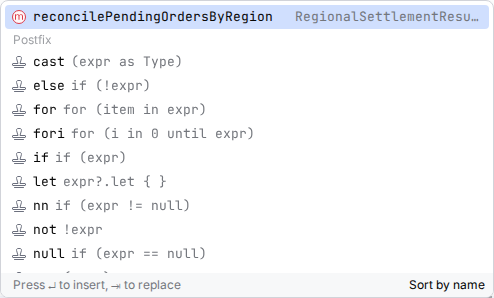
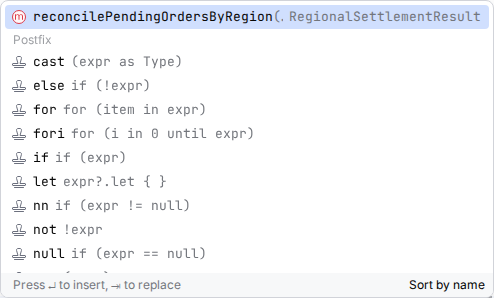
After expanding Java `fori`, the three occurrences of `i` were all editing selections, so arrow keys moved three carets. The shared snippet engine now selects only the first occurrence of each variable and mirrors edits to the others, for every live template and language and for LSP snippets with repeated placeholders; the Java-specific handling is gone.
Co-authored-by: jiejie1133 <[email protected]>
Clicking a link to a heading in another file (e.g. [§5.2](b.md#52-状态机)) in the Markdown preview opened the file at the top. The destination now opens at the heading, in Preview Only and split mode, also when the file wasn't open yet (the preview scrolls once it has rendered). Markdown file-type aliases are honoured and a later link click wins over a slower earlier one.
Co-authored-by: fun90 <[email protected]>
Lombok-generated members (@SuperBuilder, @Data) put one override/implemented marker per generated method on the annotation line, filling the gutter. Markers of the same kind on a line now collapse into one icon with a combined tooltip; clicking it opens the target chooser (a single target still opens directly). Applies to all four inheritance marker kinds.
Select Opened File could not reveal a class opened from a dependency JAR that used a Maven classifier and was absent from External Libraries. The document knew its exact archive, but the Project view only searches registered archive roots.
External Libraries now adds the exact archive referenced by the active library document, labels it with its Maven coordinate when available, and removes the temporary entry once the build model lists the same archive.
Co-authored-by: kradme <[email protected]>
Copy Path/Reference… built a different submenu per entry point: the project view and the editor caret chooser list the contributed copy items (features/vcs: Path From Repository Root, GitHub Link), while the editor tab menu and the External Libraries menu hand-wrote theirs and silently dropped every contribution. Both hand-written submenus now append the same `copyPath` menu group, so all four entry points agree — and future contributions appear everywhere at once.
Co-authored-by: muutot <[email protected]>
With **Settings › Editor › General › Editor Tabs › Enable preview tab** on, a single click on a file in the Project view now opens it in the preview tab, and the next single click reuses that tab. Before, the click did nothing. The cause was two switches that weren't connected. The Project view checked its own "Enable Preview Tab" view option, which was off by default and only reachable from the view's ⋮ menu. The Settings checkbox was a separate setting, `editor.tabs.previewTab`, which was only read when a preview tab was created.
IntelliJ IDEA documents these as two ways into one setting, so this PR makes them one. The Project view reads `editor.tabs.previewTab` for single click and for Autoscroll to Source. Its ⋮ › Behavior › Enable Preview Tab item and the `project.option.previewTab` action (the id is unchanged) now write that setting. The old view option is removed from the saved Project view options when they load.
What existing users will see:
- Defaults (Settings on, view option off): single click now opens a preview tab. This is the fix. The editor setting already defaulted to on, so users who never changed anything get single-click preview after this change.
- Both on: no change.
- Both off: no change.
Co-authored-by: bertyhell <[email protected]>
In the Project view, copy a keyword, press ⌘F, then ⌘V: the app reported "No files on the clipboard" and the search box stayed empty, instead of pasting the keyword the user had copied to search with.
A tree's speed search is not a text field — its query is built from printable keydowns. So `⌘V` never reached the query: the keymap dispatcher ran `project.paste` on the selected folder, and the paste event that followed bubbled to the Project view's clipboard fallback, which runs the same action again.
The shared `Tree` now claims `⌘V` while a search is active (as it already claims `⌫` since #3226) and takes the clipboard text into its query: pasted text is flattened onto one line and the search jumps to the nearest match. With the search closed, or with a clipboard that holds no text, the view's Paste runs exactly as before.
Every tree with a speed search gets this — the Project view, the Database view, the Services tree and the GitHub changes tree all render `src/ui/Tree.tsx`.
Co-authored-by: aconeshana <[email protected]>
Drag-selecting in a long Find in Files query (or any text field) and moving the pointer past the field's left or right edge didn't scroll the text, so you couldn't select past what's visible. IntelliJ IDEA does scroll. WebKitGTK extends the selection in this case but never scrolls the field to follow it. Arrow keys do scroll. Now, while a drag that started in the field is past one of its edges, the field moves the selection end and the scroll position itself, faster the further out the pointer is. Once the pointer is back inside, WebKit's own selection takes over again. Both `Input` and `SearchField` get this.
Co-authored-by: bertyhell <[email protected]>
The Code Vision row above a declaration (usage count, author) cut off the top or bottom of its text, most visibly for Chinese labels like "10 个用法" / "无用法". The row was a fixed `height: 16px` with `overflow: hidden`, while its text is the editor font size minus 1px. At larger editor fonts, or with CJK fallback fonts that ink below the Latin metrics (Microsoft YaHei, Noto Sans CJK), the glyphs didn't fit.
The row now has `min-height: 16px`, and its items use `line-height: normal`, so the row grows to the ascent and descent of the fonts actually used. At the default font a Latin-only row is still exactly 16px. The line-end hint (Code Vision kinds set to "right") has the same 1em box with `overflow: hidden`. It keeps its size and position but now clips only horizontally.
Co-authored-by: bertyhell <[email protected]>
A Git Log page costs a fixed ~15 ms in a repository with 248 refs (the 100k-commit fixture), even for a one-row page. Every page listed and peeled all refs twice (once for the decorations, once more for the view cache key via `log_refs`), at ~25 µs per ref. The decorations are now cached until `HEAD`, `packed-refs` or a directory under `refs/` changes, and the cache key uses a change counter instead of the full ref map. A warm page no longer reads any ref.
The cost scales with the number of refs, not commits: the audit's 10k/100k fixtures have 50/248 refs, which is why it looked proportional to the commit count. A repository with thousands of remote branches pays correspondingly more.
Co-authored-by: Mr0Bread <[email protected]>
With a User filter on a merge-heavy history, the first page of the Git Log fanned the top merge out into dozens of dashed lanes, and the graph column pushed the commit subjects to the right. It went back to one line only after every match was loaded. The cause: `pruneFilteredEdges` (the #2670 fix) only judges a filtered connection when its target is on the loaded page. With the first 300 rows of the issue's repository, the merge kept 43 connections, 42 of them to rows that weren't loaded yet.
Now, while another kept connection of the commit already leads below the page, a filtered connection to an unloaded target waits until that target loads, and is then judged exactly like before. If no kept connection leads below the page, one filtered connection stays, so a row never looks like the end of its history. This is a heuristic: a connection that turns out to be needed (two unrelated side branches, both below the page) appears once its target loads. The sibling-branch test pins that behaviour. An exact answer on the first page would need the backend projection (`Visibility::parents`) to drop ancestors that another projected parent already reaches. This PR doesn't touch Rust; that could be a follow-up.
Go to Parent now pages until every unpruned connection of the commit is loaded, as it did before, so a merge still offers all its parents.
Co-authored-by: bertyhell <[email protected]>
Closes#4112 (its remaining half: #4347 stopped the terminal sliding sideways while composing, the
candidate window still opened at the far right of pi's input box).
xterm anchors the IME candidate window on its hidden helper textarea, and keeps that textarea on the
terminal cursor — on every render, on `compositionstart` and again on each `compositionupdate`. A
program that paints its own caret leaves the terminal cursor elsewhere: pi asks for a column past the
right edge of its input box (`ESC[21;411H` in a 206-column terminal, which xterm clamps) while it
Co-authored-by: H-TWINKLE <[email protected]>
Claude Code can return an image from a tool call without including a Markdown image in its final reply. OpenIDEA discarded that image while normalizing and saving the tool result, so the conversation showed no preview.
Preserve inline tool images separately from truncated text and show them below the folded work summary. The existing image viewer opens the full preview; expanding the work does not duplicate it, and old conversations without an image field still load.
Co-authored-by: YannABC <[email protected]>
After a compaction the context meter kept the pre-compaction usage until the next request. compact_boundary now sets the usage to post_tokens; without it the driver asks Claude Code (get_context_usage).
Co-authored-by: bertyhell <[email protected]>
The **File mask** menu in Find in Files now lists every language file type present in the project, most common first, after the recently used masks. Before, `refreshProjectMasks` kept only the 5 most common types, so in a project with six (rs, md, json, toml, yml, properties) the least common one, `*.properties`, could not be picked. The menu already scrolls and stays inside the window, so a long list stays usable.
Co-authored-by: bertyhell <[email protected]>
Backspacing through a closing tag such as `</div>` also emptied the opening tag, leaving `<>`. The first Backspace removes `>`. The parser still reads `</div` as the element's close tag, so every later Backspace in the name counted as a rename and was mirrored. Linked tag editing now only pairs two tags that both still end in `>`. A tag missing its `>` is being deleted, so nothing is mirrored into it or out of it. The same applies to an opening tag deleted before its children, in all the HTML-based modes and in JSX/TSX. XML does not use linked tags (`LINKED_TAG_LANGUAGES` in `prefs.ts`).
Co-authored-by: bertyhell <[email protected]>
The New menu had no built-in template for `.svelte` files. Add **Svelte Component** for Vite and Node.js projects, including SvelteKit workspace members. The template accepts SvelteKit filenames such as `+page.svelte`.
Co-authored-by: shohruh-genius <[email protected]>
The Git Log graph-equivalence test compares layouts for eight option combinations, each with five fragment configurations. Running all 40 comparisons in one Vitest case exceeded the five-second timeout on shared Linux runners. Give each option combination its own test for histories with and without refs. Each case still compares the complete layout with the dense reference implementation for all five fragment configurations and the same 2,400 commits.
Co-authored-by: faysou <[email protected]>
The action-search test could time out before reaching its first search assertion when the runner delayed the second Shift press. Open Search Everywhere through the title-bar button for this test, then enter a query and run the matching action. The adjacent shortcut test exercises double Shift directly.
Co-authored-by: faysou <[email protected]>
The Project tree test moves the pointer diagonally toward the New submenu in ten steps. On a busy runner, the time spent delivering input and checking assertions can exceed the menu’s hover delay and close it mid-gesture. Use Playwright’s browser clock to advance 75 ms at each step and check that the submenu stays open through the final 350 ms pause.
Co-authored-by: faysou <[email protected]>
With auxiliary windows open (comparison, diff, etc. that share the project's documents), every backend event was serialised once per window, because `emit_to` serialises its payload on each call. For a large diagnostics event that is 2.3 MB (10k items) or 11.6 MB (50k items) of JSON built again for each window, on the thread that emits the event. `TauriSink` now serialises the event once and sends the same JSON string to each window with `emit_str_to`. The payload is the same `serde_json::to_string(&event)` that `emit_to` produced, so the frontend (`getCurrentWebviewWindow().listen` in `src/platform/ipc.ts`) receives exactly what it did before. Which windows get which events is unchanged.
Co-authored-by: Mr0Bread <[email protected]>
In Restricted Mode, the refresh after a watcher batch (`status_paths`) ignored its paths and answered with the full gitoxide status, which walks the whole tree to report one saved file. In a 100k-file repository that took about 87 ms against about 15 ms for a trusted project. It now runs `git status` with the pathspec, as a trusted project does.
The audit (row S4) blamed the extra `git config --null --list` process. That process is not the cause: the full `status()` never runs it (it runs `gitoxide`), and the old restricted `status_paths` did not run it either. The cause is the early return to the full status in `Repo::status_paths`, left from #3267, when the scoped read was in-process and `git` was not allowed. #3280 moved the scoped read to `git`, with the filter overrides the restricted fallback already used, but the restricted bypass stayed.
Co-authored-by: Mr0Bread <[email protected]>
The Windows Clippy job fails because the test reader `Counted` is compiled on Windows, where its only caller is excluded. The flooding-process test uses `awk` and already requires Unix. Apply the same condition to the reader and its `Read` implementation. The cross-platform queue shutdown test keeps its own reader.
Co-authored-by: faysou <[email protected]>
The per-directory watcher skips the contents of excluded directories. A watch on the parent can still report the directory itself, which macOS did for `node_modules`. The regression test now accepts that event while continuing to reject events for descendants.
Co-authored-by: faysou <[email protected]>
Update the transitive `cookie` dependency from 0.18.2 to 0.18.3. Cargo Deny reports the older release for possible nonce reuse when encrypting private cookies across a fork. The patched crate obtains those nonces from the operating system. [RustSec advisory](https://rustsec.org/advisories/RUSTSEC-2026-0594.html)
Co-authored-by: faysou <[email protected]>
A commit preview or a commit of selected changes can omit a same-size edit made on the same filesystem clock tick as the Git index. Git uses the index timestamp to decide when it must inspect the file contents. The temporary copy now preserves that timestamp so Git detects the edit.
Co-authored-by: faysou <[email protected]>
Show History (and Add to VCS / the ignore actions) took the editor's file when the shortcut ran right after clicking a Project view row: the row publishes its selection on mousedown, but tree focus is a separate DOM event, so projectViewFocus was still false. File actions now use the Project view selection while the tree owns the context (its lead is set and the editor has no focus), the same rule External Tools use (shared projectViewContextLead helper).
Co-authored-by: akshathayadav378-boop <[email protected]>
External Tools expanded $FilePath$ and the other file macros from the editor's file even while the Project view was the user's context. They now take the Project view's selected file while it is the context (no editor focus, not a virtual document); caret macros apply only when the editor shows that same file.
Co-authored-by: bertyhell <[email protected]>
Go to Hash/Branch/Tag reads refs from the repositories it searches (shown log tab, else the filtered ones, else every root) instead of an empty Repository filter, which offered only HEAD.
Move Statement on a case label in Go, JavaScript and Java moves the whole branch (stacked labels through its last line) past the neighbouring branch instead of only the label line.
In the Git Log Branches pane with several repositories, a branch every
repository has is listed once with no repository name. Hovering it now
lists each repository with the branch it tracks there.
The wheel now scrolls only the innermost scrollable container under the
pointer: a run of tool calls from its headers, a tool output from its text,
the conversation elsewhere. A nested container at its edge no longer hands
the rest of the gesture to the conversation, and a gesture stays with the
container it started in.
Opening or closing a section keeps its header where it was. Closing one near
the end leaves temporary room below the conversation that scrolling up or new
content takes back.
The Whole Task / Last Turn switch in the agent Changes pane was a full-width
segmented pill. It now uses the compact Tabs strip that tool window sub-views
use elsewhere.
Unified Diff shows original line numbers in the first column and modified line numbers in the second. Matching rows show both. Removed and inserted rows show the number for their own revision.
Line numbers stay beside the start of their rows when code wraps, and follow scrolling inside a large removed block. Matching rows keep their original numbers when empty lines are ignored. The column order also applies when the editable side is the Git index.
- Align the repository, checkout, branch, name, location and setup fields in one label-and-control grid. Use the standard dialog type size for labels and keep the worktree path preview beneath the Location field.
- Let the `.worktreeinclude` edit action wrap below its checkbox in narrow windows. With setup expanded, the standard dialog is about 118 logical pixels shorter, and the setup field fits without scrolling in a 440 × 520 window.
Limit the inline Find and Replace fields to three visible lines each. Longer text scrolls inside the fields, leaving more of the matched code on screen.
The Compose project dashboard listed only container chips, so resource usage meant opening each container, and the project's named volumes were only findable in the global Volumes group among anonymous hashes. It now shows a per-service table (status, CPU, memory, network and block I/O, PIDs) sampled with bounded concurrency and refreshed every 3 s without overlapping requests while the dashboard is visible (paused when the tool window or app is hidden; the container dashboard's stats use the same live sampling instead of a manual Refresh), plus a Volumes section with the project's named volumes that links to each Volume Overview and back.
Co-authored-by: dengliu <[email protected]>
Docker Compose containers carry their Compose files and service name but had no way back to the source. Jump to Source (F4 / Cmd+Down, context menu, docker.jumpToSource) on a Compose container opens the Compose file at its service declaration and on a Compose project at the services section; the container dashboard's Command row has a button that lands on the service's command value (else entrypoint, across inline values, block scalars and sequences, later override files taking precedence), and the Compose project dashboard lists its Compose files as links. Missing or unreadable files show a notification.
Co-authored-by: dengliu <[email protected]>
Property rows in the Docker dashboards aligned items on their baseline; an inline-block value's baseline is its last line, so a wrapped multi-line command painted its earlier lines upward over the rows above it. Rows now align at start with a minmax(0, 1fr) value column, and container/image commands render as a single-line preview (newline markers, copy button, no auto-ellipsis tooltip via data-no-tooltip) that expands into a bounded scrollable block with Entrypoint and Command arguments shown separately.
Co-authored-by: dengliu <[email protected]>
Find in Files and Replace in Files show up to three lines in each query field. Longer text scrolls within its field. Closer spacing between the search and replacement fields gives matches and the source preview more room in short windows.
Git > Commit… from the Project view ignored the selection. It now passes the selected paths, and the commit interface (modal or not) opens with only the changes at or below them checked: tracked and unversioned files included, conflicts left out, the rest of the working tree still listed.
Co-authored-by: kradme <[email protected]>
When the editor font's glyph box is taller than the line height (e.g. 18px font at 18px line height), Find matches, occurrence highlights, in-place rename spans, matched brackets, search results and plugin range marks painted the full inline box into the rows above and below. They now share a 1lh-capped background (and a 1px-framed variant), as selection marks already were, keeping background-color / outline fallbacks for Safari before 16.4.
Co-authored-by: dengliu <[email protected]>
Every streamed file triggered a Find tool window update that rebuilt the whole result tree and its lookup tables, so a search matching thousands of files grew quadratically and froze the IDE. The session now publishes streamed results at most every 50 ms (the first file still at once), and the tool window builds its tree incrementally: only new files get nodes, merged into the sorted result; a list that is not an extension of the previous one is rebuilt.
Co-authored-by: Mr0Bread <[email protected]>
The Memory Instances tree gives field values room beside long names. The panel title uses the workbench font. Field names and value previews that run out of space use ellipses and show the full text on hover, and the row's Show Referrers button stays in reach.
WebKit skips clearing the selection highlight inside a subtree whose rendering is skipped, so a kept-alive tab (an Agent conversation) hidden with content-visibility kept a stale highlight after switching back. Hiding a kept tab now clears a selection inside it while keeping it rendered (invisibly) for one frame via a shared useSelectionVisibility hook, and the agent stream keeps data-selection independent of visibility so off-screen rows clear too.
Co-authored-by: dengliu <[email protected]>
Typing and Enter in a large TypeScript file got slower with its size. @lezer/common 1.5.6 gives each repeat group the look-ahead in effect where it ends, so groups above an edit stay reusable and an edit no longer re-parses the file up to the caret; decoratorRanges scans only subtrees not already known to hold no decorator; and Enter's one-line string check parses and highlights only the caret's line instead of the whole document.
Co-authored-by: Mr0Bread <[email protected]>
jdtls returns no semantic tokens for files outside any Java project (a failed Maven import) and sends no workspace/semanticTokens/refresh once a later import takes them in, so open editors stayed uncoloured until edited or reopened. On ProjectStatus the IDE now asks open editors to fetch semantic tokens again, after generated Maven sources are attached. Refs #5301.
Co-authored-by: wildcatDownstairs <[email protected]>
With a TypeScript 7 workspace the native server replaced vtsls before the Vue branch could inject @vue/typescript-plugin, so .vue files lost TypeScript support (Go to Declaration on the 'vue' import failed). The native swap now skips vtsls in a Vue project whose Vue language server is installed; typescript-language-server still takes the native route. Closes#4876.
Co-authored-by: qtvbwfn <[email protected]>
The formatter lookup checked the project's node_modules and PATH but never a tool's managed virtualenv, so a Ruff installed from the tools list was reported as not installed by Reformat with Ruff. It now looks there before PATH, which also covers Black and Ruff-based Optimize Imports. Closes#5371.
Co-authored-by: wildcatDownstairs <[email protected]>
Make the Coverage table's Line and Branch columns adjustable. The divider next to Element gives space to the file tree, and the divider between the metrics redistributes space between them. Each column shows the full covered/total count when it has room. Compact columns keep the percentage visible and show the full count on hover.
Drag a divider or focus it and use the arrow keys. Double-click a divider to restore the default widths. The table remembers widths across reloads and fits them to smaller docks.
Project search read a non-UTF-8 file whole and decoded it as one String, and in the comments/strings modes read every file whole to find its comments, even ones far above what the parser takes. Non-UTF-8 files now stream through an incremental decoder (ide_vfs::decode_stream: a detection pass with the same result as decode_text, then 64 KiB chunks), and files too large for the parser are not read for comments at all. Results, binary detection, the match limit and cancellation are unchanged.
Co-authored-by: Mr0Bread <[email protected]>
computeGraph kept its lanes in a dense array indexed by layout number, which grows with the log, and scanned every slot for each row, making each further page of Git Log quadratic in the loaded commits. Lanes are now kept sparsely so a row costs its live lanes, with identical output (checked against a reference implementation), and the graph is laid out again only when an option that shapes it changes.
Co-authored-by: Mr0Bread <[email protected]>
The run and build runners passed every pipe chunk or line to their consumer through an unbounded channel, so a process printing faster than the console drained piled its whole output up in memory (hundreds of MB for a few million lines). Both queues are now bounded (128 x 16 KiB chunks for runs, 64 lines for builds): the reader waits, the pipe fills and the child blocks on its write, as on a terminal. Nothing is dropped, and a reader blocked on a full queue ends once the consumer is gone.
Co-authored-by: Mr0Bread <[email protected]>
planRefresh and dropListings compared every loaded folder with every removed path or ignore-rule root. They now look up each folder and its ancestors in a set (insideAnyOf), with the same semantics as isSameOrInside.
Co-authored-by: Mr0Bread <[email protected]>
Each diagnostics event copied the whole problems map, so a storm of per-file events cost files^2 copies. The store now updates its data in place and publishes a new facade per change, so subscribers still see a new identity exactly when the content changed; the MCP problems report keeps its own copy to diff against, and profiledProblems builds its map without per-file copies.
Co-authored-by: Mr0Bread <[email protected]>
spring_route_sources (walks the project tree), agent_providers (reads the registry and custom agent files), agent_entries (serialises the whole conversation), plugin_secrets and plugin_set_secret (OS keychain) were sync commands that Tauri runs on the main thread. They are now async, all but agent_entries on the blocking pool, and blocking_commands.rs keeps them there.
Co-authored-by: Mr0Bread <[email protected]>
Each folder reloaded for an fs event copied the listings map and notified the store, so the mounted view rebuilt the whole tree model once per folder, and the reads were unbounded. One event now reads its folders at most eight at a time and applies all listings in one store update; a folder dropped while the batch was reading stays dropped.
Co-authored-by: Mr0Bread <[email protected]>
The usages code lens re-asked the language server for every visible declaration on every fsChanged event, even ones carrying only images or logs. It now recounts only when a changed path can be a file a language server analyses (by the language registry and Settings > File Types), and still recounts when in doubt: unloaded languages or paths without an extension.
Co-authored-by: Mr0Bread <[email protected]>
LocalHistory::note_removed compared every snapshot entry with every removed path, stalling the watcher thread (and saves waiting on the history lock) for seconds on large deletions. Entries are now matched by looking up their path and its ancestors in a set of the removed paths.
Co-authored-by: Mr0Bread <[email protected]>
A removed folder arrives with every path below it in one watcher batch; each child that was already gone was looked up as a folder and triggered another full scan of the indexed paths under the write lock, so the cost was removed paths x indexed files. Removed paths that are not indexed files are now collected and everything below them is removed in a single scan.
Co-authored-by: Mr0Bread <[email protected]>
Send to Agent appended an @ mention for every target even when the message already held the same file and lines, leaving duplicate chips and file entries. Mentions already in the message are skipped (a different line range is still its own reference), the draft keeps one file entry per path, and the composer is still shown when nothing new was added. Part of #5296.
Co-authored-by: wildcatDownstairs <[email protected]>
The 500 ms notification timer did not cover a change-list read already running, so slow reads overlapped and an older snapshot could land last. Refreshes for one task now share one active read and one trailing read; results from an old project, a removed task or an evicted cache are dropped, and other tasks refresh independently. Refs #5335.
Co-authored-by: dengliu <[email protected]>
A turn could take the next queued message before its row disappeared, so Send now / Edit / Remove on it failed with "already sent" once per click. The dequeue is now published as soon as the turn takes the message; a stale queue action returns OutOfSync after re-publishing the current queue, which the row ignores, and only the pending row is disabled. A missing task or other failure still shows an error.
Co-authored-by: dengliu <[email protected]>
A flat change-list request with known attribution now diffs only the nested checkouts that own the task's paths (deleted files included), resolves the nested layout once, keeps the final attribution filter, and falls back to the full scan when attribution is unknown. A task with no touched paths reads nothing. Refs #5335.
Co-authored-by: dengliu <[email protected]>
Flat, grouped and last-turn change-list reads now share four slots per agent manager, acquired before taking a blocking worker and held until the Git work ends even if the caller goes away. Mutations and other VCS work are not limited. Refs #5335.
Co-authored-by: dengliu <[email protected]>
project_workspace_members and project_workspace_member_set ran synchronously on the main thread; each attached root's for_project() re-parses both settings layers and validates the merge against Settings, which overflowed the main thread's stack from a WebView2 callback in a debug build on Windows (STATUS_STACK_OVERFLOW on project open). Both now use desktop_body = spawn with thin desktop bodies, and blocking_commands.rs keeps them off the main thread.
Co-authored-by: muutot <[email protected]>
resume, step and step_in_target emitted a synthetic Continued after the DAP reply even when the adapter's next stopped event had already landed (php-debug/Xdebug on fast steps), leaving the Debug window showing running while paused. The reply now ends prior stops and emits Continued under the suspension lock only when a prior stop was ended and no newer stop superseded it; stopped and continued adapter events emit under the same lock so a synthetic Continued can never follow a newer Stopped.
Co-authored-by: wildcatDownstairs <[email protected]>
- Open the resizable text editor from its Git Log filter. It follows the visible Paths or More Filters control as the window narrows.
- Give paths a code-font editing area with soft wrapping. Keep the one-path-per-line hint and apply controls beneath it.
- Enter inserts a newline. The platform's primary modifier with Enter applies the filter, and Escape or clicking outside discards the draft.
Debug tabs were ordered by the backend's increasing session id, so Rerun or a replaced finished tab jumped to the end. Each tab now has a stable local slot that a rerun, a prepared start, a pinned tab's rerun and a browser page inherit; a new session reuses a stopped tab by configuration id, then name, then the selected one. Child sessions are ordered by their root's slot so they stay next to their parent.
Co-authored-by: kradme <[email protected]>
The import_roots helper in maven_external polled the background jdtls Maven re-import for 5s, which a loaded CI runner can exceed. Raise the deadline to 15s.
Co-authored-by: charli117 <[email protected]>
java_sharing_cancels_a_retiring_initialize_before_starting_its_replacement checked old.is_closed() once right after reconfigure() returned, racing the asynchronous close on a loaded runner. Wait for the close before releasing the initialize response; the ordering guarantee still holds because the gate stays shut until then.
Co-authored-by: charli117 <[email protected]>
log_lines_arrive_in_order_as_few_batches slept 80ms and assumed the 30ms flusher had emitted the 1000-line burst by then; on a loaded runner the flusher is starved and the trailing line folds into the burst. Wait until every line of the burst has been flushed before sending the trailing one.
Co-authored-by: charli117 <[email protected]>
- Keep the shape and paging controls above the table and put the full-width slice expression below it, above Close. The grid scrolls between the controls.
- Open at 700 × 500 when there is room. Give short tables the available width, use workbench typography and center the row and column headers.
- Update the title when a slice is submitted and show expression errors below the field.
- Start with equal space for the results tree and source preview. Each orientation restores its saved split and starts at 50/50 when it has no saved split.
- Follow the editor's line height and size the preview gutter for the document's longest line number. Keep the selected line visible when the panel height or line metrics change.
- Align the tab placement and close button selectors in the Appearance form.
- Put the row and overflow choices on separate lines with the overflow options nested under the single-row choice. The two groups retain their own selections and support independent arrow-key navigation.
- Stack each set of closing policy choices below its heading, so the order stays consistent as the window narrows.
- Put the language picker in the Search template header and keep each label next to its template.
- Give both templates 150 px of editing space in a standard window. Tighten the editors on shorter screens and keep the dialog footer accessible.
- Use the configured editor font, size, and line height in both templates.
* ci: add Docker Compose setup for persistent self-hosted Actions runners
* ci: wire Linux Rust CI to hardened self-hosted runners under scripts/
* ci: gate self-hosted runners behind a variable and use the jammy image
- Pin the Ubuntu 22.04 runner image; the untagged-distro image is 20.04 and
cannot install libwebkit2gtk-4.1-dev.
- Route the Linux Rust job to self-hosted runners only while the
SELFHOSTED_RUNNERS repository variable is 'true', so CI keeps working when
no runner is online.
- On self-hosted runners, enable incremental compilation and clear the
persistent target dir once it exceeds 40 GB.
- README: document the variable, passwordless sudo inside the container and
the target dir shared between main and same-repo branches.
---------
Co-authored-by: l0ng-ai <[email protected]>
Edit Macros starts with equal widths for the macro list and recorded steps. The keyboard-resizable divider remembers its position. Rename and Delete sit in the toolbar above the macro list, and the dialog opens with focus on the list. Recorded steps use the UI font and wrap within their pane.
The shared analysis scope picker aligns directory and custom scope controls with their radio choices. At narrow widths each control sits directly below its choice. Controls stay visible when inactive, and switching the radio selection keeps both values.
The Git Log settings layout test read two checkbox positions one after the other while the Settings dialog was still opening, so it failed depending on timing. It now polls both positions together until they match.
The Debug Memory toolbar uses the available space for class search and places the Changed only filter in View Options at the right edge. The button shows when the filter is active. The search field shows a clear button when a query is present.
Maven plugin rows use the plugin prefix as the primary label and show the coordinates in muted text. The coordinates truncate independently in narrow docks and can be read in full from their tooltip.
Settings → Version Control → Log now groups the display and column checkboxes under titled separators. Both groups use the same checkbox alignment, row spacing, and UI font size, so the controls are easier to scan at narrow window widths.
Gradle task rows give the available space beside the icon to the task name. The full description appears in the row tooltip, where assistive technology can also read it.
- Give the line separator picker a standard menu heading. List Windows, Unix and macOS, and classic Mac OS from top to bottom.
- Use the localized platform names and escaped newline sequences in the menu. The status bar still shows the abbreviation and the menu checks the current format.
- Put read and write filters alongside the other actions in Show Usages and in the Find Usages tool window. Both results areas use the space previously occupied by a separate filter row.
- Keep the two buttons together as the popup narrows. The side toolbar can scroll when the tool window is short.
- Put the pin in a pinned editor tab's action slot so the filename has more room. The pin follows the left or right placement and can unpin the tab directly.
- Use the same Unpin action in Hidden Editor Tabs. A modified pinned tab shows its unsaved marker beside the pin.
Multiline run configuration fields now keep the Expand button inside the field. The larger editor opens next to the field so the configuration stays in view. It can be resized, scrolls long arguments horizontally, and applies edits through OK or Ctrl/⌘+Enter.
- Give Search Everywhere's Text results a separate column for the line number. Long filenames truncate within the existing metadata width, leaving the same amount of space for the highlighted code snippet.
- Use tabular digits at the trailing edge and show the full relative path on hover.
- Move the top-level disclosure arrows away from the sidebar edge and reduce each nested level from 20 px to 16 px.
- Keep leaf and expandable labels aligned at the same depth. The third-level result has 4 px more room in the 160 px sidebar shown below.
Git annotation details size themselves to the commit text, so short messages cover less of the editor. Long author details and messages wrap within the available width. The revision and its metadata share the tooltip's UI font, and the full revision remains clickable.
The completion footer keeps its shortcut hint and sorting control on one line. In narrow editor splits the hint shortens first, and hovering reveals its full text. The compact footer takes up less vertical space in the editor.
Add New Configuration keeps the title and search field above a scrollable list. The picker keeps its width while filtering with the standard 16 px icons and shows more types when the window has room. After filtering, Enter opens the configuration type highlighted in the list, including types under a group heading.
The source preview in Find in Files and Replace in Files keeps the filename prominent and leaves the end of its containing path visible. The middle of a long directory shortens to fit, and hovering over the caption reveals the full project-relative path.
The Build tree shortens long directory hints first so there is room for the filename and diagnostic counts. The build duration uses smaller, tabular text at the trailing edge. Hovering over a file row reveals its full path.
Notification balloons reserve space for Dismiss in the title row. The body and action rows extend underneath it, giving paths and action labels more room to wrap in narrow windows. The cards use the standard UI text size and spacing.
The three-way staging diff displays the filename in the index heading. When a version has a different path, its heading shows that filename too. The headings use the standard workbench text size, and hovering over a filename heading reveals its full path.
The Commit staging tree gives group headings more weight so the staged, unstaged, and unversioned sections are easy to scan. The inline Stage or Unstage action appears on the current selected row and on hover, so a multi-selection shows which row the inline action applies to.
Git Log commit details now show branches and tags in separate groups. Reference names use the same size as the surrounding metadata, and each group wraps within the details pane.
Size the floating terminal find bar to its controls. Keep the match count beside the previous and next buttons, and move the controls below the query in narrow docks so the full first row is available for typing.
Use the standard bold UI font for compact debugger value hints. Put the variable icon and expand control beside the summary so wrapped values align with their first line. Size the hint to the available editor width, including when a dock reduces the space or the window is resized.
Show before-launch tasks as compact tags numbered in execution order. Tags wrap within the configuration form, and each task has a remove button and a menu for moving it up or down. Shell commands stay editable in place.
Place commit message history just above the editor and use the same font settings as the draft. Show the beginning of the body in each row so messages with the same subject are distinguishable. Keep seven rows visible when space allows and scroll through the rest.
Give commit check results their own scroll area. The status icon and retry action stay in place, and the results fit the space above the commit buttons. Use the standard 13 px UI type and a 4 px gap between results.
The Amend chooser sizes to its contents within the window, up to about 520 px. Long subjects get more room and the full text on hover. The latest commit row gives its action label more weight and leaves the subject in secondary text. The list still shows five rows before scrolling.
Commit Options gives the author and date fields a shared label column when there is room. A narrow options pane puts the labels above the controls and moves the clear button below the date when needed. In the 650 px desktop window, the author input grew from 104 px to 157 px, and the date input grew from 133 px to 157 px. The native date control can still clip part of the time display at that width.
The Git Log commit chooser now gives its results the full dialog width and sizes the list to the number of candidates. Previously the list could be clipped inside a fixed-height area. Each row separates the subject from the hash, author and timestamp. The search field keeps keyboard focus while the arrow keys move the selection.
Project tree Rename places the name prompt directly above the input and keeps the two search options together below it. The options share one row when they fit and wrap at the dialog width. This gives the name and any validation message a clear place in the form.
Run and Debug menus keep the end of a long configuration name visible beside the shortcut. When the label runs out of room, the menu truncates the middle so names with the same prefix remain distinguishable. Hovering still shows the full name.
The editor Find bar and the Find and Replace in Files dialog now share one history menu. The menu can grow up to 200 px wider than its field, within the window, and the text uses the space previously reserved for icons. The heading stays visible as the list scrolls. Multi-line entries show a line-break marker and restore the original text when selected.
Replace All puts the affected count above separate, scrollable values for the search text and replacement. Both values stay available in full, and an empty replacement is labeled explicitly. The Replace in Files popup and the Find tool window use the same confirmation.
The Scopes dialog in Find in Files keeps its list scrollable beside the Name and Pattern fields. At narrow widths the editor moves below the list, giving the pattern more room. Long names show an ellipsis and a tooltip, and the selected scope stays visible when a row is added.
The image viewer groups the image and zoom controls at the start of a compact toolbar. Its dimensions, file size, and zoom appear at the other end in the standard UI text size. In narrow splits the details wrap onto another row, leaving the SVG Open as Text action readable on one line.
The editor color picker uses a shorter color field and a tighter control row. Numeric inputs use the UI text size, recent colors wrap with consistent spacing, and the action buttons stay visible when the popup has to scroll.
The local changes review shows the filename first and uses smaller, muted text for its parent folder. This keeps filenames visible when directories are long. The warning and change preservation hint sit together above the file list. Force Checkout sits on the left, with Smart Checkout and cancellation on the right.
Right-click **More Tool Windows** (`…`) and choose **Move to Right** or **Move to Left**. The workbench previously placed this button on the left unconditionally. It now starts on the left, remembers your choice across restarts, and opens the list toward the editor from either edge.
The test results export dialog puts HTML and XML on separate rows and gives the file name and folder separate fields. The file name is selected on open, so it can be replaced without retyping the directory. Pasting a full path and choosing a destination with Browse still work.
The gutter breakpoint popup puts the file and line in a fixed header and keeps the action buttons visible while the fields scroll. The popup gives the condition and hit-count fields more room. Long filenames shorten in the header while the line number stays visible. The same popup layout covers method breakpoints and field watchpoints.
The shortcut recorder puts the action name and its category in the dialog body and uses a full-width first field. The optional second stroke stays beside its checkbox. Conflicting actions use two-line rows that keep the action name, category and binding readable in a narrow window.
external_maven_link_persists_reloads_and_unlink_keeps_files failed on the macOS runner: setting languages.java.maven.linkedProjects refreshes the language server's import roots on a blocking task, and the test read them right after build_model returned. It now waits up to 5 s for them to change.
The two Language smoke workflow tests compute the repo-wide import closure and crate tree. On a CI runner running the whole suite they took longer than vitest's default 5 s and failed the Frontend job on main.
Co-authored-by: charli117 <[email protected]>
url 2.5.8 overflows the stack in Url::origin() on nested blob: URLs (RUSTSEC-2026-0592), which failed Cargo deny on main. 2.5.9 fixes it; form_urlencoded moves to 1.2.3 with it. The rest of the lockfile stays as on main.
Co-authored-by: charli117 <[email protected]>
The Git Log path chooser now uses a compact, resizable dialog with a framed file tree. Files and folders have icons and use the standard workbench text size. Long names shorten inside their rows and show the full name on hover. The tree and the checked paths list scroll independently, keeping both reachable in a short window.
The Variables pane now keeps Add to Watches and the history arrow at the trailing edge of the evaluation field. The field uses the configured editor font family at up to the workbench text size, and its short placeholder fits narrow docks. The history menu matches the field width and uses the existing Evaluate history for single-line expressions.
src/editor/api.ts re-exported disambiguateTitles, which brought src/editor/core/model/tabTitles.ts into what the frontend language smoke loads without it being in that workflow's paths, so scripts/smoke-paths.test.ts failed on main. The Show Usages popup now imports it from its module, as EditorArea does.
Improve OpenIDEA's Git workflows across commit and staging, branch and remote operations, merge and rebase, Git Log and signing, worktrees, stash and shelf, patch application, and clone settings. Adds a one-click stash for tracked changes across Git roots and lets users open a worktree branch's associated GitHub review from its context menu. Cloning now includes submodules by default (Settings › Version Control › Git, can be turned off).
Repository entry points added here run in each repository's execution scope, so they use the project's own git executable.
Editor line numbers use a font 1 px smaller than the code and a more compact column. The gutter grows with the editor font and with longer line numbers. Sticky Lines uses the same number metrics, and a breakpoint sits at the trailing edge of the number column at the full editor font size.
Selecting new text in an agent conversation left the previous selection highlighted on messages that had been scrolled out of view, so it looked like several selections at once while copying only the new one. Rows that were laid out once skip rendering off screen (`content-visibility: auto`), and WebKit doesn't clear the selection highlight of skipped rows. While the conversation holds a selection, every row now renders (`data-selection` on the stream), until the frame after the selection is cleared, when WebKit applies the change; then off-screen rows skip rendering again.
Find Usages now uses the result tree's font for both line numbers and snippets. Line numbers start at the same indent and take only the width of their digits, with a 4 px gap before the snippet. This brings short line numbers closer to their code and gives the snippet more room on narrow panes.
Rename… (db.rename, Shift+F6) did nothing on a database or schema node: canRename accepted only tables, columns, views and PostgreSQL indexes, and database nodes map to no schema object.
Databases of a server that creates them (PostgreSQL, SQL Server) now rename with ALTER DATABASE after the IDE closes its sessions on them; the connected database and read-only sources keep Rename disabled, as Drop does. Schemas rename with ALTER SCHEMA on PostgreSQL and Snowflake. Both use the rename dialog with its SQL preview and refresh the tree.
Fixes#5205
A new npm tool window on the right lists the scripts of every package.json in the project (root, workspace members, detected module roots and any other package.json the index knows outside node_modules), grouped by package. Double-click runs a script; the context menu offers Run / Debug through the same path as the package.json gutter, reusing a matching run configuration or creating a temporary one. The window appears only while the project has scripts and refreshes when a package.json changes or indexing finishes. The editor context menu on a package.json script line also offers Run / Debug for that script.
Co-authored-by: lifeir <[email protected]>
Search Everywhere reserves room for action names alongside shortcuts and categories. Shortcut text is smaller and semibold. Very long key sequences and categories can shorten with an ellipsis, and hovering shows their full text.
Settings › Version Control › Git › Path to Git executable can be set per project, but the value lived in one process-wide variable that each trusted window overwrote before running git. Two windows running git at once could start a command of one project with the other's executable, and a relative value then resolved inside the wrong repository.
Each project's repositories now carry its executable on the same per-thread scope that already carries their trust. Work that opens repositories of its own (agent worktrees and snapshots, gh pull requests, plugin repository access, Create Git Repository…) runs with the project's value. The process-wide value is only the global settings' one, used for git without a project (clone, init without a project).
Co-authored-by: ntbang0901 <[email protected]>
Long Git Log filter values now end in an ellipsis, with the full value available on hover. A tighter width in compact commit panes keeps the active filter and its clear button visible at more window sizes.
CSS, SCSS and Less files get Stylelint diagnostics from the Stylelint language server, installed on demand like the other tools. A project's Stylelint config is picked up as is, a Fix Stylelint Problems action applies the server's fixes, and the built-in CSS diagnostics step aside for rules Stylelint covers.
Closes#5156
Co-authored-by: wildcatDownstairs <[email protected]>
Alt+Enter on a throw statement or a catch parameter offers to create, enable or disable a Java exception breakpoint for that exception type. The type is resolved by the new openidea.java.exceptionType command in the java-usages bundle (1.17.0), and intention providers can now be asynchronous.
Co-authored-by: ntbang0901 <[email protected]>
Keep a debugger variable's icon, name and equals sign anchored when Set Value opens. The input fits the tree row, and an error uses a limited share of the value area so the field remains usable in a narrow pane.
Keep the shortcut hint beside Open in Find Window and keep Replace All beside the current selection action when the popup wraps. A separator and a smaller keyboard hint give the footer its own visual hierarchy. The popup handles its advertised shortcut when either search field has focus.
Expanded output has a collapse control beside its row in the Run console gutter. It stays at the left edge while long output scrolls horizontally. A fold at the start of the buffer keeps its control after expansion, and activating a focused fold control leaves process input alone.
Give Git Log commit subjects room beside long reference labels. Compact References View keeps labels within about a third of the available text column, with the full reference on hover. References in the log use the small UI font and the layout works on either side of the subject.
Same-name editor tabs show the distinguishing directory before the filename. In a narrow split, the directory gives up space first and the filename stays intact when it fits. The Hidden Tabs picker uses the same path label.
Keep elapsed time beside the test counts in the Run window at the same text size. The summary keeps its Running label when the first test has started and no results have arrived yet. A thin line below the summary shows the current state alongside the icon and counts.
Keep debugger values readable beside long runtime types. The row reserves space for a value preview based on its length, so short values leave more room for names. A truncated type can still be read on hover, and the full type appears when the pane has room.
Separate the filename from its directory in workspace refactoring previews. This gives same-named files distinct locations and frees space for rename targets and occurrence counts. Hovering a file or a rename target shows its full path.
Add a muted directory caption beside each filename that appears in more than one file in Show Usages. Identical filenames, line numbers and snippets can otherwise make two results indistinguishable until selected. The popup uses the same directory labels as editor tabs, including a longer suffix when directory names repeat at different depths.
Give the selected commit's subject a stronger weight and separate it from the body in the Push dialog. The preview uses the editor's font settings for the message and compact text for the revision, author and date, matching the message hierarchy in Git Log.
Keep the configuration name and project-file checkbox visible above the scrolling options in Run/Debug Configurations. Long forms previously scrolled these controls out of view, so editing the name or changing where a configuration is saved meant returning to the top.
Recent Locations now shows the filename once, with a symbol breadcrumb or its parent directory beside it. Directory captions distinguish entries with the same filename, and hovering over a caption reveals the full project-relative path.
Separate quick fixes from other actions in the Intentions popup with a divider. The divider is skipped during keyboard navigation and disappears when filtering leaves a single group. The popup keeps the chosen action selected when more results arrive from the language server.
Keep filenames visible in side-by-side revision headings. Long directories elide before the filename, and the title tooltip shows the complete path and revision. Revision paths use the standard 13 px UI text size.
Keep Rerun and Stop together and give narrow Run docks more room for output. When the toolbar gets narrow, Scroll to End and Soft-Wrap move into More Actions and keep their checked states. The same menu opens the current run configuration, and a wider panel shows the console toggles on the toolbar.
Give line numbers their own space at the right edge of Find in Files and Replace in Files results. Long file labels can still fit with an ellipsis, and hovering reveals the full relative path. Consecutive hits in the same file use quieter filename text so the line numbers are easier to scan.
Group a line breakpoint's logging controls under Actions in the Breakpoints dialog and gutter popup. The dialog includes Remove once hit in the same group. The gutter popup uses the standard 13 px text size for the condition and hit count labels.
Add to .gitignore, Add to .git/info/exclude and Show History for File took the active editor's file even when the shortcut was pressed in the Project view. Like Add to VCS they now take the Project view's selection while it has focus and the open file otherwise.
Pressing Add to VCS (Option+Cmd+A) with a folder selected in the Project view reported "Nothing to add" instead of staging the unversioned files in it: the action resolved its targets from the active editor's file only. While the Project view has focus it now takes the Project view's selection; from the editor it still adds the open file.
Co-authored-by: aevioni <[email protected]>
Gradle's Eclipse model, which jdtls imports a Gradle build through, leaves out project dependencies a source set only compiles against (compileOnly / testCompileOnly(project(":a"))), so their classes showed as unresolved although Gradle compiled them. jdtls's Gradle import now runs an init script that adds every project on the main and test compile classpaths, keeping test-only ones marked as test code.
On macOS, Buildship stores a build's arguments joined by spaces and splits them again, and jdtls passes its own init scripts from its configuration area under Application Support, so every import that set a Gradle JDK, user home or argument failed ("The specified initialization script '.../Application' does not exist"). A jdtls install under a path with spaces now gets a configuration area in the user's cache directory, and our init script goes to the first directory without spaces.
Fixes#5090
The custom swatch of Settings > Appearance > Accent color now opens the editor's colour picker (opaque: RGB and HEX fields, recent colours, eyedropper where available) instead of a native colour input and hex field. The new value is staged and saved with Settings Apply.
The picker moves from the color-preview feature to src/ui so both features use the same component.
Co-authored-by: laot7490 <[email protected]>
Settings > Editor > Color Scheme > Diff & Merge now previews the colours in a three-pane merge view (left / result / right) painted with the same CodeMirror diff decorations as a real merge, including a folded unchanged fragment with the wave separator. Clicking a coloured line selects its attribute.
The preview is a mergeSchemePreview editor kind registered from the VCS settings pages, so it also works in the standalone Settings window, which never activates the workbench diff viewer, and the settings feature does not import the VCS feature.
Co-authored-by: muutot <[email protected]>
Adds Biome as a language server (lint diagnostics and code actions) and as a formatter for CSS, GraphQL, JavaScript, TypeScript (and JSX), JSON and JSONC, with a Languages & Frameworks > Biome settings page (path, provider, run on save, enabled languages).
Biome formats instead of Prettier and oxfmt below a biome.json / biome.jsonc or a Biome installation, unless the nearest configuration sets formatter.enabled to false, in which case Prettier keeps formatting. Resolved conflicts with the Tailwind CSS language server: both servers are listed in the language definitions, registry tests and docs.
Co-authored-by: wildcatDownstairs <[email protected]>
Typeset equations with MathJax before painting the Markdown preview.
Load MathJax on demand, preserve accessible MathML, and fall back
to KaTeX for unsupported equations.
Runs @tailwindcss/language-server next to the language's own servers for HTML, CSS, JS/JSX, TS/TSX, Vue, Svelte and Astro, only below a tailwind.config.* (v3) or a package.json listing tailwindcss in dependencies or devDependencies (v4), with one-click install like the ESLint and Angular servers. JSON root markers (package.json#…) now match a key with any non-null value, not only objects. Adds fixtures/tailwind-app and an ignored real-server test.
Co-authored-by: wildcatDownstairs <[email protected]>
A window whose project moves to another backend process (a remote reconnect, or a new openidea-server in the smoke tests) sees session ids numbered from 1 again. ownSession checked the ids of forgotten sessions before looking for a known parent, so a new child's started event reusing such an id was dropped, along with every later event of that child: the Debug tool window never showed the pause. started is a session's first event and can't be a late event of a forgotten session, so it no longer stops there; a child is still adopted only under a session of this window, and other late events of forgotten ids stay ignored.
Co-authored-by: wildcatDownstairs <[email protected]>
#5173 gave every JS file in test/ gutter targets and #5169 made all kind-node test configurations bases for gutter runs, so Jest/Vitest projects gained run icons in test/ helpers and imported npx jest configurations started running gutter targets. test/ now counts only in projects with a Mocha or node --test configuration, and only Playwright's node configurations are gutter bases.
Co-authored-by: wildcatDownstairs <[email protected]>
Add to Git stages a new file as it was created, usually empty; edits afterwards leave it partially staged, and Commit included partially staged files with only their staged part, so the first commit held the empty file and the content needed a second commit. A partially staged file whose staged side is an addition is now included whole by default (also when committing selected files) and loses the partial badge; other partially staged files keep committing their staged part.
Fixes#5189
Compact mode now also steps the combo box label padding (9/6 → 6/6, ComboBox.padding.compact) and radius (4px → 2px, ComboBox.arc.compact), and the editor tab pill's inline padding (8px → 6px, EditorTabs.tabInsets.compact), through new --combo-pad-start/end, --radius-combo and --tab-pad-x tokens. Toolbar and tool window stripe button radii stay at 6px → 4px (MainToolbar.Button.arc and Button.ToolWindow.arc 12 → 8).
Co-authored-by: muutot <[email protected]>
Launch snapshots are reused while a module's sources keep their fingerprint. Build › Rebuild Project cleaned and recompiled target/classes but left the launch records untouched, so the next run kept loading a snapshot that could hold classes the clean removed (a class compiled under its old package), and Spring found two beans with the same name.
A Rebuild now clears the fingerprint of every launch record in the project, so the next launch copies the rebuilt outputs; the records stay, so those modules keep delegating to Maven.
Fixes#5179
Adds `pnpm dogfood:remote <remote_name> [--restart | --no-restart] [--clean] [--install-rust]` (also `mise run dogfood:remote`) for dogfooding backend changes in Remote Development without cross-compiling locally. It reads the host from Settings › Tools › SSH Configurations, checks SSH reachability and the minimum Rust version, syncs the backend workspace to `~/.cache/openidea-dogfood/workspace`, builds `openidea-server` there, installs it at the `~/.openidea/server/<version>/<build_id>` path `ensure_server` expects (so connecting doesn't upload another binary), stages the matching binary locally (`--clean` restores the release one), and asks before restarting a running server. The `build_id` hash uses `blake3` from the new `@noble/hashes` devDependency. Rust is installed on the host only with `--install-rust`.
Closes#5135
Co-authored-by: dengliu <[email protected]>
Skills now parse `context: fork` and `paths` / `globs` frontmatter (inline, bracketed or YAML list). Settings › Agents › Skills shows `context: fork` and `paths (n)` badges, with the patterns in the inspector, and the session Skills picker shows fork / paths pills. `SKILL.md` is still staged untouched, so CLIs that support these fields natively apply them. Frontmatter key lookup is case-insensitive.
Part of #5113
Co-authored-by: dengliu <[email protected]>
Mocha runs showed no test tree, and single tests ran with Jest's `-t`. A `package.json` script that runs `mocha` is now a test configuration with `testRunner: "mocha"`. Test runs import the IDE's hook (`mochaHook.js`, a `data:` URL in `NODE_OPTIONS`), which prints a record per finished test (file, suite chain, status, duration, declaration line, error) next to the run's own reporter; the records become the tree and are hidden from the console. Gutter icons, Rerun Failed Tests and running selected tests use Mocha's own `--grep`. New fixture `fixtures/mocha-app`, run by `smoke/run.test.ts` in the TypeScript job.
Closes#5153
Co-authored-by: wildcatDownstairs <[email protected]>
`node --test` runs showed no test tree, and single tests ran with Jest's `-t`.
- Detection: a `package.json` script whose Node options include `--test` (also `tsx --test`) is a test configuration with `testRunner: "node-test"`; a script that picks its own `--test-reporter` runs as written.
- Test tree: test runs add the IDE's reporter (`nodeTestReporter.js`, passed as a `data:` URL) next to `spec` through `NODE_OPTIONS`, which works through `npm run`, Node's per-file child processes and remote run targets. It prints a record per test (file, describe chain, status, duration, declaration line, error); the records become the tree and are hidden from the console, which keeps `spec`'s output.
- Gutter, Rerun Failed Tests, run selected tests: select by full name with `--test-name-pattern` in `NODE_OPTIONS`, plus the files.
New fixture `fixtures/node-test-app`, run by `smoke/run.test.ts` in the TypeScript job.
Closes#5152
Co-authored-by: wildcatDownstairs <[email protected]>
In the Chinese UI, Rename on a folder named `tasks` read 将目录“任务”及其用法重命名为:. The `tx` template tag translated every interpolated string that had a catalog entry of its own, so a file, branch, script or container name that matched a UI word (`tasks`, `Retry`) was shown translated. Values are now inserted as written. Call sites that interpolate the app's own UI words (kind labels, option titles, "Source"/"Target") mark them with the new `txPart(...)`, which is also translated again after a language change; the text catalog guard checks `txPart` literals too. `txTemplate` still translates captured parts.
Co-authored-by: wildcatDownstairs <[email protected]>
Three frontend tests failed on main after #5157 and #5164: SkillsPage.module.css read an undeclared --r-sm (now --radius-small); the SKILL.md catalog entry is a file name kept as written in Chinese, so it joins the same-as-English list; and the VS Code presets lacked python.console.executeSelection, which stays unbound there because Shift+Enter would shadow typing in Python files.
Settings › Agents › Skills gets Install Skill…: enter a GitHub source in the forms `npx skills add` accepts (`owner/repo`, `owner/repo@skill`, `owner/repo#ref`, `owner/repo/path[@ref]`, GitHub tree URLs, pasted skills.sh links), pick one of the skills found, preview its `SKILL.md` and file list, and install it into `~/.agents/skills` (default) or the workspace `.agents/skills` (trusted projects only). Sources resolve through GitHub's Git Trees and Blobs APIs over the existing `ide-tools` HTTP client, with no curated repository list and no Node or git dependency, retrying unauthenticated when an ambient GitHub token gets HTTP 401 on a public repository. Only the selected skill's subtree is downloaded (capped at 2 MiB / 256 files) and installed atomically through a staging folder. A static scan flags hidden or bidirectional Unicode, out-of-root symlinks (omitted on disk), executable scripts and `allowed-tools` shell grants; the user must confirm the warnings, and the backend checks that confirmation again before writing.
Part of #5115
Co-authored-by: dengliu <[email protected]>
Plugins can now bundle `SKILL.md` folders with a manifest-only `[[contributes.skills]]` extension point (API 1.15, no WIT change). They appear under Plugins in Settings › Agents › Skills and the Composer Skills picker while the plugin is enabled, and are staged into each CLI's per-session skill folder from the plugin's package directory; disabling or uninstalling the plugin removes them right away. Load-time validation keeps `path` inside the package (no `..` or escaping symlinks), requires `<dir>/SKILL.md` with the usual folder-name and frontmatter rules, and caps a skill folder at 2 MiB / 256 files; an invalid entry becomes a plugin load warning without failing the rest of the plugin. Every file of a valid skill folder is part of the package files, so versioned installs and remote sync copy supporting scripts and references. Workspace and user skills win on a name clash. Includes a declarative fixture plugin and docs.
Closes#5114
Co-authored-by: dengliu <[email protected]>
Skill roots are joined as `.agents/skills`, so a SKILL.md path that could not be canonicalized kept a forward slash on Windows and failed hub_staging_hands_each_cli_its_own_tree. Rebuild the path from its components before handing it to Codex.
`requirements*.txt` and `pyproject.toml` (`[project]` dependencies, optional dependencies, `[dependency-groups]`) now mark each requirement the project's interpreter doesn't have installed, or whose installed version misses the specifier. A banner offers Install requirements, and the quick fixes are Install requirement and Install all missing requirements; installs use the same pip/uv path as the interpreter settings page, run as a background task, report failures in one notification and re-check the file. The interpreter judges the requirements itself (with `packaging` or pip's vendored copy), so PEP 440 specifiers, PEP 503 names and markers behave as pip does; Rust only parses the files for spans, skipping `-r`, `-e`, options, URLs and paths. Nothing is checked without a local interpreter, for a container interpreter, or in Restricted Mode. It is a new inspection, "Unsatisfied package requirements", and the Cargo version check now shares the same editor plugin (`manifestCheck.ts`).
Closes#5147
Co-authored-by: wildcatDownstairs <[email protected]>
Adds a Python Console tool window: an interactive interpreter of the project's Python (the one Settings and the status bar show; in a workspace, the member the active file is in), started in the project root with the source roots on `PYTHONPATH`. It uses IPython when the interpreter has it and plain Python otherwise, in its own `__main__`. Enter runs the input, Shift+Enter adds a line, Up/Down recall earlier inputs, and while code runs a typed line answers its `input()`. A Variables pane lists the console's globals after each run. Execute Selection in Python Console (`python.console.executeSelection`, Alt+Shift+E, also in the editor context menu of Python files) sends the selection or the current line, starting the console if needed; a selection inside an indented block is dedented. The console is a small driver script run on the existing Run process host, so there are no backend changes.
Closes#5148
Co-authored-by: wildcatDownstairs <[email protected]>
In a Python debug session, a DataFrame, Series or ndarray variable or watch only showed a one-line repr. It now has View as Table in its context menu: a resizable window with column headers (with dtypes for a DataFrame), the index, the shape, and pagers for rows (100 per page) and columns (30 per page). Each page is one `evaluate` in the paused frame: a small helper slices the object in the debuggee and returns only that page as JSON, so the whole object never goes over DAP. The expression can be edited (e.g. `a[0]` for a 3-D array), and the window stays open across steps, refreshing after each step or frame change.
Closes#5165
Co-authored-by: wildcatDownstairs <[email protected]>
A Playwright project had no test tree and no Rerun Failed Tests: its output went through the Jest / Vitest parser, single tests ran with Jest's `-t`, and projects without a `test` script weren't detected at all.
- Detection: a `package.json` script that runs `playwright test` is a test configuration and records `testRunner: "playwright"` (new optional `RunExtras.test_runner`, `test-runner` in `run.toml`); a package with a `playwright.config.*` that no script runs gets `npx playwright test`.
- Test tree: test runs add `--reporter=list` unless a reporter is named, parsed into file › [project] › describe chain › test with status, duration, location and failure details.
- Gutter: `test.describe` blocks and `fixme` / `fail` / `serial` tests get run / debug icons and run by declaration line (`file:line`); in a project with Playwright and another runner, specs run on Playwright's configuration and other tests on the other runner's.
- Rerun Failed Tests / run selected tests: the files plus `--grep` on the describe chain and title, with `--project` when the run named projects.
New fixture `fixtures/playwright-app`; `smoke/run.test.ts` runs it after `ts-app`.
Co-authored-by: wildcatDownstairs <[email protected]>
Renaming or moving a Python module or package left every import of it broken: basedpyright has no `workspace/willRenameFiles`, so no reference updates reached the move preview. `refactor_file_move_edits` now maps the moved paths to dotted module names from the project's Python roots (`src/` layout or the project root, `tests/`), and `Syntax::python_import_edits` rewrites the import statements of each project `.py`/`.pyi` file from its tree-sitter tree. It covers `import a.b` (with qualified uses `a.b.X`), `import a.b as c`, `from a.b import X`, `from a import b`, relative imports (kept relative, also in the moved files themselves) and package moves; when a rename changes the name an import binds, the import keeps it with an alias. The edits join the existing move preview and undo. A Python server that answers `willRenameFiles` still wins. The Python language smoke now checks file moves.
Closes#5146
Co-authored-by: wildcatDownstairs <[email protected]>
In JavaScript and TypeScript files, embedded code in template literals showed as one string. The body of a tagged template literal is now parsed in the language its tag names: CSS for styled-components / emotion / Lit (`styled.div`, `styled(Comp)`, `.attrs(…)`, `css`, `createGlobalStyle`, `keyframes`, `injectGlobal`, parsed as declarations plus nested rules), GraphQL for `gql` / `graphql` (also the `graphql(`…`)` call form), SQL for `sql` and HTML for `html`; a `/* GraphQL */`-style comment before a plain literal works too. Substitutions stay JavaScript. CSS, SQL and HTML use the same modes as files in those languages; GraphQL gets a small stream mode used only inside literals (`.graphql` files keep tree-sitter highlighting). The embedded mode loads lazily, comment toggling and bracket matching follow it, and Angular TypeScript files and Markdown `ts` fences get the same injection.
Closes#5150
Co-authored-by: wildcatDownstairs <[email protected]>
The Ports tool window existed only for SSH hosts and dev containers; a WSL project refused to forward. A WSL distribution shares this machine's loopback (as `forward_web_url` already assumes), so a port it listens on is reachable here on the same port without a tunnel. The route decision is now a pure `forward_route(target, host)` (SSH channel tunnel, container exec tunnel, or WSL's shared loopback; another host stays reachable from a dev container only), and `Forward::Wsl` reports the port unchanged and owns no resource. The Ports tool window registers for WSL sessions, remembered ports are scoped per distribution and folder (`wsl:<distro>:<root>`), the refusal and its string are gone, and the remote docs describe it.
Co-authored-by: akbar1214 <[email protected]>
On Python files, Extract Method, Inline, Introduce Parameter and module-level Introduce Constant come from pylsp-rope, a companion server the missing-server prompt skipped, so without it these refactorings only said "Cannot perform refactoring". Now, when one of them finds nothing and pylsp-rope isn't installed, the usual missing-tool notification offers to install it (Install restarts the server, so the refactoring works right away). `promptInstall` takes a purpose (code insight, formatter or a refactoring) instead of a formatter flag; a refactoring purpose lets a companion server through, even when another server already serves the files. Opening a project stays quiet.
Closes#5149
Co-authored-by: wildcatDownstairs <[email protected]>
Plugins running compilers, linters or large diffs lost output: `start` kept only a 1 MiB tail and `run`/`run-command` truncated stderr. API 1.15 adds `process-options` (`max-output-bytes` up to 128 MiB, `buffer-bytes` up to 4 MiB), `run-captured`, which fails explicitly when either stream overflows, and `start-stream`, which streams losslessly with pipe backpressure: readers pause at the buffer limit, resume as `poll`/`chunk` consume, and `wait` drains up to the total limit so fast producers don't deadlock. Overflow stops the process tree and records its exit status before reaping it. `run`, `run-command` and `start` behave as before, and 1.14 components still load.
Closes#4763
Co-authored-by: Akin01 <[email protected]>
A request generated from a Spring mapping got an `https://` host when `server.ssl.enabled=false` and a key store was also configured (typically a base file with the key store and a profile that turns TLS off for local runs). `hostFromConfig` picked https when TLS was enabled or a key store was set, so the key store won over an explicit `false`. In Spring Boot the property defaults to true and SSL is configured only when it is, so an explicit `false` now wins; the other cases are unchanged.
Co-authored-by: HEOJUNFO <[email protected]>
A run or test lasting between 1 m 59.5 s and 2 m showed as `1 m 60 s` (and likewise at every minute) in the test tree, the exported test report and the run tab's "Finished in …" tooltip. `formatDuration` split off whole minutes first and rounded the remainder afterwards; it now rounds to whole seconds first and splits after.
Co-authored-by: HEOJUNFO <[email protected]>
Open the predefined session chooser directly on the installed shells and SSH. The plus button opens the default shell. Split commands live in the terminal tool window's Options menu, with Settings at the bottom of the session chooser. On the Windows fixture the chooser went from nine actions to six and from 267 px to 153 px in height.
Keep suggestion names readable when long signatures compete for space. The name keeps its natural width when it fits, the return type gets space next, and parameters use the rest. Exceptionally long names can still truncate within the editor.
⌘⇧↵ after `foreach ($xs as $x)` in PHP produced `foreach ($xs as $x);` with the caret on the next line: a semicolon that terminates an empty loop. `foreach` was missing from the block-head keywords, so the line was treated as a plain statement.
`foreach` (PHP, C#) and PHP's `elseif` are now block heads: the line gets `{` / caret / `}`, and a bare `foreach` gets `(|)` like `for`.
⌘⇧↵ after `struct S` (C) or `class A` (C++) produced `struct S {` / `|` / `}`: a type definition without its terminating `;`, which does not compile.
`completeStatementSpec` now closes the body with `};` in C, C++, Objective-C and Objective-C++ when the header is a type definition: `struct` / `class` / `union` / `enum` / `enum class`, optionally with `typedef`, `template <…>`, `final` and base classes. `typedef struct Node`, `union U` and `template <typename T> class Box` are now recognised as block heads too. Namespaces and control flow keep a plain `}`.
Typing `public:` on a member line of a C++ class left it at member indentation (` public:`) instead of lining it up with the class, as CLion's default code style does. The Lezer C++ indentation has no rule for access specifiers, and its `indentOnInput` only reindents `case`, `default:` and braces.
For C++ (`EXTRA_SUPPORT` in `languages.ts`), an indent service puts a `public:` / `protected:` / `private:` line at the indentation of the line opening its class body (`FieldDeclarationList`), and an `indentOnInput` pattern reindents the line when the colon is typed. Members after it keep the member indentation; `std::` is unaffected.
Enter after an 8-space `case 1:` (or `default:`) in C, C++ or PHP put the caret at 8 spaces, aligned with the label, instead of 12 for the branch body: the Lezer C++ and PHP grammars indent a `case` body from the switch body, not from the label.
`caseBodyIndent`, an indent service added for C, C++ and PHP in `EXTRA_SUPPORT`, puts the new line one level deeper than a `case …:` / `default:` line when nothing follows the caret. Other lines, including a C++ `std::`, are unchanged.
Use compact rows and content-based widths in navigation bar child lists. The default row height is 18 px and the text stays at 13 px. The wide desktop fixture shows 20 complete rows, up from 14. The two-folder list in the narrow fixture uses 95 px of width, down from 199 px.
src/editor/api.ts re-exports navigationProviders and relatedProviders, which the frontend smoke loads. Add both files to the Language smoke workflow paths and to the Changes step's smoke pattern, so scripts/smoke-paths.test.ts passes again and a change to either file runs every language.
Closes#5073
Show the affected-changes toggle on the changed-files toolbar when Git Log has a path filter. This makes it possible to narrow the selected commit's file list in one click. Group the Diff preview toggle and its location under Layout in View Options. Let the toolbar wrap when the pane is narrow.
Two problems with the `/**` + Enter stub:
- **PHP**: `/**` + Enter right after `<?php` gave `/**` / caret, with no `*/`, so the function below ended up inside an open comment. With an unclosed `/**` directly after `<?php`, Lezer PHP parses the text as the surrounding HTML: `languageDataAt("commentTokens")` there returns only `<!-- -->` (checked with the real PHP language), and `enterInDocComment` stood back. In PHP documents it no longer requires `/* */` tokens at the caret, so the stub is closed and lists `@param` / `@return` as elsewhere in PHP.
- **C / C++**: the stub had no tags. New `cDocTags` lists `@param` per named parameter (defaults and array suffixes dropped, `void` / `...` skipped) and `@return` unless the function returns `void` or is a constructor or destructor. It handles specifiers, pointers and references, `template <…>`, qualified names (`Box<T>::take`), trailing `const` / `noexcept` / `override` and initializer lists; types, calls and statements get no tags.
With bracket pairing on, `<` after `#include ` (C, C++) and after `std::vector` (C++) stayed single: `smartAngleBrackets` had no rule for C or C++.
- C and Objective-C: `#include <` (and `#include_next`, `#import`) pairs.
- C++ and Objective-C++: the same, plus `template <`, a standard template or cast written against its `<` (`std::vector<`, `std::make_unique<`, `static_cast<`…) and a capitalized name (`Box<`).
- Lowercase values (`a <`, `i<`), `std::cout <`, all-caps macros (`MAX<`) and `operator<` stay single.
`inLiteral` treated any node whose name contains "template" as a template literal, which made Lezer C++'s `TemplateFunction` (`std::make_unique`) look like a string; C++ template nodes are now excluded.
Project's Options menu groups its settings under Behavior, Appearance, and Sort By. Sort By includes the folder ordering toggle alongside the sort choices. The first level now has seven items, so the window controls stay visible in a short window.
⌥⌘V on `value * value` in C or C++ said "Selected block should represent an expression", while ⌥↵ on the same selection offered **Extract subexpression to variable** and it worked. clangd gives every tweak the kind `refactor`, and `refactor` is not contained in `refactor.extract`, so the shortcut's request returned nothing. Checked with a small LSP script against the installed clangd: `only: ["refactor"]` → `Extract subexpression to variable` (`refactor`); `only: ["refactor.extract"]` → none.
`requestKind` now asks for `refactor` in C, C++, Objective-C and Objective-C++ too (as it already does for typescript-language-server); `classifyAction` already maps a generic `refactor` action by its title.
Keep the Close button next to More in the editor's Find and Replace toolbar. The two fields share a column that scales with the editor pane. In narrow panes, the controls wrap below the query and the fields use the space freed by moving Close.
Add `pnpm dogfood:build` / `pnpm dogfood:install` (and matching mise tasks) to build a fast local release app named openidea_dogfood with a grey icon. It keeps the release identifier, so it shares settings and data with the installed app.
The dogfood config clears the updater endpoints so a release never replaces the dogfood bundle, the bundle is read from Cargo's target directory, and the install output and setup docs note that the two apps share one instance and settings and that the dogfood app never updates itself.
Copy Path/Reference… gets "Absolute Path with line number" right below "Absolute Path": the absolute file path with the caret line, or the selected line range (`/abs/path/File.java:12`, `/abs/path/File.java:12-18`), like the existing relative "Path with line number". It is also an action (`editor.copyAbsolutePathWithLineNumber`) reachable from Find Action. Like the relative variant, the chooser copies the value it previewed, even if the caret moved after it opened.
Co-authored-by: clevertension <[email protected]>
Two pairing gaps in Kotlin:
- **`"${`** stayed `"${|"`: `closeBrackets()` pairs `{` only before whitespace or a closer, and here the auto-inserted closing quote follows. `templateBrace` pairs a `{` typed right after `$` inside an open string into `${|}`, in Kotlin, Groovy, Dart, Scala, JavaScript and TypeScript (template literals). Outside a string nothing changes.
- **`mutableListOf<`** got no `>`: the Kotlin rule only treats capitalized names as types. A generic factory call written directly against its `<` — `…Of` (`listOf`, `mutableMapOf`, `setOf`…), `empty…`, `arrayOfNulls`, `enumValues`, `enumValueOf`, `typeOf` — now pairs. Other lowercase names, and any name followed by a space, stay comparisons.
The desktop window keeps native drag and drop on for files dropped onto it, so HTML5 drop events never reach the page and CodeMirror's built-in text drag never landed: dragged text stayed where it was.
Text drag now runs on mouse events. Dragging the selection shows a drop caret, scrolls the editor near its edges, and drops the text at the caret on release, into the same or another editor. Option (macOS) or Ctrl held at release copies instead of moving; Escape cancels; a click on the selection without dragging places the caret. "Enable drag-and-drop functionality in editor" still turns it off.
Closes#5117
The Search Everywhere query field now sits directly on the popup surface. A single inset divider shows focus for the query and its history button. The shorter query row gives results more room in short windows.
Fixes the remaining Phase 1 gaps of the Agent Skills hub:
- `/` completion drops skills that are off or `user-invocable: false`, de-duplicates Codex's prefixed names, keeps `argument-hint`, defaults `disable-model-invocation: true` skills to slash-only, and refreshes when session or draft overrides change.
- Discovery scans workspace member folders, monorepo packages up to two levels down, `<category>/<skill>/SKILL.md` folders and Copilot CLI's two-level `installed-plugins` layout (skipping disabled plugins). Codex disable rules point at `<skill>/SKILL.md`, and roots each CLI already scans are treated as native so skills aren't staged twice.
- A skill that is off globally or for the workspace can be turned on for one session; untrusted workspace skills stay locked. Settings › Agents › Skills shows the other folders a symlinked skill is linked from.
Closes#3897
Co-authored-by: dengliu <[email protected]>
Move Statement (⌘⇧↓/↑) on a branch header:
- **Go** `case 1:`: `structural_ranges` climbed past the branch to the whole `switch` (a `case` keyword's ancestors are not direct children of a block until the switch). With no sibling, the line-based fallback ran and moved `println("one")` above every label, breaking the switch.
- **Kotlin** `1 -> …` in a `when`: the statement was the whole `when`, so nothing moved.
`LangKinds` gains `clauses` (Go `expression_case`, `default_case`, `type_case`, `communication_case`; Kotlin `when_entry`). In `structural_ranges`, a branch reached from its header is the statement, and its neighbours are only other branches (never the switch subject `x`). Statements inside a branch are unchanged. On the frontend, `planMoveStatement` trims the line breaks a node may end with: Go branch ranges run to the next line's start, which made `ownsLines` reject them and fall back again.
Installing a .NET tool (csharp-ls, FsAutoComplete) on a machine whose newest SDK is older than the one the tool targets failed with dotnet's generic "NuGet feed cannot be accessed" hint.
Before installing, the IDE reads the newest SDK from `dotnet --list-sdks` and the target framework of the package's releases from the nuget.org catalog. If the latest release needs a newer SDK, it installs the newest stable release that runs on the installed one and logs why; if none of the 20 newest does, it fails naming the SDK version required. When nuget.org can't be reached it installs as before, and a failed install now quotes dotnet's `error NUxxxx` lines.
Co-authored-by: EjaYF <[email protected]>
The Run Anything command field now sits directly on the popup surface. A single inset divider shows keyboard focus. The command row is 14 px shorter, giving the scrollable results the extra space in short windows.
⌥⌘V on `1 + 2` in `println(1 + 2)` (Go) answered "Selected block should represent an expression". gopls 0.24 offers only **Extract constant** (`refactor.extract.constant`) for a constant expression — checked with a small LSP script against the installed gopls: both `only: ["refactor"]` and `["refactor.extract"]` return just that action. No action mapped to Introduce Variable, and the syntax-based fallback deliberately stands back when a running server answers nothing (`reason: "empty"`).
When the server's answer contains another introduce-kind extraction for the selection, the server evidently takes it for an expression, so `runRefactoring` now calls the fallback with a new reason `otherKind`, which builds the variable from the syntax tree (`value := 1 + 2`, as GoLand does). An empty answer otherwise still means no fallback.
In Kotlin, Enter after `1 ->` in a `when` (with the body still to come) or after `val answer =` kept the line's indentation (8 and 4 spaces) instead of continuing one level deeper (12 and 8), as IDEA does. Kotlin uses CodeMirror's legacy C-like mode, whose indentation does not know either construct.
An indent service for the Kotlin mode (`EXTRA_SUPPORT` in `languages.ts`) adds one level after a line ending in `->` or in an assignment `=` (not `==`, `!=`, `<=`, `>=`), with nothing after the caret and no bracket left open.
Enter after `/// Summary` above a Rust function gave a blank line: `enterInLineComment` only splits a comment when text follows the caret, so at the end of the line nothing continued the documentation. RustRover (and Rider for C#) continue documentation line comments.
`enterAfterDocLineComment` handles Enter at the end of a `///` line (Rust, C#, Dart, Swift, F#) or a Rust `//!` line: the next line gets the same indentation and prefix, caret after `/// `. Plain `//` comments and `////` banners are unchanged, as is Enter in the middle of a comment (still split by `enterInLineComment`).
Two caret problems with the comment commands, seen in Go, Rust and Kotlin:
- **⌘/, Undo, Redo**: the comment came back but the caret went to the line above (L2 instead of L3). As with Delete Line and Move Statement, CodeMirror's history maps the pre-command caret through the change on Redo unless a selection was recorded after it; `commentLine` now records its resulting caret (and keeps its repeated-⌘/ detection on the state after that).
- **⌥⌘/ on a blank line without a selection** inserted `/* */` with the caret before it. It now inserts the language's empty block comment with the caret between the delimiters (`/* | */`); lines with code keep the existing behaviour.
With quote pairing on, typing `'a` between `<>` in `fn borrow<>() {}` gave `fn borrow<'a'>() {}`, and `&'a` got a stray quote too: `closeBrackets()` pairs `'` wherever no word character precedes it, and Rust's apostrophe also starts lifetimes.
`rustLifetimeQuote` (an input handler for Rust, under the Insert pair quote option) inserts a single `'` where a lifetime goes: after `<`, `&` or `+`, and after `,` or `:` inside angle brackets (`<'a, 'b>`, `<T: 'static>`). Lifetimes earlier on the line are ignored when counting brackets. A char literal (`let c = '`, `f('a', '`) still pairs.
Complete Current Statement (⌘⇧↵) after `func f` (Go), `fn f` (Rust) or `fun f` (Kotlin) produced `func f {` / `|` / `}`: a body without a parameter list, which does not compile. A header that names a function (after any modifiers such as `pub async`, `private suspend`, and optional type parameters) but has no `(` yet now gets `()` before the body; the caret goes into the body as before. `pub async fn …` is now recognised as a block head too.
Git Log now uses the editor's configured font, size, and weights for commit subjects and descriptions. Authors, dates, branches, and signatures use smaller UI text and tighter spacing. Long metadata can wrap inside the details pane.
Plugin API 1.15 adds a caret-moved event through the existing events.other channel (no WIT interface or signature change): {path, line, col, settled} with 0-based UTF-16 positions for the focused editor. The frontend batches caret moves after 120 ms (only the latest position per file) and sends one settled event 600 ms after the caret rests; queued and delayed events are dropped when the editor, document, path or project changes. editor-focused now carries the focused editor (path, language, selections) through an optional argument on plugin_set_active_file, which the remote adapter forwards. Requires the events capability; components and fixtures are rebuilt for 1.15.
Co-authored-by: charli117 <[email protected]>
The Debug tool window puts the call stack above Variables when docked on either side, giving both panes the full dock width; in the bottom dock the panes sit side by side. Each orientation remembers its divider position.
In a side dock, Problems puts the severity and navigation toolbar above the list and the source preview below it, both at the full dock width; in the bottom dock the list and preview sit side by side. Each orientation remembers its divider position.
The docked Structure tree starts directly below the tool window header, gaining 32 px of vertical space. The header's View Options menu groups sorting and member filters, and the existing Options menu holds Expand All, Collapse All and the two source-following commands.
Run session tabs fit the available space in the tool window header. Long names shorten to keep the close or pin button visible, and hovering shows the full name and, for completed runs, the duration and exit code.
Search Everywhere shortens long directory paths before the last folder in Files and Classes, so same-named results stay distinguishable; hovering shows the full directory. File names keep their extensions visible when the name fits on the row.
Compact Mode reduced tree row height and the island gap, but the tree's horizontal inset stayed at 6px, leaving compact trees 2px wider on each side than JetBrains' compact Tree.border (2,8,2,8). The --tree-inset token now steps 6px → 4px in Compact Mode, so island gap plus inset is 12px normally and 8px compact.
Co-authored-by: muutot <[email protected]>
The single-file diff toolbar keeps the comparison status beside Settings and the other viewer tools, in a group that can wrap to a second row so longer comparison messages stay readable. At toolbar widths of 520 px and below, the viewer layout, collapse and synchronized scrolling commands are available from Settings.
The debugger variable menu groups Set Value with Copy Value and Copy Name, and watch creation and field watchpoints get their own group when available. The watch menu puts Remove Watch and Remove All Watches first, above value and source commands.
The Commit changes menu leads with Commit, Rollback and Move to Another Changelist in the change-list workflow, and with Stage and Unstage in staging mode. Diff, source and path-copy commands are grouped together, and the two patch commands sit next to each other.
The terminal output menu puts Find and session commands first, then groups Copy, Paste and Select All above Clear Buffer and the split commands. Find opens the search bar with the selected text as the query.
The console search field no longer shares a row with its matching options in a narrow dock: below 224 px the clear and matching controls move below the query. The match count uses the small UI font with tabular digits and sits beside the previous and next buttons.
The main toolbar shares the available text width between labels, so long project and run configuration names give up space before short branch names. At the minimum window width, dropdowns with leading icons show just those icons with their tooltips, while Run, Debug and the window buttons keep their hit targets.
The Git Log commit menu puts revision copying and patch creation at the top, then separates comparison from operations that change the repository. Cherry-pick sits with the other commit operations, parent and child navigation sit together, and both bookmark actions share a group.
The Project view puts Rename beside Refactor and Delete, with a separate group for Reformat Code and Optimize Imports. Jump to Source follows the clipboard actions; Local History, Git and Reload from Disk share a group, and comparison is separated from directory roles and file colors.
The editor tab context menu puts Close All Tabs beside Close Other Tabs, followed by the more specific close commands. Copy Path/Reference gets its own group above the splits, each split sits beside its split-and-move action, and pinning, opening a new window and configuring tabs share a group.
WebKitGTK pastes the primary selection on a middle-button release into the focused editable, wherever the release lands, so closing a tab with a middle click pasted into the active editor (and a middle click on a tree, tool window or the terminal did the same). Middle-button releases outside editable content now cancel that paste; a middle click in the editor or a text field still pastes.
Fixes#5079
The editor context menu keeps Cut, Copy, Paste and Copy / Paste Special together, with clipboard shortcut labels that follow the host platform. With a selection, Find in Files sits with the other search and navigation actions, and Split Right sits next to Open In, above Local History and Git.
When the global settings.toml is missing, OpenIDEA now saves the OS's preferred UI language (NSLocale on macOS, GetUserPreferredUILanguages on Windows, LC_ALL/LC_MESSAGES/LANG elsewhere) as appearance.locale, mapped to one of the shipped UI languages with English as the fallback, and loads that catalog before the workbench renders. An existing settings file keeps its saved language. The mapping lives in ide-workspace next to the settings store, and a test keeps its locale list in step with the frontend's.
Co-authored-by: laot7490 <[email protected]>
The Expressions chooser uses one compact column for both the refactoring action and the syntax fallback. Multiline candidates show their first source line followed by an ellipsis, while selecting a row still highlights and uses the full expression; the highlight clears when filtering leaves no active row.
With no desktop session (WSLg, a bare compositor) GTK reports its built-in decoration layout, close only, so the frameless title bar had no way to minimize or maximize the window. The desktop's gtk-decoration-layout is now used only when a desktop session is running (XDG_CURRENT_DESKTOP, XDG_SESSION_DESKTOP or DESKTOP_SESSION); otherwise the title bar shows minimize, maximize and close.
Fixes#4421
The Unwrap/Remove chooser uses a compact list of action names. The selected action previews the kept and removed code in the editor; switching rows leaves the caret and scroll position in place, and Escape dismisses the chooser and clears the preview.
Inline refactoring name suggestions align with the identifier being edited. Rows follow the editor font and zoom, with a separate footer for the shortcut; the list fits inside the editor and scrolls to keep the active suggestion visible.
Generate now uses the compact, caret-anchored action chooser. Constructors, accessors, overrides and tests get distinct icons at the standard action-list size, and the chooser keeps its width while typing to filter.
When the caret reaches a closing delimiter whose opener is above the viewport, the opening line of that scope (with the declaration above a brace on its own line) is shown at the top of the editor after a short pause, in the editor's font, line numbers and colours. Caret and scroll stay put; it follows the brace highlighting setting, closes on Escape, and stays hidden when Sticky Lines already shows the opener.
A scroll range of one pixel or less is WebKit rounding after a resize (a splitter drag leaves scrollHeight 319 over clientHeight 318), not content: the overlay scrollbar and the editor scrollbar thumb no longer show for it.
Inline hints use a size one pixel under the editor font, sit on the text baseline with even padding, and stay a single label when lines wrap, so they no longer shift or split around the source text.
Collapsed unchanged lines in the diff viewer are now a full-width button: a chevron, the line count in UI type and a hatched rule in the separator colour, with hover and focus states. Clicking it or pressing Enter expands the range in both panes and returns focus to the editor.
Redo of Move Statement Up / Down left the caret where the move started: CodeMirror's history maps the selection from before the edit through it unless the command records the selection after. Both the structural and the line-based move now record the caret they set, so Undo / Redo put it back.
Optimize Imports in JavaScript / TypeScript now removes unused imports first: typescript-language-server's organize imports only sorts and merges them, and removing the unused ones is its own source.removeUnusedImports action. Optimize-imports-on-save does the same.
typescript-language-server answers code actions with refactorings only when `only` contains a kind that contains `refactor`; asked for `refactor.extract` it returned nothing, so Introduce Variable and Extract Method refused the selection. JavaScript / TypeScript now ask for `refactor`; the actions are still mapped by their own kind, and other servers keep the narrow kind.
TypeScript Introduce Variable, Extract Constant and Extract Method did nothing with vtsls: its refactoring actions carry resolve data and a follow-up command but no edit, and an action was only resolved when it had no command either. The resolved edit then failed on a create of the edited file marked ignoreIfExists, which the conversion dropped.
- Resolve an action without an edit whenever it carries resolve data (interactive path and lsp_apply_code_action).
- Leave out create / rename operations their ignoreIfExists makes no-ops, and deletes their ignoreIfNotExists does.
Hovering a folded region's placeholder shows the folded lines in a tooltip: highlighted as in the editor, with line numbers when the gutter shows them, up to 80 lines, aligned to the pane edge. It closes on Escape, scroll or a fold change. The sticky-lines renderer shares the line rendering.
Wheel or keyboard zoom now shows the current font size at the bottom of the editor pane that changed, with Reset Font Size and a link to Editor > General. It stays while hovered or focused and dismisses after five seconds; LightEdit gets the same reset.
A task's agent only learned its own directory, so in a workspace with attached projects it missed the other projects and left their part of a change undone.
- Sessions pass the workspace's other roots (the project and the trusted attached projects, minus the task's own directory and project) as ACP additionalDirectories to agents that advertise the capability.
- The Codex shim turns them into runtimeWorkspaceRoots on thread start, resume and fork, so workspace-write covers them and the model is told about them; the Claude Code shim passes each as --add-dir.
- New read-only MCP tool get_workspace_roots lists the roots, and the server instructions point to it for workspace questions and changes that span projects.
Fixes#5058
Insert documentation comment stub filled tags in for PHP only.
- **JavaScript / TypeScript**: `/**` + Enter above a function declaration, method, constructor or arrow function assigned to a `const` now lists `@param name` for each parameter (parameter properties, rest and defaulted parameters included) and `@returns` when a non-void result type is declared. Calls and statements get no tags.
- **Python**: Enter between the quotes of a `"""` (or `'''`) opened on the first line under a `def` expands it into a docstring, as PyCharm does with its default reStructuredText format: the summary line, `:param name:` per parameter (`self` / `cls` skipped, `*args` / `**kw` by name) and `:return:` (not for `__init__` or `-> None`), then the closing quotes.
Both follow the existing Smart Keys › Insert documentation comment stub option.
Complete Current Statement (⌘⇧↵) in TypeScript and Python (both use the text rules in `completeStatementSpec`):
- `const f = (x: number) =>` became `=>;`. An arrow function now gets a block body, followed by the brackets still open and a `;` where the statement needs one: `=> {` / `|` / `};`, `items.map((x) => {` / `|` / `});`.
- `const obj = { name: "Ada"` became `{ name: "Ada";`. Brackets the line opened and left open are now closed before the `;` (`{ name: "Ada" };`, `foo(a, bar(2));`); a line ending in `,` or `{` is left to continue.
- Python `async def …`, `with …`, `except …`, `case …`, `match …`, `async for …` got no `:`. Every compound statement header now gets one; `match = 5` and `case.x` stay statements.
`closeBrackets()` steps over a closer only when it inserted that closer itself during the session. So with `value = (1 + 2|)` in a reopened file (or code pasted / written earlier), typing `)` gave `(1 + 2)|)`; same for `]` and `}`. IDEA types over a closing bracket that already closes a pair.
`skipClosingBracket` (an input handler next to `skipClosingQuote`, under the Insert pair bracket option) steps over the bracket at the caret when the syntax tree matches it to an opener and the line has no more openers than closers of that kind outside strings; otherwise the bracket is inserted (`f(g(x|)` still gets its missing `)`). Multi-line pairs (`foo(` … `)` on a later line) are stepped over too.
Tool window titles and tabs give up width before the header actions, so Options and Hide stay at the right edge of a narrow pane. A shortened title keeps its full text on hover. When the contributed controls need more room, their strip scrolls independently while Options and Hide stay in place.
Two Python indentation gaps against PyCharm:
- Enter after `return 1`, `pass`, `raise …`, `break` or `continue` kept the block's indentation. The dedent rule existed only in `fallbackIndent`, which steps aside when a language mode is loaded (Python has `@codemirror/lang-python`). An indent service for Python now applies it: one level out, unless a bracket is still open (`return foo(`) or text follows the caret.
- Typing a bare `except:` inside a `try` body left it indented: the stock `indentOnInput` pattern and `Body` rule only know `except ` with a space. `except:` now triggers reindentation and aligns with its `try:` (or a previous `except`).
Both are added through `EXTRA_SUPPORT` for the Python mode (`src/editor/core/cm/languages.ts`).
`prefsExtension` gives `closeBrackets()` its own pairing list (to honour the Insert pair bracket / quote options), and that list replaced the language's: only `( [ { ' "`. So:
- TypeScript / JavaScript: typing `\`` left the template literal open;
- Python: `f"`, `r'`, `b"`… left the string open (the language's `stringPrefixes` were dropped), and `"""` did not close.
The list now adds the backtick for JavaScript, TypeScript, Vue, Svelte, Astro and Go, and Python's `'''` / `"""` with its string prefixes; the two options still switch brackets and quotes off.
Editor notification bars group their action links and let the message wrap at the width of the editor pane. Links stay on the same row when there is room and wrap below the message in narrower splits. The banner uses the UI text size and has smaller vertical insets in Compact Mode.
Docker logs reached the webview one IPC message per line; WebView2 delivers each message on its own, so a 1000-line tail took 10-40 s on Windows. ide_docker::logs now collects lines for 30 ms and sends them together from a second thread, so a quiet log still flushes, and docker_logs streams Vec<DockerLogLine>. The log pane (container and plugin service logs) renders ANSI colours instead of stripping them, takes the Console log level colours like the Run console, and has Scroll to End.
Fixes#5049
Delete Line (⌘⌫), Undo, Redo: the line was deleted again, but the caret ended at the end of the line above instead of where the deletion had put it (the next line, same column). CodeMirror's history restores, on Redo, the first selection recorded after the change, and otherwise maps the pre-change caret through it; Delete Line set its caret in the same transaction, so nothing was recorded and the old caret (inside the deleted line) mapped to the previous line end. `deleteLine` now dispatches its resulting selection once more, which the history records as the selection after the edit.
Copy Path/Reference opens at 500 px when space permits. Each row places the action and shortcut before the right-aligned path preview. Long paths keep the filename in view, and dragging the popup edge gives them more room.
Enter inside a Java string (`String t = "hello|world";`) inserted a raw line break into the literal, leaving code that does not compile. A new Enter handler (`enterInStringLiteral`) splits a one-line string literal into two joined with `+`, the second on a continuation-indented line with the caret after its opening quote:
```java
String t = "hello" +
"|world";
```
It applies in Java, C#, Kotlin, Groovy, JavaScript and TypeScript (the literal's own quote in JS/TS), with IDEA's default continuation indent (two levels for the JVM languages and C#, one for JS/TS). Text blocks, template literals, a caret inside an escape (`\\|n`), char literals, multi-line literals and other languages keep the plain newline.
After Introduce Variable (⌥⌘V) and Enter on a suggested name, one Undo only put the server's placeholder name back (`value` → `extracted`); the reformatting and the extraction each needed another Undo. The refactoring is made of several transactions (the server's workspace edit, `reformatGenerated`, the in-place rename) and each was its own history event.
A small history group (`src/editor/lsp/historyGroup.ts`) keeps the transactions in between out of the undo history and, when it closes, records the net change once. `applyIntroduceAction` opens it before applying the server action and closes it when the in-place rename ends (new `onEnd` on the session), or right away if no rename starts. One Undo now restores the original expression, and Redo brings the whole refactoring back.
Escape during the rename keeps the introduced variable with its current name, as the hint says and as IDEA does; that part of the report is not changed.
Closing the focused editor tab with ⌘W (or its close button) showed the next tab, but `document.activeElement` became `<body>`: arrow keys and typing did nothing until the editor was clicked. `closeTab` removed the tab without giving the focus to the editor that took its place. It now does so when the closed editor had the focus (a tab closed while focus is elsewhere leaves focus alone).
Complete Current Statement (⌘⇧↵) in Java added a `;` where a block was meant, because tree-sitter's error recovery reports a missing `;` after an unfinished head and the structural pass inserted it:
- `if (true)` → `if (true);` (the next statement then runs unconditionally)
- `public class App` / `public void run()` → `…;`
- `String m = "hello` → `"hello;` (the `;` inside the open string)
- `for` → `for { }` (the text rules only knew keyword-led heads)
Now a finished block head (balanced brackets, not followed by an Allman `{` line) and an open string skip the parser's `;` and go to the text rules, which:
- recognise type declarations behind modifiers/annotations and Java / C# method and constructor headers (`abstract` / `native` methods keep the `;`; `return` / `throw` / `new` lines and plain calls are statements);
- give a bare `if` / `for` / `while` / `switch` / `catch` its parentheses with the caret inside (`for (|) {` / `}`) in languages with parenthesised conditions;
- close an open string or char literal before the `;` (Rust's `'a` is a lifetime, not a quote).
The status bar uses one 30 px row in the standard density and a 24 px row in Compact Mode. Adjacent widgets use their existing insets for spacing, which gives the editor and its status controls a little more room.
Three CSS rules in the agents feature can never apply, so they only add to the files:
- `ReferenceChip.module.css` `.selected`: no `styles.selected` (or `chipStyles.selected`) anywhere in `src/`.
- `SkillsPage.module.css` `.link` and `.link:hover`: `SkillsPage.tsx` never reads `styles.link`.
- `Session.module.css`: the first `.questionChoices` block (`display`, `flex-direction`, `gap`) is overridden property-for-property by the second `.questionChoices` block later in the file (same selector, same specificity, no media query), so the computed style is unchanged.
22 lines removed, no behaviour change.
Co-authored-by: Mr0Bread <[email protected]>
Project names now have a line of their own in the title bar project switcher, so a long Git branch can no longer crowd out the name. The path and branch use the smaller metadata type size. Remote projects show their host and folder on separate lines, with keyboard search highlighting each match in its corresponding line.
Complete Current Statement (⌘⇧↵) on `String a = "123"` added the `;` but put the caret on a new line one continuation indent deeper (12 spaces instead of 8). `completeStatementSpec` asked for the new line's indentation before inserting the `;`, when the parser still saw an unfinished statement. The indentation is now computed on the line with the `;` in place.
The test results toolbar groups its filters together and moves Previous and Next Failed Test into More Actions, where the shortcuts are shown next to their labels. Test Runner Options can hide row durations to give long test names more room. The choice is remembered across sessions and the test summary and selected output remain visible.
During Introduce Variable, the name suggestions listed under the new variable reacted only to a single press: a double click put the name in but left the refactoring open, so it looked like double click did nothing. A double click now puts the name in and finishes, as Enter does (a single click still only puts it in). The list and its hint used the hand cursor; they now show the arrow, as other editor popups do.
With the Run notification group set to not show balloons (Settings › Notifications, or Don't Show Again on a Run notification), clicking Profile '…' / Allocations / Live Objects or Run with Coverage looked like it did nothing: the reason the run could not start (async-profiler or the coverage tool is not installed, the configuration is not supported, preparing it failed) went only to the Notifications list. These notifications answer a command the user just ran, so they are now `userInitiated` and always show as a balloon, like a manual update check.
New Project accepted the name of a folder that already exists and has files, and only reported "already exists and is not empty" in the progress view after Create. It now checks as the name or location changes: the name field and its hint turn red and Create is disabled. Until the user types a name, it follows the first free `untitled`, `untitled1`, … in the location.
The location always started at the home folder (unless Default Project Directory was set). It now starts where the last project was created; the Default Project Directory setting still comes first.
The check is the one `scaffold_create` already did, moved into `ide_scaffold::target_taken` and exposed with `free_name` as `scaffold_target_taken` / `scaffold_free_name`.
Markdown can display the editor above its live preview so both use the full width of a narrow editor group. Choose Side by side or Stacked under Preview layout in Markdown settings. Each layout remembers its own divider position, and existing side-by-side sizes are restored when switching back.
Remote Development was hidden in the welcome page's More Actions menu, with the same folder icon as Open; New File used the same plus as New Project. Remote Development is now a header button next to Clone Repository with a new server icon, and New File has a new page-with-plus icon (both icons apply wherever these actions appear). Header buttons no longer cap their width, which cut "Remote Development" to "Remote Develo…"; they collapse to icons below 740px.
The Remote Development dialog's rows ended at different edges because Configure… is wider than Browse. The form is now a two-column grid: fields share the first column and side buttons the second, and its horizontal padding matches the dialog footer, so fields, side buttons and Cancel / Open line up.
A long file name in a single-row editor split could push the selected tab's close button outside the visible strip. Single-row tabs now constrain the label to the available width and keep the close button beside the shortened name. The hidden tabs picker still opens tabs outside the visible strip.
Right-clicking the annotation gutter showed Show Commit in Git Log first and Close Annotations last, below Options. The menu now starts with Close Annotations, then Show Diff and Copy Revision Number; after a separator come the revision actions (Annotate at Revision…, Annotate Previous Revision, Show Commit in Git Log, Ignore This Commit), and Options is last. On an uncommitted line the menu is Close Annotations, Options.
A long terminal session name could take more space than its tab strip and push the close button out of view. Each tab now fits the available width, with an ellipsis for long labels and the full name on hover. New Tab and the terminal options sit next to the strip, and the tab picker handles sessions that overflow.
File refactoring previews give each file a distinct header with its directory and occurrence count. Each code excerpt starts near the changed text and can wrap in a narrow window. The reference count and confirmation buttons stay visible as the list scrolls, and excluded files have a struck-through file name.
The plugin details page groups version, downloads, author, categories and the ID / homepage / mail / signer fields so they are easier to scan, with translated labels. The Welcome sidebar uses a larger logo and full-width navigation rows; danger menu items tint their icons.
Co-authored-by: laot7490 <[email protected]>
The count on a Database tree row opens a searchable chooser for what that row shows, without opening Data Source Properties: PostgreSQL source rows choose databases and database rows choose schemas (each database inherits the source rules until overridden, stored as schemasByDatabase); ClickHouse keeps a flat database list. A visibility-only save updates the rules against the latest saved file and keeps the connection and loaded metadata, while wildcard rules and names the server did not return are preserved.
Closes#4781
Co-authored-by: principalwater <[email protected]>
The General tab of a named database preset lists its built-in driver and the local JDBC profiles associated with that preset, so a local driver no longer requires switching the type to Custom JDBC; the type and tree icon stay. Manage Drivers and Go to Driver open the profile manager scoped to that type. A connection refuses a profile associated with another preset, and a JDBC password is kept apart from a Snowflake key-pair passphrase when switching transports.
Closes#4564
Co-authored-by: principalwater <[email protected]>
Adds a Diff & Merge page to Color Scheme with the four change types (Changed, Conflict, Deleted, Inserted: line background and error stripe mark) and the folded unchanged fragments wave. Each attribute edits the --diff-* tokens the diff viewer paints, with a live preview, and IntelliJ scheme import maps DIFF_* keys and DIFF_SEPARATOR_WAVE onto them. The theme template and token reference list the new wave token.
Co-authored-by: muutot <[email protected]>
The MCP and Skills pickers in the composer share one SessionPicker for the trigger, popup header, filter, footer and row parts, and one CSS module; each picker supplies only its data and labels. The trigger's product name is passed as `brand` and shown as written, as before.
Co-authored-by: Mr0Bread <[email protected]>
The rules the MCP Servers and Skills settings pages had in common move into SettingsPage.module.css; each page keeps only its own rules. No visual change.
Co-authored-by: Mr0Bread <[email protected]>
GitHub and GitLab item URLs are matched through one route table, and tool output (JSON metadata and links) is ingested by one helper for both the gh-create and plain tool paths. Classification results are unchanged.
Co-authored-by: Mr0Bread <[email protected]>
Features import navigation/related provider registration and the offset/position helpers from `@/editor/api` instead of reaching into editor internals. No behaviour change.
Co-authored-by: Mr0Bread <[email protected]>
The left and right paths of Compare Directories are editable fields with a folder chooser beside each, as in IDEA. Enter, leaving the field or picking a folder compares the new pair, opened as its own tab in place of the current one; a path that isn't a folder, or the same folder on both sides, is refused with a message. The layout e2e test follows the editable fields and per-row synchronisation.
Closes#3925
Co-authored-by: wildcatDownstairs <[email protected]>
Each Compare Directories row carries IDEA's synchronisation operation in the marker column: copy to the right, copy to the left, delete (one-sided entries) or do nothing; Space or a click cycles it. Synchronize Selected and Synchronize All run the operations as one batch after a single confirmation counting deletions and overwrites. The new fs_synchronize_directories command validates every path, runs the operations on the blocking pool through the existing copy/merge and delete paths (Local History, VCS delete hooks), continues past failures and returns them; cancelling stops before the next entry. The per-row operations replace the single-entry Copy to Left / Copy to Right / Delete buttons.
Refs #3925
Co-authored-by: wildcatDownstairs <[email protected]>
A folder inside an attached project now has Mark Directory as › Excluded (and Cancel Exclusion), written to that project's own .openidea settings so it also applies when the project is opened alone. New commands project_workspace_members and project_workspace_member_set (projectStructure.* keys of attached projects only); the existing markFolder logic computes the change. Other roles stay out of the menu for attached projects until their source and test roots are applied.
Closes#4712
Co-authored-by: wildcatDownstairs <[email protected]>
Compare Directories gets IDEA's Compare by selector: Binary content (default), Text, Size, and Size and timestamp. Text decodes both files with the editor's encoding detection and ignores line separators (files over 5 MiB or binary ones fall back to bytes); Size and timestamp allows 2 s of skew. The choice is remembered.
Refs #3925
Co-authored-by: wildcatDownstairs <[email protected]>
With Delegate IDE build/run actions to Maven, starting several Java configurations together (a Compound, or several Services rows) ran one mvn -pl <module> -am compile plus one classpath probe per configuration, one after another, rebuilding shared upstream modules each time. A launch's Maven run now also builds the modules of the launches still waiting for theirs (same reactor, scope, incremental policy and delegation) as one -pl a,b,c -am run with one classpath probe; the waiting launches reuse the recorded snapshots and classpaths. A member with JDT errors makes it a clean compile; if the shared build fails, none start and each console shows the failure. A lone launch builds as before.
Refs #3971
Co-authored-by: wildcatDownstairs <[email protected]>
In a workspace with attached projects, the primary project's excluded folders were applied relative to every root (excluding gen in the primary also hid gen in each attached project), while an attached project's own exclusions were ignored. Each workspace project now keeps its own excluded folders, read from its Project Structure settings and build files, and one per-root lookup (exclude_globs_in / search_excludes_in / root_of) gives the index, file watchers, Find in Files, the Project view, the Cucumber/Spring scans and the MCP file tools that root's set. A workspace folder (container) still applies its excluded folders in every member.
Co-authored-by: wildcatDownstairs <[email protected]>
The Kotlin page gets Identifiers › Extension function call, Package-level function call and Classes › Enum entry, as IntelliJ's Kotlin page has. Calls on an explicit receiver to top-level functions are extension calls, without one package-level calls; enum entries no longer take Constant. Each falls back to its parent until set; .icls KOTLIN_* keys fill them.
Closes#4059
Co-authored-by: wildcatDownstairs <[email protected]>
Language Defaults and each language page get Identifiers › Predefined type and Predefined function next to Predefined symbol, and Literal keyword next to Keyword. The new entries show their parent until set, so existing overrides keep applying. true / false / null in the clike modes (Kotlin, Scala, Dart, Groovy, C#) are bool / null tokens taking Literal keyword instead of Constant.
Co-authored-by: wildcatDownstairs <[email protected]>
Settings › Editor › Color Scheme gets a JavaScript and TypeScript page as in WebStorm, with Decorator and Identifiers › Global variable / Global function. A decorator's whole name takes the Decorator colour (tsserver reports it as a class), from the syntax tree before the server answers; non-local variables and functions take the global entries, library symbols stay Predefined symbol. .icls TS.* / JS.* keys land on the new page.
Co-authored-by: wildcatDownstairs <[email protected]>
The open AskUserQuestion card was pinned above the composer: with several options it covered the conversation (max 50vh, its own scroll), and in a short conversation it floated away from its messages. The card now renders in the conversation at the asking entry and scrolls with it; picking an option on a single-select question moves on to the next one. Permission forms and questions that outlive their turn still wait above the composer at the composer's width.
Closes#5033
Co-authored-by: panda-student <[email protected]>
Markdown Preview Only still showed the code breadcrumbs (the heading at the caret) under the rendered preview. A text editor wrapper can now report that it hides the source editor (useSourceHidden); the editor pane then drops that tab's code breadcrumbs. Markdown does so in Preview Only and keeps its heading breadcrumbs while the source is shown.
Co-authored-by: faysou <[email protected]>
Each preview scroll frame read offsetTop of every block to find the line at the top. The preview now indexes its blocks when the HTML changes and binary-searches them, reading offsets lazily from the live layout so reflows (zoom, images, diagrams) still count.
Co-authored-by: faysou <[email protected]>
The Markdown preview showed footnote references as raw text. A marked extension renders references as bracketed superscript links and collects (multi-line) definitions after the document body in citation order, each with return links to its citations; unresolved references and code spans stay literal.
Co-authored-by: faysou <[email protected]>
Typing ; while only closing parentheses follow the caret puts it after the last ), as IntelliJ IDEA's editor.move.semicolon.after.paren does (on by default). It applies in languages that end statements with ;, and not in strings, comments, control statement heads (for, if, try-with-resources, …), declarations, annotations, or when the statement continues on the next line. Settings › Editor › General › Smart Keys has an option to turn it off.
Closes#4936
Co-authored-by: wildcatDownstairs <[email protected]>
Linked worktrees share one repository's branches, but the branch popup and the Git Log Branches pane listed each checkout as its own repository. vcs_roots now reports each root's branch_root (the main worktree of its common Git directory), and both views group checkouts by it while the Paths filter still scopes the log to the selected checkout. The branch menus also offer New Worktree from '<branch>'…, which preselects the branch, requires a new branch when it is already checked out, and opens the worktree in a new window.
Co-authored-by: faysou <[email protected]>
The JavaScript page still said there was no ESLint integration, no browser debugging and no Bun debugging, and the GitHub page said files couldn't be opened on GitHub or linked. Document the ESLint server, the JavaScript Debug configuration, bun-dap, Open In / Copy Path/Reference… for GitHub, GitLab and Bitbucket remotes, and the TypeScript inlay hints, in English and Chinese.
vscode-json-language-server validates nothing unless json.validate.enable is set, so even a file's own $schema was ignored. JSON and JSONC now enable validation and map package.json, tsconfig/jsconfig, ESLint, Prettier, Babel, Lerna, Turborepo, SWC and Composer configs to their published schemas.
Both servers produce no inlay hints unless their inlayHints settings ask for them, and no language config set any. TS, TSX, JS, JSX and Vue's vtsls now enable parameter names at literal arguments, inferred variable types and enum member values; Editor › Inlay Hints still decides which kinds are shown.
Add mise.toml pinning Rust (with rustfmt and clippy), Node.js and pnpm, plus six tasks (setup, dev, dev:app, build, test, check) that call the existing pnpm scripts and Cargo commands, so the worktree-aware launcher is unchanged and contributors can still work without mise. Document the optional workflow in both setup guides and AGENTS.md, and raise the documented Node minimum to 22.22.2, which the locked jsdom requires on the 22.x line.
Closes#4941
Co-authored-by: dengliu <[email protected]>
Language smoke's path filters missed inputs the smoke actually loads (src/workbench, src/ui, src/bindings.ts, editor LSP modules, vite/tsconfig, pnpm-workspace, patches, build-tools) and the crates ide-host pulls in directly (ide-search, ide-streams), so changes there skipped the smoke. Add them to the workflow paths and the Changes step patterns, and add scripts/smoke-paths.ts with a test that derives the smoke's inputs from the frontend import closure and cargo metadata and fails when the workflow misses one. CI's frontend filter now also runs on crate manifest changes, which the test reads.
Co-authored-by: Mr0Bread <[email protected]>
The workbench CSP had no base-uri or form-action, so injected markup could add a <base> element to retarget relative URLs or post a form to any origin. Add base-uri 'self' and form-action 'none'; the workbench never uses <base> and every form handles submit in script. The plugin view CSP already sets form-action 'none'.
Co-authored-by: ntbang0901 <[email protected]>
In a narrow composer the toolbar's first item was capped at 110px, meant for the New Task agent picker. A chat's composer has no agent picker, so the cap fell on the model control and squeezed the model name to "G…" next to its settings chip while the row had room to spare. The agent picker already shows only its icon and doesn't grow, so the cap is removed.
The composer's model controls had three ways into the same settings: a "High" detail next to the model chip with a half divider and no chevron, a "Low ›" entry on model list rows leading to a settings page with a back arrow, and inside it a dropdown for Codex's six effort levels — two steps to change effort. While a model's settings loaded, a "Loading model settings…" text broke the row's alignment.
Now the model chip only picks (and pins) models, and the chip next to it opens every option of the current model — effort, context size, fast mode — in one popup, each a click away: on/off as a switch, up to five values as a segmented control, more listed. A model with a single option closes the popup on a choice. The chip has a chevron like the other composer chips, and a spinner takes its place while settings load. Configuring a model other than the current one from its list row is gone.
The Test and Test Subject choosers give file names their own space and align directories to the right, keeping the end of long directories visible. When there are several tests, the first match is selected and Create New Test appears below the results, with a divider before it.
Navigation target rows show the container next to the symbol at the same text size. File locations align to the right and keep the file name and line visible when a long path has to be shortened. The list scrolls inside the popup when space is limited.
The indentation popup uses a Code Style heading for the active file's language. The current indentation stays checked even when the file uses a custom number of spaces. The heading and choices use the standard menu text size.
RUSTSEC-2026-0587: on Windows a drive-prefixed path component let a WASI guest escape its preopened directory. 49.0.7 carries the fix; the rest of the wasmtime crates move with it. Lockfile-only.
Go to Declaration on a declaration's own name shows its usages only when the language server answers the declaration itself. kotlin-language-server answers nothing there, so ⌘B / ⌘-click on `fun lend` reported "Cannot find declaration to go to" while Find Usages listed four. When the server has no definition and the syntax tree puts the caret on a declaration's name, the usages show now, for every language.
Go to Declaration into a library could open its source editable: only files under the External Libraries roots were read-only, and many language servers answer with sources they keep elsewhere (java-analyzer's source cache, the TypeScript lib files of the server's own typescript, Intelephense's stubs, the temporary copies kotlin-language-server writes). A file outside the project that code navigation opens (declarations, implementations, usages, hierarchy, documentation and inlay links) now opens read-only with the Library source notice. Files opened outside the project in other ways stay editable.
Without jdtls, a Java run or debug used the JDK the Java language server reports (java-analyzer's own runtime) before matching the module's Java version, so a module compiled for release 21 started on JDK 17 and failed with UnsupportedClassVersionError. The server's JDK is now used only when it can run the module's release; otherwise the installed JDK matching it is picked.
A key the keymap leaves alone reached WebView2's browser accelerators: Ctrl+F in a view without its own find opened the page's Find bar over the whole window, and F3, F12 or Alt+Left ran browser features. Turn the accelerators off for every webview; the page still gets every key.
The combined changes view gives each file its own inset section, with a bold file name and a muted path. File actions sit before the name so they stay visible when a narrow editor pane truncates the text. Compact Mode reduces the space around file sections and headers.
A middle click on a link (an agent reply, any rendered content) navigated the IDE window to it: link handlers listen to click, and the middle button fires auxclick, whose default action the webview carried out. A window-wide auxclick handler now cancels it for every link and opens a web link in the default browser, as a left click does; a link into the app itself does nothing.
Fixes#4992
The keyboard New popup aligns the search icon and text with the options below it. The search divider has side margins, and the search field keeps its height in short windows while the list scrolls. The wider list and smaller shortcut text let the full Scratch File label fit alongside its Windows shortcut.
A folder the enclosing repository still tracks can become a repository of its own; both then reported its files, so the same path appeared twice in the Commit tool window's change tree and its rows went stale when a repository group was collapsed. Each file now belongs to its innermost repository: the enclosing repository's entries inside a nested one are dropped, in the full status and the scoped refresh.
Fixes#4990
The empty editor presents its actions and shortcuts in a left-aligned block centered across the editor. The text uses a 16 px default size with more space between rows, and shortcuts use the foreground color. The Project action appears when the Project tool window is hidden. LightEdit uses the same layout for its file actions.
After uninstalling a plugin, the marketplace kept showing it as installed until it was refreshed, so it couldn't be installed again right away. Uninstall now refreshes the marketplace (from its cached index), as install already does.
Co-authored-by: laot7490 <[email protected]>
The editor inspection widget uses smaller tabular counts and groups the two diagnostic navigation buttons. A narrow pane shows the total beside the Problems icon, leaving more of the code visible. The summary tooltip and accessible label provide the count for each severity.
Sticky Lines now shares the editor's typography, tab width, and line-number mode. Pinned text and line numbers align with their columns in the document. The panel follows the editor viewport and paints behind the overview lane, with header text clipped at the lane's edge.
The Background Tasks popup has a fixed title bar and a scrollable task list. Long titles and progress details wrap, and the progress bars, percentages, and cancel buttons line up across rows. The popup remembers its size after it is resized.
Notifications now has a Timeline heading and a Clear All button that stays visible while the history scrolls. Entries use the workbench UI text size and align their titles, timestamps, and actions. In a narrow pane the timestamp and dismiss button move below the title so longer titles can wrap at normal word boundaries. Multiline messages scroll with the history.
The Bookmarks popup opens in the center and remembers its window size and the split between the bookmark list and source preview. The panes sit side by side in a wide window and stack in a narrow one so the preview has room for source lines. Bookmark rows use the workbench list density and align their line numbers on the right.
Parameter Info uses the workbench font and UI size for its signatures. A single signature emphasizes the current argument in bold. Overload lists use inset separators and a rounded highlight for the active signature, while keeping the current argument visible as the list wraps.
The narrow debug dock test timed out after the thread selector started including each thread's state in its option name (Order worker Running). It now finds the option by its visible thread label within the Thread listbox.
Co-authored-by: faysou <[email protected]>
Quick Documentation now keeps Edit Source and More Actions in its lower-right corner. More Actions groups the commands for opening the Documentation tool window and moving back or forward through the current document history. The corner stays visible while the documentation scrolls.
Evaluate uses the configured editor font, size and line height for the expression field. Its history dropdown lines up with the full field and uses the same code typography. The Result label also names the results area for assistive technology.
typescript-language-server passes tsserver's own token type for methods, member (vtsls renames it method). The semantic token mapping only knew method and dropped member tokens, so with typescript-language-server method declarations took the field colour and calls none. member now maps like method.
Co-authored-by: wildcatDownstairs <[email protected]>
Under an imported or explicitly chosen non-default scheme, tokens that tokens.css derives with var() kept the parent scheme's colour: resolvedSchemeTokens resolved the parent's var() chains to hex first and applied the overrides afterwards. Overrides now take part in resolving, so a derived token follows its source unless it is overridden itself, in the editor stylesheet, the Settings preview and resolvedAttribute. The theme's own scheme is unchanged.
Co-authored-by: wildcatDownstairs <[email protected]>
File Structure puts the member filters in a compact toolbar above the search field and symbol tree. The toolbar wraps complete labels on narrow windows, while the tree scrolls independently. Sorting and narrowing on typing are available from the View Options menu on the right.
Search Everywhere now aligns the checkbox, type icon and label in each filter row. All, None and Invert sit below the scrolling list so they stay visible when the list is long or the window is short.
A Python override of Function call coloured plain calls but not method calls: tokens.css declares --syn-python-method-call: var(--syn-function-call) on :root, so the fallback was resolved there and never saw the Python block's override. The Python block now re-declares the Python tokens whose default is a var() of a token it overrides (unless they have their own override), so Method call follows Function call and Nested function definition follows Function definition, as in PyCharm. The Settings page shows the same inherited colour.
Co-authored-by: wildcatDownstairs <[email protected]>
The SQL console got one response at the end of a batch, so progress, timings and results only appeared once every statement had finished. A new db_execute_stream command reports each statement's start and completion over a channel; the console shows the spinner and timer on the running statement and publishes each result grid as it completes. The batch still runs once, stops at the first error or on cancel, and an older remote server falls back to db_execute after rejecting the new command before execution.
Closes#4782
Co-authored-by: principalwater <[email protected]>
- Place the Project tree's speed search above the file rows so the first item stays readable while typing.
- Use the standard field height, a 16 px search icon, and a visible caret. Long queries truncate within the sidebar. Keyboard focus stays in the tree.
- Show the expanded replacement beneath the current match in file-level regex Replace when the result differs from the template. The preview uses the same replacement calculation as Replace Next.
- Use a compact monospace balloon that preserves line breaks and stays within the editor width. It follows the selected match and leaves focus in the toolbar.
- List only the editor tabs clipped by the strip. A separator marks the split between tabs clipped before and after the visible stretch.
- Use compact rows with file icons, the tab label, and its close control. Keep the popup open while closing hidden tabs and bring the chosen tab into view when it is opened.
WebView2 paints an opaque backdrop behind an iframe whose color-scheme differs from the embedding page's. Plugin web view pages (web = "...") got data-theme from the frame bridge but no color-scheme (only html views get BASE_STYLE), so under a dark theme they turned white on Windows. The bridge now sets the frame root's color-scheme along with data-theme, as html views already have.
Co-authored-by: wildcatDownstairs <[email protected]>
Importing a PyCharm color scheme skipped eight PyCharm Python keys (PY.FUNCTION_CALL, PY.CLASS_DEFINITION, PY.PARAMETER, PY.LOCAL_VARIABLE, PY.TYPE_PARAMETER, PY.INVALID_STRING_ESCAPE, PY.FSTRING_FRAGMENT_BRACES, PY.FSTRING_FORMAT_SPEC_NUMBER), so Python calls took the shared call colour. They now map to the existing Python attributes and export under PyCharm's keys; files exported earlier under OPENIDEA_ names still import.
Co-authored-by: wildcatDownstairs <[email protected]>
- Give the thread selector the width of the call stack header, with the standard workbench font and a fixed chevron at the trailing edge.
- Show a leading icon for running, suspended, and breakpoint threads in both the header and the menu. Keep the status text in the menu and make the selected thread's full name and status available in the header tooltip and accessible description.
- Open the Smart Step Into target list by the paused source line. Center it when the paused source is outside the visible editor.
- Keep the list compact for short target lists. Scroll longer lists and show clipped method names in a tooltip.
Size the debugger's full-value popup to the workbench and let the text fill the available space as the popup grows. Render the value with the configured editor font, line height and tab width. Keep the resized popup visible if the workbench shrinks.
Show Diff called openDiff directly and always opened an editor tab, ignoring Settings > Version Control > Confirmation > Open diff as editor tab. It now goes through openVcsDiff like the other change entry points, so with the option off the diff opens in the separate Diff window.
Co-authored-by: Greenker <[email protected]>
Go to Declaration in a library file could wait 10-20 s behind usage lenses, server code lenses and inheritor markers, which asked references / implementation for every visible library declaration and made the server analyse the whole project.
Usage lenses and server code lenses now skip library sources (library roots, node_modules, excluded folders, virtual documents, files outside the project). Gutter markers stay: in library files ↓ is asked for classes and interfaces only, and in-flight marker requests are cancelled while a navigation gesture runs and asked again afterwards.
Enter after a Java annotation added an indentation level, so stacked annotations above a class drifted right: the stock Java grammar parses an annotation (or an unfinished annotation type) as a Statement, which continues one level deeper. A Java-only indent service keeps the annotation line's indentation when the break follows the whole annotation; an open @Ann( and code blocks still indent.
Co-authored-by: Greenker <[email protected]>
Put Version first in Download JDK, followed by Vendor and Location. Use one aligned control column in the desktop dialog and put labels above their controls in narrow windows. The location field uses the regular UI font, and long help, progress, and error text can wrap within the dialog.
The Breakpoints dialog gains Java Exception Breakpoints on a chosen class (subclasses included): Caught and/or Uncaught, optionally limited by class filters on the throwing code. java-debug's Caught/Uncaught filters stay as the Any exception row. java-debug has no per-class exception requests, so the jvm-inspect bundle (1.2.0) makes the JDI exception requests itself; ide-dap arms them before configurationDone (a throw on main's first line stops) and again after each setExceptionBreakpoints, which drops them. Condition and catch-class filters show disabled with the reason. The bundle jar was rebuilt from source and matches the checked-in one byte for byte.
Co-authored-by: ntbang0901 <[email protected]>
Put the folder tree and marked roots in a resizable split in Project Structure › Modules › Sources. The panels stack when the available width is too small for a side-by-side layout. The summary shows populated root groups and uses the 13 px workbench font for folder paths.
Run configuration nodes in Services gain Jump to Source (F4, ⌘↓, context menu): JVM applications and Spring Boot open their main class at the declaration (the configuration's module first), npm/Bun the script in package.json, Python/Ruby/shell/pytest their file, Gradle/Maven the build file, Go the target or main.go, .NET the project file. Kinds without a file show it disabled. F4 on a run configuration no longer starts it; providers without Jump to Source keep activating.
Project Libraries now shows class and source attachments in one expandable tree with a shared add and remove toolbar. Attachment rows use the 13 px workbench font. In narrow windows, the library list and details adapt to the available width, and long paths scroll inside the tree.
Adds 繁體中文 to the UI languages. The catalogs are converted from the Simplified ones with OpenCC (s2twp) plus a Taiwan IT terminology pass keyed on the English source (column → 欄, undo → 復原). zh-TW, zh-HK, zh-MO and zh-Hant* resolve to it; other zh tags stay Simplified. The update source picks CNB for every zh* locale, matching the backend.
Co-authored-by: g4cj8498741 <[email protected]>
Give the stack trace editor a 600 × 400 preferred area and use the configured editor typography, including tab width. Resizing the dialog grows the editor. At short window heights, the editor shrinks so the trace scrolls within the field and the footer stays visible.
OpenSSH authentication asked the agent client for SSH_AUTH_SOCK from the process environment only. On macOS an app started from the Dock has launchd's socket there, so an agent exported in ~/.zshrc (Bitwarden's, in #4934) was never used. The default agent is now SSH_AUTH_SOCK as the login shell sets it (the app already reads that environment at startup), and IdentityAgent in ~/.ssh/config is honoured per host, jump hosts included (none, SSH_AUTH_SOCK, $VAR or a path with ~ and % tokens). On Windows a SSH_AUTH_SOCK that is not a pipe falls back to the OpenSSH pipe.
Co-authored-by: GGVidal <[email protected]>
Put existing and new target changelists in one editable **Name** field. Open the list to pick an existing target or enter a name to make a new one. The comment and active status sit in the same place for both choices. Undo Commit offers the commit subject as a suggested name.
Show the commit hash and author above the message editor when editing a commit. Use the same layout for the message of a squashed commit. The dialog resizes in both directions, and the text area follows the configured editor font, weight and line height.
git diff against the working tree rewrites .git/index when it meets files with stale stat data, even with --no-optional-locks. The watcher reported that as a repository change, so the agent changes view, which re-reads on every repository change, re-ran its diffs and triggered itself again; on Windows, where git and gix disagree on stat data, it never settled and kept several git processes a second running (#4792). Every git diff that reads the working tree now records an index it rewrote as our own write, like status's write-back; this covers agent changes, compare with the working tree and the other worktree diffs.
The commit settings default shape gained includeChangesByDefault (#4864), and New Task options now come from the project's saved catalog (#4901), so the approvals test seeds projectCatalogs instead of the removed provider-wide config. Fixes Rust checks on main for every platform.
Move **Show Diff** from the desktop revision comparison footer to a compact toolbar above the changed files. The action is available when a file is selected. **Close** sits by itself at the bottom right.
- Group the repository, command and target branch in one row. The row wraps when space is limited.
- Put the branch being rebased in the title. With `--onto` enabled, place the new base beside the command and label the old base on its own row.
- Move flags to **Modify options** and show active flags below the fields. Clear branch selections when switching repositories and wait for the new repository's branches.
- Align the repository, current branch, stash list, and branch input in two columns using the workbench form font. Put Show Changes and Drop Stash beside the list and group the restore options beneath it.
- Add a repository picker for multi-repository projects. Each repository loads its own stash list before the actions become available. After a drop, the list stays visible while the actions wait for the refreshed selection. The fields stack on narrow windows.
Raw notify events were queued one by one until the debounce window closed, so an event storm grew the queue without bound. Events are now classified in the notify callback and coalesced per path, keeping each path's distinct transitions in order, so the batch sees the same result while memory is bounded by paths touched (100,000 writes over 1,000 paths: 100,000 entries before, 1,000 after). Coalesced VCS changes replay as creates so directory changes under .git are not dropped as lock-file touches.
Co-authored-by: akbar1214 <[email protected]>
- Place the actions on the left of the Worktrees tree in both the dialog and the Git tool window.
- Show the checkout name above its branch and path, with the same UI font size for the checkout name and branch. Current, locked, and prunable worktrees have status icons. The tree supports searching by either checkout name or branch.
In native full screen on macOS, the window buttons lived in the title bar strip AppKit slides down with the menu bar, which showed up as a dark band over the IDE's own title bar. Full screen now hosts system window buttons made by standardWindowButton:forStyleMask: in the slot the page keeps for them, and hides that strip. The strip is re-hidden from its own window notifications (no polling), matched by its exact class, and only for the window in full screen.
Fixes#4746
Co-authored-by: GGVidal <[email protected]>
- Align the Reset HEAD fields in two columns and use the workbench form font throughout. Show the current branch and the selected reset mode's effect, and stack the fields on narrow windows.
- Let the user choose the repository in a multi-repository project. A repository change resets the typed revision to HEAD.
- In Reset to Here, put the repository, branch, and fixed commit above the mode choices.
- Put the repository and searchable branch picker on the same line as the Git command. The row wraps on narrow windows.
- Move the merge flags into the Modify options menu and show the selected flags below the command row. Choosing a custom commit message opens a multiline field.
The settings pages that used RadioRow now lay out their radio groups themselves, so it had no callers left and knip failed on main. Removes it with its RadioChoice type.
The Services tree persists the order of its run type groups per project, but only configurations inside a group could be moved. Groups now reorder among each other by drag or with Move Up / Move Down, using the project's type list as their order, so the new position survives reopening.
Co-authored-by: weigram <[email protected]>
New Branch used a stacked prompt with a small label above the name field and the creation options at the left edge. The dialog now puts the label beside the field, uses the workbench UI font for both, and aligns validation and options with the field. On narrow windows the label stacks above the field and the checkboxes can wrap.
Settings now records the page it shows (when it opens and on each navigation) and reopens there, in the separate Settings window and across restarts. The page is UI state and stays in localStorage; Settings for New Projects keeps its own pages out of it, and an id that no longer exists falls back to the first page.
Co-authored-by: weigram <[email protected]>
- Align the Tag dialog's labels and controls in two columns, use the workbench font throughout, and stack the fields on narrow windows.
- Show the selected repository and its current branch above the tag fields. Keep the duplicate-name message and Force checkbox under the tag name.
The changelist form stacked small labels above each field and left room for only three lines of comments. The Name and Comment labels now sit beside a shared field column at the workbench UI size. The comment field starts at four lines, and the fields stack on narrow windows. The same form is available when creating, editing or moving changes to a new list.
Git for Windows reports a parent directory modification when Git creates or removes a lock. The watcher treated these notifications as repository changes and refreshed Git status even when the index was identical. Refresh Git status on metadata file changes and directory creation or removal. Skip directory modifications caused by the changed entries.
Git annotations displayed only the first part of each author's name, and variable-width dates pushed the author column out of alignment. The gutter now uses the workbench UI font and sizes the columns from the file's annotations. Authors are shown by full name, with a width cap for long labels. When enabled, the revision column leads the row.
File History inherited the repository log's sidebars, which left little room for the revision list or commit message. It now uses a full-width toolbar and revision list, with author and date before the subject by default. A resizable pane below puts the selected commit message beside the changed files and remembers its size independently. The repository log and directory history keep their current layout.
A plugin's fs.read-*, editor.open and views.open-location rejected absolute paths under its own install (package) directory, so a linked plugin could not open files bundled next to its component. The install directory is now readable like fs.plugin-dir() (writes still need an fs.write grant). Custom editors with priority "default" now open in the IDE ahead of the Files opened in associated applications list, so a PDF editor plugin is not bypassed by the built-in *.pdf association. The SDK carries the updated WIT docs and the plugin components are rebuilt.
Fixes#4167
Co-authored-by: GGVidal <[email protected]>
Refactor This uses a compact action list with an Extract/Introduce section and dividers for the related action groups. Filtering keeps captions only for groups with matching actions. The number beside each action still selects that action directly.
The run configuration chooser adapts its width to configuration names and leaves room for the row actions. At large zoom or in a short viewport, the configuration list scrolls while the search field and keyboard shortcuts stay visible.
Quick Definition opens with a toolbar above a resizable code preview. The header shows the symbol and its source location, with previous and next controls when several results are available. The preview uses the source editor's font size, line height, and zoom.
Window → Tool Window Layouts groups commands under each saved layout and marks the active layout. The default layout is at the top, with commands for the current arrangement below the saved layouts. Rename opens the name field for the selected layout directly.
Move the add, remove, reorder, transfer, and restore controls into a compact toolbar above the lists. Keep the left and right groups side by side when there is room, and stack them in narrow windows so the labels have more space. The add picker opens directly below its command.
Quick Switch Scheme now opens in the center of the window and stays there when the window is resized. A title identifies the popup, and a numeric column shows shortcuts 1–4 for opening its categories. Theme previews and editor focus still restore when the popup closes.
Place the date pattern help beside the input when there is room and let it wrap under the input in narrow windows. Put the live examples just below the time format control in smaller, secondary text. Pretty formatting remains a separate setting and still updates both examples.
Pair Name and Group when the form has room and put Description on its own row. Tool Settings contains the command fields, while the execution checkboxes sit in a collapsible Advanced options section that opens for matching settings searches. The fields and macro buttons adapt to the available width.
Put exit confirmation before Project, then place file saving and synchronization in a Files section before Caches. In narrow windows, the project-opening choices use less vertical space, the directory field keeps its browse button beside it, and the idle timeout keeps its unit. The existing Autosave search term still finds the page.
Put Check Now and Last checked on the same row, below automatic checks and the update source. The last-checked timestamp uses secondary text and follows the button as the window narrows. The release notes preference sits below the manual check.
Put the snapshot option and a compact thread count at the top. Group Maven home, user settings, the local repository, and toolchains under Environment. Put source downloads under Importing, with build delegation, JRE, and profiles together under Runner.
Environment and Runner put labels above their fields in narrow windows. Browse buttons stay beside their paths, and Maven Daemon controls are available below Runner.
Place Gradle user home at the top of the page, with separate sections for Build and Run and the Gradle runtime. Keep the local installation path and Browse button beside Distribution when there is room. In narrow windows the path field moves below the selector and stays next to Browse. The Gradle JVM picker sits below the distribution controls.
Place custom dictionary files above the accepted words. Give both lists the available pane width, with monospaced paths and standard UI text for words. A tab selects the project or application dictionary within the accepted words section. Settings for New Projects shows the application dictionary directly.
Group inline values and value tooltips under Editor. Keep the hover delay beside its checkbox in wide windows and below it in narrow windows. Turning off hover dims the delay field and keeps its value for when hover is enabled again. Sort order and live watches sit at the top of the page.
Group the primary font, fallback font, and sizing controls above Application Settings. Let the start directory and default tab name use the available width. Keep the shell path, installed-shell menu, and Browse button together. Narrow windows place text fields below their labels and show the application checkboxes in one column.
The file creation and deletion policies use aligned selectors in Version Control settings. They fit on separate rows at narrow widths. The patch creation and history controls follow the Changes group as separate settings.
Confirm Exit and the Terminate / Unsaved Changes prompts of a quit are drawn inside the window, but a quit can start outside it (the Dock, a logout, another window). A minimized or covered window asked with nothing on screen and the app looked hung. The window is now unminimized, shown and focused right before a quit prompt; a window with nothing to ask is left where it is.
Fixes#4912
Co-authored-by: weigram <[email protected]>
Co-authored-by: weigram <[email protected]>
#4810 replaced the notification group table with a listbox, and the compact settings test still waited for a table cell, so it timed out before measuring anything. It now measures the group labels inside the listbox.
Fixes#4891
Co-authored-by: principalwater <[email protected]>
Co-authored-by: principalwater <[email protected]>
A local task in a project with nested git repositories recorded no turns, so the Changes pane's last-turn scope stayed empty there and the whole-task list no longer kept to the files the task touched. A turn now records each repository's HEAD as it starts; the files a turn changed, their text when it began and its rollback come from the repository holding each file, including commits made in a nested one.
A local agent task in a project that holds nested git repositories (an own .git below the project root, not a submodule) only saw the changes of the repository at its root. Its changes are now read from every repository under the root, each against its own HEAD; the Changes pane groups them under a row per repository when there are several, and a rollback reads each file from its own repository.
Co-authored-by: PawelSzymanski89 <[email protected]>
Co-authored-by: PawelSzymanski89 <[email protected]>
Directory Mappings now supports multi-row selection with Cmd/Ctrl and Shift. Minus moves the selected Git roots to an Unregistered roots section instead of only removing manually added ones, and plus registers the selected unregistered roots again in one step. Applying a removal refreshes Git status and branches: removing the selected repository switches to the remaining one, and removing the last repository clears the previous Git state and decorations.
Co-authored-by: faysou <[email protected]>
Co-authored-by: faysou <[email protected]>
The Paths filter of the Git Log now holds the repository checkboxes, path entry, the file and folder tree and recent paths. Selecting paths replaces the repository selection, so a path in another repository no longer leaves the log empty, and the commit log and the Branches panel are scoped to the repositories the paths belong to.
Co-authored-by: faysou <[email protected]>
Co-authored-by: faysou <[email protected]>
JSX/TSX editing like the HTML modes: editing an opening or closing tag's name renames its partner (Simultaneous <tag></tag> editing), Enter between a tag pair puts the caret on an indented line with the closing tag below, and JSX tag pairs are matched. Typing = after a value-less prop inserts "" for string-typed props and {} otherwise (type from the server's hover, {} after 500 ms), following Pair quotes / Pair brackets. Emmet expands with Tab among an element's children and after return / => (className, self-closing void elements). Under TypeScript 7 the native server is asked for jsxAttributeCompletionStyle auto, so prop completion inserts the value delimiters as vtsls does.
Co-authored-by: ChildishForces <[email protected]>
Co-authored-by: ChildishForces <[email protected]>
An existing agent chat listed models from the agent's catalog but refused to switch to them unless the catalog was under 15 minutes old and matched the launch fingerprint. A model the picker lists is now always selectable. The chat's picker offers the agent's current catalog plus the model the chat runs, and falls back to the session's own list when there is no catalog. The per-task copy of models and effort levels is removed, so the project catalog is the only source of available models and efforts.
Co-authored-by: Mr0Bread <[email protected]>
Co-authored-by: Mr0Bread <[email protected]>
The tool-window shortcut hides a window only once it is active, and activation focuses it on the next frame; under load the test pressed Cmd+4 or Shift+Escape before that, so the window stayed open. The test now waits for focus inside the Run window first.
A focus request made before xterm opened was applied whenever it opened, so a terminal still loading took the caret back from a view the user had clicked meanwhile. The deferred focus now applies only while focus is where it was when requested, on the page, or inside the terminal's own tool window.
Protected inline math ($`...`$) now matches the opening backtick run to the first closing run of the same length, as Markdown code spans do: ($``x` + y``$) renders as math, while ($`x` `y`$) keeps two code spans and literal dollars.
Co-authored-by: faysou <[email protected]>
Co-authored-by: faysou <[email protected]>
Activating a tool window focuses its first field or tree on the next frame unless its content marks a data-autofocus target. The Commit window's message wasn't marked, so after Cmd+K focused the message, activation could move focus to the Changes tree depending on timing. The message is now the window's preferred focus, also when the window is activated from its stripe button.
Settings > Version Control > Commit gets Include changes in the commit by default. It is on by default, which keeps the current behaviour (the active changelist's changes start checked). Turned off, the Commit view starts with every file unchecked, partially staged files included. Explicit selections still apply, and staging-area mode still follows the Git index.
Co-authored-by: faysou <[email protected]>
Co-authored-by: faysou <[email protected]>
Refs #3447
kotlin-lsp inserts a picked item itself, parentheses included, and the caret was moved after the whole edit (read()| for read(name: String)), so typed arguments went after the call. When the item's signature lists parameters and the server's edit ends with (), the caret now goes between the parentheses, as it does for items inserted on the client.
Refs #3447
A failed save only showed its message in the Could not save notification, and a failed autosave of a closed tab went to the console. Both are now written to the log file with their stack, so a report's log shows where the save failed.
Turkish joins the UI languages (Settings > Appearance > Language), with the key catalog and the source-text catalog; tr / tr-TR system locales resolve to it.
Co-authored-by: laot7490 <[email protected]>
Co-authored-by: laot7490 <[email protected]>
Fixes#3897 (phase 1)
Settings > Agents > Skills lists every skill found in the workspace (.agents/skills, .openidea/skills and each CLI's folder) and the user's folders (~/.agents/skills, ~/.claude/skills, ~/.copilot, ~/.codex, ~/.cursor), with symlinked copies collapsed and SKILL.md validated. Each skill can be auto, slash only or off, globally or per workspace ([agents.skills.<name>] in settings.toml). SKILL.md files are never edited. An untrusted workspace can only turn skills off. The composer gets a per-session Skills picker and /skills, and / completion offers active skills for every agent.
Sessions get their skills through a per-task folder that is rebuilt on each start: Claude Code via --add-dir and --settings skillOverrides, Copilot via skillDirectories/disabledSkills, Codex via skills/extraRoots/set and skills.config. Other ACP agents only get their / menu filtered.
Co-authored-by: Inf1mum <[email protected]>
Co-authored-by: Inf1mum <[email protected]>
Refs #4792
The dirty-scope status refresh (and the full one when gitoxide can't read the tree) ran git status, which writes refreshed stat data back to .git/index. The watcher can't tell that write from an external one, so it scheduled another refresh that could run git again. git status now runs with GIT_OPTIONAL_LOCKS=0 and leaves the index alone; our own gitoxide write-back is unchanged.
Images in the Markdown preview get the pan/zoom Mermaid diagrams already have: Cmd/Ctrl+wheel zooms the image at the cursor, drag pans once zoomed, double-click resets; the image keeps its place and size in the page and font zoom still scales it.
Co-authored-by: EjaYF <[email protected]>
Co-authored-by: EjaYF <[email protected]>
In a narrow Settings window, System Settings clipped the Open project in radio labels because they could not wrap; the labels now wrap within the group.
Co-authored-by: principalwater <[email protected]>
Co-authored-by: principalwater <[email protected]>
With Words on, Find and Replace in Files missed matches whose text starts or ends with punctuation (doWork( in doWork(arg), [] in string[]) because ripgrep's word rule wants non-word characters on both sides. The whole-word check now follows the editor's rule: an identifier-character edge must not touch another identifier character (escapes like \n excepted), any other edge only needs a different neighbour, and a rejected match is retried from its next character; it sits in the shared match iteration so search, Replace, match_ranges and replace_in_text agree. $ counts as an identifier character.
Co-authored-by: ntbang0901 <[email protected]>
Co-authored-by: ntbang0901 <[email protected]>
Replace All after the search hit its match limit ignored the Search Context (e.g. In Comments also rewrote code and string literals): past the limit the scope is searched again to find files, and the replace step had no comment/string filter. The filter now lives in SearchContext::keeps, used by both the search engine and replace_files_in_context, with comments and string literals from the same literals_of in ide-host.
Co-authored-by: ntbang0901 <[email protected]>
Co-authored-by: ntbang0901 <[email protected]>
Find in Files dropped every match outside the window kept around the first match of a line longer than 500 UTF-16 units, so long lines showed one match and Replace All replaced only that one. Such a line now yields one LineMatch per window, so each match is listed, counted, navigable and replaceable with its own context; result rows are keyed by line and column, and the MCP text search matches each long line once.
Co-authored-by: ntbang0901 <[email protected]>
Co-authored-by: ntbang0901 <[email protected]>
Renaming or moving a class through a refactoring closed the editor of the old file and never opened the new one: workspace edits applied through Documents::apply_workspace_edit_as reported only the affected paths, so the editor saw just the watcher's removal. WorkspaceEditApplied now carries the edit's file moves, and WorkspaceHistory makes open editors follow them on apply, Undo and Redo using the Project view's helper (moved to src/editor/fileMoves.ts), which now waits for the old tab to close before reopening and settles the record before reopening on Undo/Redo.
Co-authored-by: ntbang0901 <[email protected]>
Co-authored-by: ntbang0901 <[email protected]>
Dependency Analyzer keeps module selection, search, scope or configuration, and conflict filtering in the main toolbar; the pane headers align the resolved dependency list with the selected dependency's usages, with list and tree controls beside the list, and narrow editors stack both panes.
TypeScript type aliases showed as variables in the Structure view and breadcrumbs, and Rust type aliases / associated types had no usages lens, because LSP has no kind for type aliases and servers report Variable or TypeParameter. doc_outline now takes the syntax tree's type kind (merge_kinds) where the server reported one of those placeholder kinds for a declaration the syntax outline types at the same name and position.
Co-authored-by: ntbang0901 <[email protected]>
Co-authored-by: ntbang0901 <[email protected]>
Navigation choosers and gutter marker names took a target's container from the nearest type declaration above it without checking that its body was still open, so targets after a closed type got that type's name. enclosingType now uses a declaration only when its body holds the target: brace bodies count braces up to the target column (ignoring string literals), others use indentation; Go methods still use their receiver.
Co-authored-by: ntbang0901 <[email protected]>
Co-authored-by: ntbang0901 <[email protected]>
Clicking a binary artifact (Word, Excel...) in an agent session's Artifacts popup always opened it as text: SessionAssets called the opener plugin's openPath, which the app capability does not grant. It now goes through fs_open_with_system, the checked command Open in Associated Application uses (local window, trusted project, existing file inside the project or its content roots), and still falls back to the editor when the backend refuses.
Co-authored-by: ntbang0901 <[email protected]>
Co-authored-by: ntbang0901 <[email protected]>
After a run of a multi-project Gradle build's plain test task, Rerun Failed Tests and running a selection from the test tree put every --tests filter on that plain task, so the first subproject without a match failed the build. Each failed class is now resolved to its module (the source lookup Application configurations use, now classModules) and its filter goes on that subproject's own test task (:alpha:test --tests A :beta:test --tests B --continue); the command line is unchanged when a class is not found in exactly one module, all tests are the root project's, or the run already names a task.
Co-authored-by: ntbang0901 <[email protected]>
Co-authored-by: ntbang0901 <[email protected]>
Settings > Editor > General > Code Completion shows both case-matching choices beside the Match case checkbox; the options wrap when space is limited and stay visible when disabled, so the saved choice is easy to see.
Settings > Tools > Actions on Save groups the three save preferences in a table: each row keeps its description with the checkbox and shows Save or Save All in the trigger column while enabled; the scope switch and the whitespace settings link stay below the table.
Settings > Editor > General > Postfix Completion puts the template list beside a preview of the selected template, showing the typed expression and its expansion from the existing template body; in narrow panes the preview moves below the list.
Cancelling a server-reported background task (window/workDoneProgress/cancel) left it on Cancelling for good when the server never sent end, e.g. Pyright stuck before loading its workspace. The server now gets five seconds to end the task; after that the IDE ends it and clears the server's busy state, ignoring later reports on that token.
Settings > Editor > File Colors puts the placement switches together above the rules; a table keeps scope names aligned with their swatches and colour names, with the toolbar and headings sticky while the rules scroll. The selected rule's editor sits directly below the table, and the colour controls wrap in narrow panes so the full hex value stays visible.
Settings > Editor > General: the mouse-wheel zoom scope choices sit beneath their checkbox as radio buttons, the soft-wrap file patterns field sits beside its checkbox (wrapping underneath in a narrow pane), and Scrolling follows Virtual Space with each caret behaviour on its own line.
Explicit Quick Evaluate sends DAP context watch since #4801 so method calls can run; the layout e2e test now expects watch for both evaluations.
Co-authored-by: principalwater <[email protected]>
Co-authored-by: principalwater <[email protected]>
When a traced stream's terminal operation threw something the program does not catch, the trace lost its records: ide-dap reads them in the stop after its stepOut, and an uncaught exception ends the thread without one. Before parking a trace whose terminal threw, the jvm-inspect bundle now adds an uncaught-only ExceptionRequest on the traced thread (unless an enabled java-debug request already stops there), so the program stops at that throw and the trace shows the records with the exception. Bundle 1.1.1; the jar was rebuilt from source and matches byte for byte.
Co-authored-by: ntbang0901 <[email protected]>
Co-authored-by: ntbang0901 <[email protected]>
Settings > Editor > General > Smart Keys places the Backspace and paste formatting controls directly below the Enter options; the two controls share a label column and the paste escaping option sits below the formatting control.
Java values whose class overrides toString() showed without their text, and opening them showed one nameless row with the fields a level deeper. java-debug marks these values with DAP presentationHint.lazy and the IDE ignored it. Variables now carry lazy; debug_resolve_variable merges the adapter's single inner variable into the row; debugger configs can declare resolve-lazy-variables (on for java-debug) so variables/evaluate return resolved values; other adapters resolve a lazy row in place when it is opened or its (...) marker is clicked.
Co-authored-by: ntbang0901 <[email protected]>
Co-authored-by: ntbang0901 <[email protected]>
Java debugging suspends only the thread that hits a breakpoint, but the Debug window tracked one stopped thread: after resuming it, the window showed Running with Resume and Step disabled while another thread was still stopped. The session now tracks every thread stopped alone (stopped adds, continued removes) and moves to a remaining stopped thread when the shown one continues; steps report all_threads_continued false since they run only their thread.
Co-authored-by: ntbang0901 <[email protected]>
Co-authored-by: ntbang0901 <[email protected]>
Merging a branch from the Branches popup recorded "Merge branch 'refs/heads/feature'" (and the rebase reflog "checkout refs/heads/feature") because the popup passes the full ref to avoid tags of the same name. Merge and rebase now pass the short name when it resolves to that same branch, and keep the full ref when a tag shares the name.
Co-authored-by: ntbang0901 <[email protected]>
Co-authored-by: ntbang0901 <[email protected]>
Applying or popping a stash that conflicts with the working tree showed an error balloon instead of the conflict resolver. unstash() was the only operation that can stop on conflicts without the conflict handler; it now uses conflictsInstead like merge, rebase and unshelve, so the Conflicts dialog opens. Other unstash failures still report the error.
Co-authored-by: ntbang0901 <[email protected]>
Co-authored-by: ntbang0901 <[email protected]>
In a Gradle multi-project build, gutter class/method runs, Run on a test file and JUnit configurations used the build's plain test task, so --tests filtered every subproject and the first one without a match failed the build before the subproject holding the test ran. They now share inGradleModule (the lookup directory runs already used) and run :<subproject>:test --tests ...; reruns and test-tree selections inherit that task.
Co-authored-by: ntbang0901 <[email protected]>
Co-authored-by: ntbang0901 <[email protected]>
In a Maven multi-module project, Rerun Failed Tests and Run on a test file failed before the selected tests ran: -Dtest reached the first module without a matching test and Surefire stopped the build, skipping the module with the test. Those two paths built -Dtest themselves without -Dsurefire.failIfNoSpecifiedTests=false; every Maven test selection now goes through withMavenTests, which replaces an earlier -Dtest and always adds the flag.
Co-authored-by: ntbang0901 <[email protected]>
Co-authored-by: ntbang0901 <[email protected]>
Editor > Open In > GitHub / GitLab / Bitbucket opened only the caret line even with several lines selected. The editor menu passed the caret line only and vcs.openOnRemote dropped endLine; the menu now takes its lines from the helper Copy Path/Reference uses (moved to selectedLines.ts) and Open In keeps endLine.
Co-authored-by: ntbang0901 <[email protected]>
Co-authored-by: ntbang0901 <[email protected]>
The full-value dialog shows a string without its adapter quotes; the debugger layout e2e test now asserts the unquoted text there and keeps the quoted value in the Variables row.
Co-authored-by: principalwater <[email protected]>
Co-authored-by: principalwater <[email protected]>
The font-family e2e test matched both the editable preview and its resize handle through a substring label lookup; it now targets the textbox by its exact accessible name.
Co-authored-by: principalwater <[email protected]>
Co-authored-by: principalwater <[email protected]>
Python step definitions for Gherkin: behave decorators with its parse / cfparse / re matchers (use_step_matcher switches them), and pytest-bdd's exact strings and parsers.parse / cfparse / re. Covers navigation both ways, the Undefined step check and Create step definition (pending step_impl for behave, def _() for pytest-bdd, decorator added to the existing import). The backend scan reads .py files with a step decorator and skips site-packages.
Settings > Editor > General > Code Folding puts the outline visibility next to Show code folding outline (On hover / Always, new editor setting folding.outlineVisibility, default On hover) and lists the Fold by default options in one column. With Always, open fold arrows stay visible without hovering the gutter.
Pending editor hints (Finding navigation target and other progress hints) start with the ring spinner used elsewhere in the UI; final hints are unchanged.
Adds Settings > Version Control > Confirmation > Open diff as editor tab (default on, client-side workflow setting vcs.diffAsEditorTab). When off, diffs opened from the Commit tool window, history, log and Compare show in a separate Diff window; combined multi-file diffs still open as a tab.
Settings › Editor › Inlay Hints lists the hint categories beside the selected category's toggle and a preview that uses the editor font and shows or hides the sample hint, instead of nested checkboxes. Searching selects the matching category.
On Linux Wayland with IBus, a pending dead key made WebKitGTK collapse every new selection in the window (Select All, mouse drags, text fields) through GTK's compositor input method (text-input-v3). Startup now selects GTK's own IBus module (GTK_IM_MODULE=ibus) on a Wayland session whose input method is IBus, unless GTK_IM_MODULE is already set or ibus-gtk3 isn't installed.
Co-authored-by: bertyhell <[email protected]>
With Incoming Commits First, an older branch at the front of one repository's history could push that repository's latest commits out of the first page of a workspace Git Log. Each row now carries the newest commit time at or after it (logMergeTimeMs), and the multi-repository merge ranks by it, so recent commits stay visible while each repository keeps its selected order.
Co-authored-by: shohruh-genius <[email protected]>
The Project tree's Git suffix shows the branch, then the incoming / outgoing commit counts, then the working-tree state after a slash: ∅ when no files changed (also when the branch is ahead or behind), else the changed-file count with Δ. The color scheme preview shows the same markers. The changed-files tooltip keeps its text-catalog key.
Co-authored-by: faysou <[email protected]>
The Keymap search field also matches typed shortcut text: ctrl+shift+n, Shift+Ctrl+N, ctrl shift n, cmd+shift+o and ⇧⌘O all work, with aliases such as control, cmd, option and esc. Modifiers alone list every shortcut holding them; once a key is typed the modifiers must match exactly, and chords match stroke by stroke. Plain words still search action names only.
Co-authored-by: bertyhell <[email protected]>
A strict read-only ClickHouse account rejects the driver's per-request result settings (code 164), so stateless sources behind a load balancer could not connect. With use_http_session=false and Read-only enabled, the connection check is repeated without the driver's result-limit and number-format settings; every request still sends readonly=1, the client-side write guard stays on, the grid keeps only the requested rows, and KILL QUERY also carries readonly=1.
Closes#4783
Co-authored-by: principalwater <[email protected]>
When a JDBC statement misses the cancellation deadline the session is closed; the error now says to check the statement's status on the server before running it again and that the next query reconnects on its own, instead of asking for a manual reconnect.
Closes#4742
Co-authored-by: principalwater <[email protected]>
Settings › Appearance & Behavior › Notifications shows the notification groups as a list beside the selected group's popup type and tool window option instead of a wide table, and stacks them in a narrow settings pane. Searching selects the matching group.
Settings › Editor › File and Code Templates uses the shared compact tabs and a resizable list / editor split that keeps the editor usable in narrow settings windows.
The completion list could paint one icon column right of the caret and then jump into place. The editor now positions it before the first paint, also when local suggestions arrive while a language server is still responding, and repositions it in the same frame when its size changes.
Pyright, given a client with workspace folders, asks for its configuration and loads the workspace only after workspace/didChangeConfiguration. The notification was sent only when a server had user settings, so Pyright stayed idle and navigation, references and diagnostics never answered. Send it to every server after initialized.
Settings › Editor › Live Templates stacks the template list above the editor in a resizable split, puts Abbreviation and Description on one row (stacked in narrow settings), labels the template text, and keeps the variables table within the pane.
The Safe Delete confirmation and the Usages Detected question use the form layout: the usage count as a heading, the detail below it, and no question icon.
Surround With gets a separate shortcut column and uses the UI font for action labels. The list scrolls within the space beside the caret, and the title stays visible while the keyboard moves through it.
WebKit autoscrolls the pressed tree toward a pointer right of it, so dragging a file to the editor, terminal or out of the window scrolled long rows out of view. The drag now holds the horizontal scroll position for its whole length, as it already held the vertical one outside the tree.
When a drag from the Project view leaves the window it becomes an OS file drag (copy only) of the selected local files and folders: AppKit dragging session on macOS, OLE CF_HDROP on Windows, GTK on Linux, in the new ide-drag-out crate behind the window_drag_files command. A drop back on the window itself is ignored, and remote projects keep the in-window drag only.
Closes#2867
Co-authored-by: bertyhell <[email protected]>
Removing a debug session dropped only its direct children, so js-debug's grandchild sessions (pnpm run dev -> pnpm.cjs -> rspack.js) were orphaned and piled up with every rerun; a session now goes with all its descendants. The debug console also appended text after a carriage return instead of replacing the line; as in the Run console, a carriage return or erase-line now makes the next text replace it, so progress bars update in place.
Re-parsing after an edit could reuse a whole doc comment (a skipped node) from the old tree. @lezer/lr's Stack.useNode then moved reducePos past it and storeNode didn't move reused skipped nodes out of the node being reduced, so the declaration before the comment swallowed the rest of the file and highlighting vanished until the next edit. A pnpm patch for @lezer/lr fixes both; a regression test compares the incremental tree with a fresh parse.
The split panels' own overflow: auto showed a native scrollbar whenever a fractional panel height left 1px of rounding overflow, so it flickered while the tool window was dragged. The log's panes scroll themselves; their panels now clip instead.
Opening a folder with many large Git repositories kept the backend at about 2.2 GB after indexing. redb's page caches (1 GiB default per database) are capped at 64 MiB for the symbol index and 32 MiB per repository commit log, and after a full scan the backend returns freed heap pages to the OS (malloc_zone_pressure_relief on macOS, malloc_trim on glibc). On 16 repositories / 152k files the footprint after a cold index dropped from 2226 MB to 1078 MB with unchanged index and log query times.
A + button next to the working directory field lists the supported path macros ($USER_HOME$ only on a local project) and inserts the chosen one at the caret.
A built-in agent's settings page can check its global npm installation for a newer release and update it. The backend (ide-agent cli_update) runs npm prefix/view/install as cancellable requests, and only touches the installation the launcher actually runs: the executable must be the npm-generated link of that exact package, the prefix must be writable, and the install verifies the version afterwards. Native installs and pre-release channels are left to their own installers.
Co-authored-by: 0xC3B6 <[email protected]>
The splitter library applied a document-wide resize cursor while the pointer was near the divider, so it showed over the source editor's scrollbar. The Markdown split now keeps the divider's own hover cursor and shows the resize cursor only inside the split while dragging.
Co-authored-by: faysou <[email protected]>
A run configuration's working directory may use $PROJECT_DIR$, $ContentRoot$, $MODULE_DIR$, $MODULE_WORKING_DIR$ and $USER_HOME$, expanded when it runs or is debugged; the stored value keeps them. An unknown macro, or one without a value in a remote project, stops the start with a notification naming it.
The Changes tree showed a file count only on change-list groups. Repository and directory rows now show how many changed files they hold, subdirectories included; repository rows keep the branch after the count.
Co-authored-by: faysou <[email protected]>
Custom .dic files were read as flat word lists, dropping /FLAGS and ignoring the .aff beside them, so inflected forms and compounds were flagged and suggestions were English only. A .dic with a sibling .aff now loads as a full Hunspell dictionary, and suggestions merge the English and custom Hunspell dictionaries.
gopls computes constant values, iota sequences included, but reports them as inlay hints only with its constantValues hint on; the Go language definition now enables it.
Right-clicking another task in Agents selected it through the same callback that opens conversations, replacing the current chat or file. Tree now marks context-menu selections (right-click, and Control-click on macOS) so the Agents view updates the menu target without navigating; ordinary clicks, keyboard activation and multi-selection are unchanged.
Co-authored-by: YannABC <[email protected]>
Debugging from Services showed only the console in the detail pane and the first breakpoint switched to the Debug tool window. The detail pane of a configuration being debugged now shows the whole debugger for that session (an attached run's console stays its Console tab), and a session started in place from Services reveals Services on a stop and reruns in place.
Quick Evaluate built the expression from the identifier and its member chain only, so on o.getX() it sent o.getX, which Java adapters resolve as a field, and it evaluated with the hover context, in which adapters refuse to call methods. Quick Evaluate and the Evaluate dialog seed now take the call of the clicked identifier and member chains through calls and indexing, and Quick Evaluate uses the watch context. Plain hovers and value-on-selection stay side-effect free.
The live preview plugin read editor geometry inside a CodeMirror update after the source scrolled, so CodeMirror threw and disabled the plugin and the preview stopped following Find and edits. The top-line read now goes through requestMeasure.
Co-authored-by: faysou <[email protected]>
Diagnostic hovers now fit the editor pane: long messages and quick-fix labels wrap, text aligns with the severity icon, shortcuts are smaller and muted, and a divider separates overlapping diagnostics.
Open in New Window moves an agent conversation to a lightweight editor window while its task and agent process keep running. The agent manager now keeps one event sink per window instead of a single one, lightweight windows keep their launch across webview reloads, and the project window keeps the task list, notifications and a copy of the unsent draft; closing the window brings the conversation and its draft back.
Co-authored-by: YannABC <[email protected]>
GitHub-style protected inline math ($`...`$) passed the backticks to KaTeX. The math tokenizer now matches the protected form first, passes only the formula, and keeps nearby prices, emphasis and unfinished delimiters intact.
Co-authored-by: faysou <[email protected]>
WebKit painted relatively positioned native MathML wrappers in Mermaid labels at the SVG origin, leaving nodes empty. Native MathML KaTeX labels inside foreignObject are now statically positioned so each formula paints inside its node.
Co-authored-by: faysou <[email protected]>
The value popup showed the adapter's truncated, escaped value in a modal only its close button dismissed. It now re-evaluates the variable in the clipboard context for the full value, shows strings unescaped with real line breaks, and closes on an outside click; Copy Value of a string gets the full value too.
Settings › Maven › Thread count drops any value Maven would not accept as -T (a count or a core multiplier) so it cannot break builds, but said nothing, leaving builds serial. The field now marks such a value invalid and explains the accepted forms, using the same rule as the backend's thread_count().
In Auto-detect proxy mode the shared HTTP client was cached per proxy setting and kept the system proxy it saw when first built, so a proxy app switching the system proxy on after launch left plugin downloads going direct until a restart (Check connection, a fresh client, worked). The cached client now remembers the system proxy it was built with, re-read at most every 3 seconds, and is rebuilt when it changes.
The floating navigation bar keeps its path visible while a segment's child list is open: the list anchors to that segment and scrolls within the viewport. Both navigation bar placements share compact row spacing and font size, keep full names on hover, and open toward the editor.
Stop in the Debug tool window was enabled whenever any session was live, so a finished session's tab showed an active Stop that did nothing. It now follows the selected tab like Rerun, Resume, Pause and the step buttons; with no tab selected it still acts on any live session.
A custom JDBC source has driver "jdbc", so completion quoted only names that aren't plain words. On Oracle (and other case-folding servers) a mixed-case table such as BAS_MeterUnit was inserted bare and folded to BAS_METERUNIT (ORA-00942).
Completion now takes the dialect from the source's URL scheme (jdbc:oracle:thin:@…, jdbc:postgresql://…), using the vendor scheme table Data Source from URL already uses, and quotes table, column and JOIN candidates the way that dialect needs. Unknown schemes keep the previous behaviour.
Co-authored-by: eclix-del <[email protected]>
JDBC completion read the columns of every schema on the server. The JDBC bridge runs one command at a time, so on a large Oracle instance (dozens of system schemas, minutes of metadata) the user's statements queued behind it.
Completion now reads only the schemas the data source's Schemas tab picks, matched the way the database tree matches them (exact names, `*` / `?` patterns); sources that show all schemas behave as before.
Co-authored-by: eclix-del <[email protected]>
Database table tabs remember their horizontal scroll offset when the tab is mounted again (more than five kept table tabs, or the table opened in a split pane), alongside the page, sort and filter they already remembered.
The offset lives in a ref and is written straight into the remembered view state, so scrolling sideways doesn't re-render the editor; the grid restores it once on mount, retrying as the columns are measured.
Co-authored-by: akshathayadav378-boop <[email protected]>
Diagnostics events are full replacements for one (path, source), but the desktop sink serialized and emitted each one immediately. Repeated diagnostics now collapse to the latest within a 16 ms window, any other event flushes pending diagnostics first so ordering is kept, and the buffer flushes at 4,096 keys instead of dropping. Installed on the global and per-window sinks; part of #3937.
Co-authored-by: akshathayadav378-boop <[email protected]>
Go to Implementation on a reference to a symbol with no implementations now navigates to the symbol's declaration instead of stopping on No implementations found, including servers that fail the request rather than answer empty (gopls). On the declaration itself it still reports nothing found.
Co-authored-by: zhzhsx <[email protected]>
In a window with an attached project, Add to .gitignore / .git/info/exclude on an untracked file of the attached repository failed with Ignore selection is outside the project: the guard checked the project folder only. It now also accepts any path in one of the window's repositories, the set the Changes view lists; paths inside the project folder stay accepted before that set is discovered.
Co-authored-by: muutot <[email protected]>
Cmd-click (macOS) or Ctrl-click on a repository in the Git Log's Repository filter now shows only that repository; a plain click still adds or removes it, and each row's tooltip says so. Menu items gain an optional modifier-click action and a row tooltip.
Reformat Code in an .http file reported No language server available. The HTTP Client now contributes a formatter that re-indents each request's JSON body, keeping {{variables}} and number literals as written and leaving headers, response handlers, references and file inputs alone.
#4629 and #4636 moved the Inspections and Plugins settings into resizable split panels; the shared settings layout specs now select the details section and profile label through the new structure.
pythonHighlight: the fixture's Darcula-based scheme doesn't name NOT_USED_ELEMENT_ATTRIBUTES, which since #4737 comes from Darcula (#72737A). recentNavigationLayout: the snippet height check allows a fractional pixel (89.94px vs 90px).
Hovering the inline blame label of a commit with a long message spilled the tooltip over the workbench: it had only a max-width, and the shared editor theme never made the hover host a column flex container, so CodeMirror's height cap near the window edge did not clip it. The blame tooltip now caps its height and scrolls inside, and the base editor theme lets hover sections shrink inside the squeezed host (the rules LSP hovers already had).
Co-authored-by: muutot <[email protected]>
On Windows, pasting a plain absolute path such as E:\work\project\pkg\Config.go into Search Everywhere found nothing: backslashes were converted only when the paste had no forward slash, the project-root prefix was compared case-sensitively although drive-letter paths are not, and a \\?\ prefix was kept. The query parser and the index now reduce an absolute path below the project root to its project-relative form (case-insensitively for drive-letter roots), with mixed separators and verbatim prefixes handled.
Co-authored-by: wangpi26 <[email protected]>
Running SQL with Cmd+Enter in a read-only SQL file left Results stuck on Executing: the file lock removes the SQL editor's run-state field, so setting up the progress marks threw before execution. The marks are now skipped when the field is absent, and a failure while setting them up still clears the running request.
Co-authored-by: principalwater <[email protected]>
In an SSH project window, the Project view's context menu and the action Download to… copy the selection into a local folder over the window's SSH session (new desktop command remote_download_local), with a cancellable progress task and a failure report. The download loop of Remote Host › Download to… is shared, including its guard against writing outside the chosen folder.
A failed test's context menu in the test tree gets Diagnose with Agent while the agents feature is active. It appends the failure (test name, source location reference, expected/actual when the framework names them, first 60 output lines) to the agent message typed last and opens it for review.
Inspection Results aligns its result tree, detail pane and action toolbar: the panes keep usable widths and the actions stay grouped and labelled for assistive technology.
On Windows an auto-detected npm run start found npm.cmd on the login-shell and user PATH and started it by full path, but the script it ran only inherited the IDE process PATH, so 'node' was not recognized. A run now passes the same search path it used to resolve its program to the child, unless the configuration sets PATH itself or turns off the system environment.
Co-authored-by: persicaTao <[email protected]>
On macOS the Window menu did not list open project windows: the submenu was registered as the application's windows menu while the menu was still being built, before set_menu attached it to NSApp, so muda skipped it. It is now registered after the menu bar is installed, and AppKit lists each window by its title (project or workspace name, plus the current file).
Co-authored-by: youngledo <[email protected]>
An exported IntelliJ scheme lists only what differs from its parent. One based on Darcula that left TEXT out got Islands Dark's editor background (#191a1c) instead of Darcula's #2b2b2b, and likewise for every attribute it left out. Attributes a Darcula-based scheme doesn't name now come from Darcula, in both Color Scheme import and IntelliJ theme plugin import; exports write an empty value for an attribute they have nothing for so the parent can't show through on re-import; and an imported scheme's gutter follows its editor background unless it sets its own.
xterm 6.0.0 anchors the IME candidate window and preedit to its helper textarea, which only follows the cursor while no composition runs. Agent TUIs park the cursor at the end of a chunked redraw, so a composition starting then appeared at the far edge. 6.0.0 also left the viewport at line 0 after ESC[3J trimmed the scrollback. Both are fixed upstream in 6.1 (xtermjs#5759, #6046), which is only available as a beta.
- Move @xterm/xterm, addon-fit and addon-search to the 6.1 betas, pinned to exact versions until 6.1 is stable.
- Adapt to overviewRuler -> scrollbar (option and DOM class names) and to the DOM renderer's new createRow blink arguments in the cached renderRows; the version guard refuses renderers without them.
- Re-check the IME patches against 6.1 and update their rationale.
- Stub a 2D canvas context in the test setup, which 6.1's renderer needs under jsdom.
Co-authored-by: H-TWINKLE <[email protected]>
Scopes settings place the scope list beside the Name and Pattern fields in wide windows and stack them in narrow ones. Scope names use the standard UI text size with the full name and pattern on hover, keyboard selection stays visible, and adding a scope selects its default name for editing.
Attach to Process uses a resizable dialog with Executable, PID and Command line columns; the list scrolls under a fixed header while the filter and actions stay in view. Compact dialogs show the debug port beside the command line with the full endpoint on hover, and long executables and commands have tooltips.
Git Remotes uses dedicated Name and URL columns with a fixed header; long values keep their own space and show in full on hover. The list scrolls inside a resizable dialog with the toolbar and footer in view, keyboard selection brings the row into view, and the edit form aligns both labels beside their fields.
In a project with several Git repositories, branch operations follow a new setting, Settings > Version Control > Git > Execute branch operations on all repositories (on by default). On: the branches popup lists branches common to all repositories and acts on all of them, also when they are on different branches (it says Branches have diverged, and checking out a common branch moves only the repositories not on it); common branches gain Rename and Checkout and Rebase onto Current; each multi-repository operation can be rolled back when one repository fails. Off: the popup acts on the selected repository only. The Git log's Branches pane lists each branch once with the repositories that have it, with Group by Repository to switch back.
Co-authored-by: shanyuea <[email protected]>
The shared action menu scrolls the keyboard-focused row into view when the menu is taller than the window. Shortcuts share a right edge with a separate column for submenu arrows, long shortcuts truncate while leaving room for the label, and rows use the standard UI text size.
The Extract Interface dialog keeps its member table readable in short windows: the table takes the remaining height with a Member header and scrolls, while the name and package fields stay in view.
The run configuration Environment Variables editor aligns its table, toolbar and options in a fixed-height dialog, with the focused row outlined, so long lists and values stay readable.
When JDT LS is enabled but missing (e.g. on a WSL remote host), the editor falls back to java-analyzer, but Run and Debug still treated jdtls as serving the module and failed with 'jdtls is not installed'. Choosing the server for the classpath and debugger now skips a jdtls that gave up starting.
sdk_python_effective was a sync command, so Tauri ran it on the main thread, where merging a workspace member's settings from scratch could overflow the remaining stack inside a WebView2 IPC callback and crash on start-up. It now runs on the blocking pool like the other SDK probes, and a workspace file that fails to load falls back to the primary project's interpreter.
Co-authored-by: muutot <[email protected]>
Static symbols render italic by default, but the color scheme settings reported the inherited value as not italic, so the Italic checkbox showed unchecked and unchecking it changed nothing. Static symbol, and PHP's Static field that inherits it, now declare the renderer's italic default, so the page shows the applied state and unchecking writes an explicit upright override.
Co-authored-by: akshathayadav378-boop <[email protected]>
Clicking the agent status bar's context meter in a Claude Code session opens a breakdown of the context window read on demand from the CLI's get_context_usage control request (system prompt, tools, MCP, memory files, skills, messages, autocompact buffer, free space), with the auto-compact threshold and a Compact session button when the session offers /compact. Other providers keep the plain meter with its tooltip.
Co-authored-by: 0xC3B6 <[email protected]>
The Conflicts dialog puts the merge status and file count above a larger, resizable file list; the resolution actions sit beside the list and move below it in narrow windows, and file names keep their width before long directory paths are shortened.
The Copy dialog states what it copies (file, directory or item count) above aligned New name / To directory fields, with the directory hint under its field and the Open copy in editor option in the footer.
Message dialogs gain a form presentation: a titled dialog with the message and checkbox stacked in the body instead of an icon layout with the checkbox in the footer. The project tree's Delete confirmation uses it when Safe delete is offered.
Gutter Icons puts its five options in one bordered list under the master checkbox, each with a representative icon or color swatch, aligned checkboxes and labels at the standard settings font size, keeping search matches visible in a narrow pane.
The status-bar encoding item opens a searchable Change File Encoding popup (checked current encoding, BOM toggle, link to File Encodings settings). Picking an encoding asks whether to reload the file in it or convert the current text on save.
Go to Line puts its label and coordinate field on one row in the workbench UI font, and opening it selects the current coordinates so they can be typed over.
The new-file naming popup opens centered with an inset name field, template icon and divider above the kind list; the kind list uses standard selection rows, scrolls in short windows, and arrow keys keep the selected kind in view while the name field keeps focus.
A file changed on disk while its buffer had unsaved changes was reported with a fixed English notification and no way to take the disk version. The backend now emits DocDiskConflict and the editor shows a localized prompt with Load Changes from Disk (new doc_reload_from_disk: drops the buffer's changes and reads the file again) and Keep Editor Changes.
A @SpringBootApplication main class only became a Spring Boot configuration when its module or a parent POM applied spring-boot-maven-plugin, so modules that get Spring Boot as a dependency (directly, from spring-boot-starter-parent, or through the BOM) stayed plain Java applications. A module now counts when its build or a parent build in the project references Spring Boot outside <pluginManagement>; Gradle modules also count with an org.springframework.boot dependency.
VM options and the other multi-line run configuration fields get an Expand button (Shift+Enter) opening a resizable editor where each line stays on one visual line and scrolls sideways, so a long JVM argument isn't wrapped into what looks like several. OK applies; Cancel or OK without edits leaves the field unchanged.
Go to Declaration on a dependency, plugin or <parent> in a POM opens the artifact's own POM (a workspace module with matching coordinates first, then the local repository), and unversioned dependencies and plugins get a gutter icon that opens the management entry supplying their version, through active profiles (including JDK-activated ones), parent POMs, imported BOMs and plugin management. Maven element values are underlined whole, and contributed definition/hover providers that decline a position let the next one answer. Review fix: a BOM import without a version no longer ends the management search.
Co-authored-by: kradme <[email protected]>
Version Control > Commit > Commit Message Generation gets "Show the Generate Commit Message with Agent button" (on by default). Off hides the button above the commit message in the Commit tool window and dialog; the action stays available from Find Action and its shortcut.
"Open project in" gets "New tab in current window", and Don't ask again in the Open Project dialog now remembers New Tab too, so opening further projects adds project tabs to the current window without asking. A window without its own project, or a remote project, falls back to a new window. Attach stays a one-off choice.
CodeMirror compares a plain-text query one character at a time; a pass over a 50 MB log took ~850 ms and each find-bar keystroke runs several, freezing the editor for seconds. Plain-text queries now run as an escaped regular expression (~35 ms per pass) with a literal replacement. Find Previous no longer uses CodeMirror's quadratic backward regex search; one forward pass finds the previous match.
IDEA names a Maven module after its artifactId. The JetBrains run-configuration importer accepted a folder name or an artifactId in one breadth-first search, so a project folder named like a child module's artifactId resolved to the root module. Search artifactIds first, then folder names, then the Gradle source-set fallback.
In multi-repository projects every repository's branch submenu read and wrote the same expansion state, so expanding Remote or a folder in one (e.g. to check out a remote branch) expanded it in all others. Each repository's submenu now keeps its own expansion (keys scoped by repository root); the single-repository popup keeps its saved state.
SQL completion for custom JDBC data sources knew tables but no columns: the JDBC completion model left every table's columns empty (no alias. members, no WHERE columns, no SELECT * expansion). The bridge returns a namespace's columns in one DatabaseMetaData.getColumns call (schemaColumns) and the model fills each table; a driver refusing it still completes tables.
A failed Spring Boot / Tomcat update build only said "Application update build failed" and the Run tool window returned to the app's tab, hiding the reason. The notification now lists the compiler errors: from the Java language server's build, and from the Maven/Gradle update build's output (Maven, javac and Kotlin error lines, ANSI-stripped, de-duplicated, first ten). Notification bodies keep their line breaks.
Editor > General > Appearance gets four titled sections (caret behavior, code structure, presentation, code assistance): line numbers and indent guides sit together, whitespace controls stay indented under their toggle, using the existing Settings section typography and spacing.
The model picker showed settings only for the active model. Clicking the effort/context summary beside the model name now edits the current model directly, and each model row has an arrow that opens that model's settings without selecting it; changing a setting there selects the model and keeps the panel open, Back/Escape without an edit leaves the selection alone. Works in New Task and existing chats without sending the draft.
Co-authored-by: dengliu <[email protected]>
A header-line fold's chip is drawn at the same position as the zero-width anchors of line-end annotations, so the Code Vision hint, plugin line-end messages and inline blame painted over the chip and took its clicks. A shared foldChipWidth helper measures a chip drawn after an anchor and all three consumers step past it (Code Vision gains the MutationObserver the others already had).
Co-authored-by: muutot <[email protected]>
The pinned Find tool window moves its result actions to a vertical toolbar and the replacement controls to a wrapping footer. Wide docks show results beside the source preview, narrow docks stack them and remember the divider per layout; result rows use the editor code size and truncate long paths before file names and match counts.
The hover documentation was placed twice: create() returned a popup holding only its toolbar, CodeMirror measured and placed it, and it moved once the text arrived. The body is now built in a layout effect and rendered before create() returns (flushSync), so the tooltip is measured once at its final size; the F1 popup and Documentation tool window share DocView and lose their empty first frame too.
Co-authored-by: zhzhsx <[email protected]>
Engine API connections (SSH tunnel, socket, TCP) still ran docker logs / top / image history, failing on machines without the docker CLI. These now use the Engine API when the CLI is missing: logs stream and follow over their own connection (chunked encoding and per-stream frames, or a TTY's raw stream, cancellable); processes and image layers come from /top and /history. Refs #4648.
Container actions gave no feedback while a slow (remote) daemon worked, inviting repeated or conflicting clicks. A container is now held busy from the request until the following snapshot: its actions are disabled in the dashboard, Services toolbar and context menu, the running one shows a spinner, and a second request is ignored. Compose actions are disabled while a Docker task runs. Refs #4648.
Rollback Changes listed the files flat. It now uses the checkable change tree of the Shelve and Create Patch dialogs: files grouped by directory under the repository, with tri-state boxes on repository and directory rows; the summary follows the selection.
The Project view's Git submenu stopped at Stash / Unstash; it now ends with Manage Remotes… and Clone…, like the editor's Git submenu and IDEA's Git context menu. Covered by a new e2e test in editorGitMenu.spec.ts.
Paste from History gives the preview more room by default and remembers the divider position (a resizable split). Delete moves beside the filter as a toolbar button; the snippets and preview use the active editor's font and zoom, and the preview drops line numbers to use its full width.
The Maven sidebar listed profiles in model order. Profiles within each project group now sort by ID ignoring case, as IntelliJ's Maven tool window does; the -P argument keeps the model order.
Co-authored-by: qiany-sui <[email protected]>
When a proxy or tunnel dropped an idle custom JDBC connection, every later statement failed and the source still showed Connected: the cached pool was only marked closed when the IDE closed it. After a failed statement the bridge now checks Connection.isValid (new valid op); an invalid or orphaned session closes the pool so the next statement or Connect reconnects. Keep-alive for JDBC uses the same check (and its option shows in the dialog); failures log at info.
The deleted-lines marker is drawn above its gutter row, but clicks were resolved from the pointer's row, so clicking the triangle near the line boundary could miss the deletion. The marker gets a 12x12 transparent hit area (same triangle) with a pointer cursor, and clicks on it resolve to the deletion's row. Verified with vcs hunks and editor cm vitest, typecheck, and in the app (clicking the marker's upper half opens the Deleted lines popup).
Co-authored-by: ffgenius <[email protected]>
Copilot launched with whichever GitHub CLI account was active outside the IDE. GitHub Copilot's settings get a GitHub account field: at launch the IDE asks gh for that account's token and passes it as COPILOT_GITHUB_TOKEN, without storing it; the account (not a credential) is kept with the agent's settings and scopes the catalog cache. Also adds the field's text to the en/zh catalog. Verified with cargo test -p ide-agent, clippy, agents and locale vitest, typecheck, and the field in Settings › Agents › Coding Agents.
Co-authored-by: dengliu <[email protected]>
A session whose agent fell back to a configuration without a model option kept a stale model label and offered no way to pick another model. The composer rebuilds the model control from the provider's catalog and set_config accepts a model from that catalog, switching through the same path as other discovered models. Verified with cargo test -p ide-agent, clippy, agents vitest and typecheck.
Co-authored-by: dengliu <[email protected]>
Copilot can return an enabled Auto tier with an empty direct-model list; the catalog parser treated that as an empty catalog and forced the fallback transport. An enabled Auto tier now yields the auto model. Verified with cargo test -p ide-agent copilot and clippy.
Co-authored-by: dengliu <[email protected]>
The HTTP Client kept every exchange's full request and response in memory for the whole session, even after its row left the backend's 100-entry history. The history list is capped at 100 like the backend, and only the four most recently viewed exchanges keep their details; older rows reload theirs from the saved history (which stores the full exchange) when selected. Verified with http-client vitest and typecheck.
Co-authored-by: 0xC3B6 <[email protected]>
Spring params/headers conditions were split with split("=", 2), which drops everything after a second '='; only the first '=' divides name and value now, as in Spring. Verified with http-client vitest.
Co-authored-by: HEOJUNFO <[email protected]>
The large Markdown re-render test renders plugins/README.md repeatedly and can exceed Vitest's default 5 s timeout under full-suite load; it gets a 20 s timeout like other heavy tests.
Co-authored-by: akshathayadav378-boop <[email protected]>
@lezer/go tags every keyword except default, and gopls sends no keyword semantic tokens, so default in a Go switch/select rendered as plain text. Go now gets an extra style tag for default. Verified with editor cm vitest and typecheck.
Co-authored-by: zhzhsx <[email protected]>
The color scheme preview stays visible while editing scheme options. Verified with e2e colorSchemeLayout/editorFontLayout, settings and platform vitest and typecheck; main merged in (locale conflict resolved).
Opening a linked worktree from an SSH or WSL project treated the remote directory as a local path. The Worktrees toolbar, row double-click and the checkout prompt's Open now go through openWorktree, which reuses the session's remote target and opens a remote window; local projects are unchanged. Verified with vcs and remote-dev vitest and typecheck on macOS (local path); the SSH flow was verified by the author in the native Linux app.
Co-authored-by: leen2175 <[email protected]>
A watch row's context menu in the Variables view gets Remove All Watches next to Remove Watch; it empties the project's stored watch list. Verified with debugger and locale vitest and typecheck; main merged in (locale conflict resolved).
Co-authored-by: mansur-akhmadi <[email protected]>
The Run console's context menu gets Fold Lines Like This: it opens Settings › Build, Execution, Deployment › Console with the selected single-line text, or the right-clicked line, added to the fold patterns. Verified with full vitest, typecheck, and in the app (pattern added, Cancel leaves settings unchanged).
Co-authored-by: mansur-akhmadi <[email protected]>
* fix(remote): restore WSL projects onto a live connection
A reopened WSL window kept sending commands to a remote host it was no
longer connected to. Remember the remote location, and do not drop a
connection that a later open or a superseded attempt still needs.
Co-authored-by: Cursor <[email protected]>
* Use ? for the last remote location prefix (clippy::question_mark)
* fix(remote): save window session after connecting
---------
Co-authored-by: 胡长贵 <[email protected]>
Co-authored-by: Cursor <[email protected]>
Co-authored-by: l0ng-ai <[email protected]>
Every project.* name was treated as a Maven built-in, so custom properties such as project.port never navigated, and the bare built-in shorthand (@artifactId@) did not either. Non-coordinate project.* names now fall through to the <properties> lookup along the parent chain, and the bare shorthand resolves to the pom's own coordinate unless a custom property of that name exists. Verified with cargo test -p ide-build (maven tests pass; the one failing Go workspace test is unrelated to this change and fails from the local go toolchain) and clippy.
Co-authored-by: Greenker <[email protected]>
go list -m reports a replace target's own folder as the module's Dir, so a local replacement inside the project was registered as a read-only library root. Modules whose source sits inside the opened project (outside vendor/) are no longer library roots. Also passes the project root in the zig_groups test added on main. Verified with cargo test -p ide-sdk (new go_modules test passes; three go command tests fail the same way without this change, from the local go shim) and clippy.
Co-authored-by: zhzhsx <[email protected]>
Shelf tool window separates the list of shelves from the files of the selected shelf in resizable panes. Verified with e2e shelfLayout, full vitest and typecheck.
Plugins settings keep the list and details visible in narrow settings with a resizable split. Verified with e2e pluginsLayout, plugins/settings/locales vitest and typecheck.
Interactive rebase shows the plan and the commit message in separate resizable panes. Verified with e2e interactiveRebaseLayout, full vitest and typecheck.
Removes Settings › Agents › Working Status and its playfulStatus / playfulAfterSeconds / playfulWords settings. The line under a working conversation keeps saying what the agent is doing (Reading…, Running a command…); stored values of the removed settings are ignored.
Removes selectors that restyled whole subtrees on every inserted editor line or focus change (CodeMirror via a pnpm patch; selectorCost.test.ts guards them), measures space width once per font, shares one tooltip host, builds tab menus lazily, caches parsed SVG icons, prewarms an off-screen editor at idle, stats project-tree entries in parallel, and keeps the Git tool window at its size during a live window resize. Verified with full vitest, typecheck, ide-vfs cargo test and clippy, gitLog e2e, and a window resize in the app.
Keymap settings group the scheme selector with its actions and move the search controls to a second line in narrow settings; long action names scroll inside the tree. Verified with e2e keymapLayout/compactSettingsControls, settings vitest and typecheck.
Project Structure SDK details now wrap and stay inside the pane in narrow windows; the Home Path row reuses the shared path field. Verified with e2e projectSdkLayout/sdkFieldLayout, settings vitest and typecheck.
Editor tabs sit 4px apart and keep an 18px close slot at one edge: before the icon when the close button is on the left, after the label when it is on the right, so switching sides no longer resizes tabs. The drag ghost keeps the strip's classes so it renders with the same layout. Verified with e2e editorTabClose/editor, src/ui vitest, typecheck, and both close positions in the app.
Co-authored-by: lleviathe <[email protected]>
#4620 added vcs.shelveSilently and vcs.unshelveSilently to the IntelliJ keymaps only, so the check that the VS Code preset covers every IntelliJ action id failed on main. Both the VS Code (macOS) and Eclipse (Windows) presets now list them unbound, like the other changelist actions.
Copy Path/Reference... gains Path From Repository Root, as in IDEA: each selected path relative to the root of the Git repository holding it (innermost for nested repositories, a repository root as '.'), one per line, through the same copyPath menu group the hosting link uses. Paths outside every repository are left out, and the item is hidden when none is inside one.
Closes#4625
Co-authored-by: mansur-akhmadi <[email protected]>
Local History gave its revision list a fixed share of the pane, so in narrow panes the diff had little room and long labels were clipped. The list and diff are now a resizable split with sensible minimums, revision rows truncate with full text in tooltips, and the diff keeps room in narrow panes.
The Reformat Code dialog's option groups and controls were laid out ad hoc, so labels and checkboxes misaligned and the scope group wrapped awkwardly. The dialog now uses shared dialog fieldsets with aligned groups and controls, the same as the other analysis dialogs.
The Move dialog's title, target field and validation were laid out for a wide window, so in narrow ones the path and Browse button were clipped. The dialog now names what it moves (file, directory or N items), the target row wraps with its Browse button, and invalid targets (a folder into itself, the same directory) are explained inline.
Shelving and unshelving always opened a dialog. As in IDEA, Shelve Silently (Changes toolbar, Ctrl+Shift+H / Shift+Cmd+H) shelves the Commit selection, or the active changelist, without a dialog, one shelf per changelist named as the Shelve dialog would suggest; Unshelve Silently (Ctrl+Alt+U / Opt+Cmd+U in the Shelf) applies the selected shelf or file into the matching changelist and honours Remove applied files from the shelf. The Shelve and Unshelve dialogs share the same helpers, and both actions are in the IntelliJ keymaps and IDEA_ACTIONS.
Closes#4619
Co-authored-by: mansur-akhmadi <[email protected]>
The Breakpoints dialog had a fixed list width beside the details, so in narrow windows locations were clipped and the details' controls ran off the dialog. The list and details are now a resizable split that stacks vertically below 560px (each layout remembered), the dialog itself can be resized, and locations show the file name and line with the full path in the tooltip.
The Change Signature dialog's parameter table had fixed column widths and a one-line preview, so in narrow windows types and names were clipped and long signatures ran off the preview. The table columns now share the width with truncation, the preview puts each parameter on its own line as IDEA's does, and the dialog's sections keep their controls visible.
The query console's Data source dropdown mixed databases into the source list, and SQL Server's second dropdown listed databases. As in DataGrip, the dropdown now lists data sources only, and a database.schema switcher next to it opens a searchable database -> schema tree that loads a database's schemas on expand and moves the console to the picked database; one-level drivers keep a flat schema list and SQLite has none. SQL Server's console schema is now a real schema (SCHEMA_NAME()) that scopes resolution and completion, since a session's default schema can't be changed, while the pooled connection still returns to its database. Tree speed search also opens with Cmd/Ctrl+F, as in IDEA.
Closes#4577
Co-authored-by: faizanalhassan <[email protected]>
Adds regression tests for editor session recovery: a deleted selected file is dropped quietly and the remaining tab restores with its caret, a permission-denied tab stays open with its error inline, and truncated session JSON loads as null without writing storage until a valid session replaces it. No production changes.
Co-authored-by: Mr0Bread <[email protected]>
In narrow Variables panes the name and type kept their full width, so values were cut to nothing and the Show button could be pushed out. Names and types now truncate within caps, the value and its Show button share a group that keeps a minimum width, overflow is measured against that group, and full names and types are in tooltips.
IPC error kinds were compared as untyped strings (`(e as { kind?: string }).kind === "notFound"`), so a misspelt kind compiled and silently never matched. A typed `isErrorKind(error, kind)` helper, taking a kind from the generated `IdeError["kind"]`, now handles wrapped and raw IPC errors in document sync, editor session restore, Spring service identity, plugin commands and recent projects.
Co-authored-by: Mr0Bread <[email protected]>
Parameter Info had a fixed 640px cap and a 12-signature window, so in narrow panes it overflowed the editor and long signatures were clipped. The popup now fits the editor's tooltip bounds and height, uses the editor's current font size, wraps long signatures with a hanging indent, scrolls when needed and keeps the current parameter in view.
The merge editor's three panes had fixed widths with decorative dividers, so in narrow windows they could not be resized and the toolbar actions overflowed. The panes are now a SplitGroup whose two handles carry the connector bands, each pane has its own title (branch and side), and the toolbar status is announced.
The e2e TypeScript project was never type checked: its tsconfig didn't inherit the app's settings, so @/ imports didn't resolve and hundreds of diagnostics went unnoticed. e2e/tsconfig.json now extends the root config (plus Node/Vite types and ES2024), pnpm typecheck runs tsrs -p e2e, and the remaining real type errors in the specs and fixtures are fixed; the code-style docs list the new project.
Co-authored-by: Mr0Bread <[email protected]>
The Push dialog's commits, changed files and diff panes had pixel minimums and fixed options rows, so narrow or short windows clipped the review and the target controls. The commits and changes now stack vertically below 640px with their own remembered split, the changed files come before the commit details, panes use relative minimums, and the target bar, options and tag options wrap.
The Evaluate dialog's result had a 220px minimum height, so in short windows the dialog overflowed and the result and buttons were cut off. The dialog now caps its height to the window, the expression field scrolls within half of it, imports wrap, and the result takes the remaining space; the expression uses the editor font and its label is tied to the field.
In Preview only the editor panel stays mounted but hidden, with no separator. react-resizable-panels adds an implicit resize region between two enabled panels without a separator; with the hidden panel's rect at zero it spanned everything left of the preview, showing a resize cursor and swallowing clicks in the Project view. The hidden editor panel is now disabled, leaving the group a single resizable panel.
Fixes#4589
The inline find/replace bar used a fixed grid with a 220px minimum field, so in narrow editor panes the counter, option buttons and Close spilled outside the pane. The bar is now a container-query layout: fields shrink, the action groups wrap, and below 500px (and again below 224px) the actions and replace field move to their own rows while Show Replace and Close stay reachable.
The VCS store reset on project switch, but replies to refreshes started for the previous project still wrote to it, restoring its branch, changed files and decorations and firing conflict notifications. A project generation, bumped on every switch (also when reopening the same folder), now gates full and incremental refresh results, errors and discovered roots; queued paths are dropped on switch, and the refresh queue still drains for the active project.
Closes#4596
Co-authored-by: Mr0Bread <[email protected]>
The test tree's header held the counts, duration and every toolbar action in one 28px row, so narrow Run panes clipped the counts and buttons. As in IDEA's new layout, the status (icon, counts, total duration) now sits above the console, Expand All, Collapse All and Export Test Results move into a More Actions menu, and the tree and console stack vertically below 560px with their own remembered split.
The console tracked the running request only for Run and Cancel; statement marks and result tabs arrived after it ended, and the Results view said "No results" meanwhile. While a request runs, the submitted statements are highlighted with a gutter spinner and a ticking elapsed time, and the Results view opens with an executing bar above the previous result. Edits during the run move the marks and the outcomes land on their statements; cancel or an error clears the indication and keeps the previous result.
Fixes#4565
The symbol rename prompt was a caret-anchored popup that could be clipped in narrow windows, and its preview truncated long names. When in-place rename isn't available, Rename now opens a dialog with the symbol context, a New name field in the editor font, and an optional note; the refactoring preview keeps the context, wraps occurrence snippets in the editor font and theme, and truncates long file names with the full path in the tooltip.
Run Anything had a fixed 620px popup with a 360px list cap and a footer that could fall off short windows. The popup now fits the viewport as a column whose list shrinks, uses the shared search field with combobox semantics, shows the completion of the selected entry in the field, pages by the visible row count (compact-aware), and keeps a wrapping footer with the navigation hints.
Compact Mode only lowered the title bar and narrowed the stripes: row heights, toolbar widgets and icons were fixed in code, and nothing in JS (where virtualised list row heights are set) could tell whether the mode was on. A small density store now mirrors the setting for JS, and Compact Mode uses IntelliJ's *.compact theme values: tree/list rows 22 (VCS log 24), toolbar widgets 26, toolbar and stripe icons 16, status bar 24, island gap 4, and chrome text 1px smaller.
Co-authored-by: ChildishForces <[email protected]>
The Show Usages popup and the Find usages view used fixed header heights, a flexible spacer and a fixed preview height, so in narrow windows the title, file names and line numbers were clipped and the preview pushed results off screen. Headers now wrap their actions, rows use a file / line / text grid with truncation, and the preview shrinks with the viewport.
Long breadcrumb trails hid the current file or symbol when the editor or status bar ran out of room. Both trails now scroll to the current location (with edge fades) and keep earlier entries reachable by wheel, trackpad or keyboard. The status bar reserves a minimum width for the path and moves lower-priority widgets into its overflow menu. Code breadcrumbs use the editor font and highlight the symbol at the caret.
The intention preview had a fixed 420px width beside the list, which pushed the action list away from the caret or got clipped in narrow windows. The preview now opens to the right when there is room, to the left when that keeps the list by the caret, and below the list in narrow windows. Preview code follows the editor's font settings and theme and wraps long lines.
A long run target could take the whole row in the Run/Debug Configurations sidebar, leaving the configuration name at zero width and forcing horizontal scrolling. Target labels now truncate in wide panes, narrow panes (container query) hide the muted target and scope, and the row tooltip carries the full name, target, scope and command. Type headings are semibold.
Quick Documentation used a fixed 600px cap and kept its caret anchor after the window shrank, so short documents looked cramped and the actions could end up off screen. The popup now sizes to a 300-500px content width, keeps its actions together in the lower-right corner while the document scrolls, and clamps the anchor to the current viewport.
The lookup reserved a fixed 420px row, so long names pushed the signature and type past the editor edge, and the body-level tooltip ignored temporary editor zoom. It now sizes to its content within the editor's tooltip bounds, truncates each field, applies the label alignment through CodeMirror's own offset so the viewport clamp accounts for it, and follows the editor's current font size.
A Background Projects status bar item shows how many projects the MCP server holds open without a window, only while there are any (and never in a remote window). Its popup lists each project with its badge, state and path, opens one in its own window or unloads it, and offers Unload All and MCP Server Settings. The Settings page's Open now list uses the same rows.
Co-authored-by: lleviathe <[email protected]>
pnpm test failed on main twice: the HTTP Client's redirect list from #4519 used gap: 2px instead of --space-0-5, and the agent model-refresh test's IPC mock lacked vcsRemotes, which the session's origin lookup reads since #4554.
A Spring controller endpoint gets Find Feign Clients (gutter menu, editor context menu, Find Action; Java and Kotlin): it matches the HTTP method and literal route across the trusted workspace and uses the controller module's spring.application.name to leave out clients of other services. One known match opens directly; otherwise a chooser lists the interface methods, with unresolved service names and explicit URLs marked Possible match.
Co-authored-by: aditya-786 <[email protected]>
Deployment actions run by shortcut, Find Action or the Tools menu used the Project view's selection (else the editor's file) even in the Commit tool window, where only the context menu passed the selected changes. The changes tree now provides its selection while Commit or Git > Local Changes is focused, without deleted files, and Deployment takes it after a menu's paths.
Co-authored-by: GGVidal <[email protected]>
The test results toolbar gets Sorting Options with Sort Alphabetically (by name at every level, ignoring case, numbers by value) and Sort by Duration (slowest first at every level, a suite by its total, untimed last; disabled and not applied while the run is in progress). The two replace each other, run after the filters and are kept with Show Passed / Show Ignored.
Co-authored-by: mansur-akhmadi <[email protected]>
reqwest's automatic redirects turned a POST into a plain GET on a 301 or 302, such as the http to https redirect in #4486, and hid the redirect. Redirects are now followed by hand, as IntelliJ's HTTP Client does: 301, 302, 303, 307 and 308, at most 50 times. A 303 continues as GET without the body; the other statuses keep the method and body. Authorization and cookie headers are not re-sent to another host. The followed hops are listed in the response view.
Co-authored-by: Inf1mum <[email protected]>
Typing while a save was pending could leave the editor clean although the newest edit was not written: the save reply cleared the dirty flag even after a dirty event for a newer version, and a delayed clean event for the earlier write could clear it too. DocDirty now carries the document version from under the backend lock; the editor applies a clean transition only when that version is the synced one and no edits are pending, and a save reply only confirms the version it sent.
Co-authored-by: Mr0Bread <[email protected]>
Find in Terminal took a full-width row and shrank the grid. Wide, tall panes now show a compact search bar over the output's upper-right corner, keeping the full grid; it moves to the lower right when it would cover the active match. Short panes use an inline bar and narrow panes put the controls in two rows.
Tests that a failed save keeps the edited buffer dirty and emits no clean-state event: text the encoding can't represent, permission denial (Unix, with a retry after restoring permissions) and a file replaced by a directory. Disk bytes and the replacement directory stay untouched.
Co-authored-by: Mr0Bread <[email protected]>
The Maven and Gradle toolbars used one fixed row, which clipped actions in narrow panes. Narrow panes keep reload or cancel, run and execute visible and group the rest in More Actions; widening the pane restores the full toolbar, keeping the offline and skip-tests toggle states.
Git Branches uses the interface font for branch names, tracked branches and refs, tapers indentation at deeper levels and limits the width of secondary refs, so deeply nested branches keep room for the name, commit counts and submenu arrow. The full branch and tracked ref show on hover.
On Windows the GUI-subsystem app gave console children their own window unless they were spawned with CREATE_NO_WINDOW. Three probes used a bare std Command: the Maven classpath probe behind delegated Run/Debug, the .NET target-path probe and go list for file-scoped Go tests. The first two now go through ide_core::process::prepare; the Go probe, whose environment is already built, gets the flag. The other backend spawn sites already prepare.
Adds Hermes Agent as a built-in ACP agent, with a Hermes profile picker. The tool-call view also gets richer: kind icons, duration, status, exit codes, a terminal block for commands, and links to the files a tool touched (omitted when the title already names the file).
Co-authored-by: PawelSzymanski89 <[email protected]>
Recent Files keeps directories beside file names and gives the list and filter more room in narrow windows. Recent Locations snippets follow the editor font and line spacing, and long file names leave room for the change label and timestamp.
poll and wait returned the exit status as soon as the process ended. Reader threads could still be copying its pipes, or more output could be buffered than one chunk holds, so a caller stopping at the first status parsed a truncated result. The status now comes only with the chunk that drains the output once both pipes reached the end. WIT, SDK and guide docs say so, and point to run_command for a command's whole output.
Since #4489 and #4491, harness tests under pnpm test launched Chromium, but CI's Frontend job installs no Playwright browsers, so Frontend failed on every pull request. Those tests now skip when the build they launch (headless shell, or the full browser for the chromium channel) is missing. The legacy artifact-date test compares whole seconds, which every file system keeps.
Search Everywhere opens at 700 px wide and up to 600 px tall, query and footer included. Long lists and the code preview fit inside that height, so more of the editor stays visible.
Whenever any diagnostic source published, the editor converted every source's stored line/column ranges against the current text again. So lists published earlier, notably checks of the saved file (build, PHPStan, Kotlin bridge), jumped to the wrong code after typing. Each source's list is now anchored to the text it arrived for, and placed through the edits made since then. The editor-side counterpart of #4482.
Regression tests for formatter responses that arrive after the document changed: format on save stays silent, explicit formatting shows the stale-response hint, a same-length edit is still detected, and an unchanged buffer formats as before.
Co-authored-by: Mr0Bread <[email protected]>
A plugin status bar item could only run one command on click, so quick actions needed a centered pick dialog. Plugin API 1.14 adds ui.set-status-item-menu / set-window-status-item-menu: the item with a menu of actions (label, optional description, declared command and argument), separators and headers, at most 64; a click opens it anchored to the item with the shared Menu. Undeclared commands fail the call. SDK wrappers, mock, docs, rebuilt components. Also makes the SDK's wit_coverage export check ignore whitespace (rustfmt split the hover_actions impl, failing it since #4544).
The built-in MCP server answered only for projects open in a window, so agents working across several projects needed a window per project. With Settings › Agents › IDE MCP Server › Serve without a window (off by default; Trusted projects or Listed projects) the server opens a project on a client's first tool call for a path inside it, as an ordinary host project under mcp:<root>, and unloads it after the idle time or at the project limit. Untrusted listed folders open in Restricted Mode with read-only tools; tools that need a window say so; a window opening the same folder takes over; changes to the mode, list, trust or server unload at once. Desktop only: openidea-server serves none.
Co-authored-by: lleviathe <[email protected]>
Plugins could load a Java agent but not the JVM flags some agents need (JBR hot reload needs -XX:+AllowEnhancedClassRedefinition), so users edited every run configuration by hand. [[contributes.javaAgents]] now takes optional vmOptions (validated single flags, inserted before -javaagent:) and jdk = "jetbrains" (apply them only on a JetBrains Runtime, read from the JDK's release file) for Application, Spring Boot and JAR Application Run and Debug, under the same java.agent grant; Settings › Plugins and the consent dialog show the flags. Part of plugin API 1.14.
Review fixes: the java.agent permission text is translated apart from the flags the host appends, zh text, clippy.
Co-authored-by: GGVidal <[email protected]>
didChange built (and cloned per server) a JSON payload of the whole document before choosing per-encoding incremental edits, so every keystroke in a large file copied its full text even when all servers sync incrementally. The full payload is now built lazily, only for full-sync servers or when the local copy is out of sync. Adds the lsp/did_change_incremental_1mb criterion bench (observe-only in pnpm perf:rust).
Co-authored-by: akshathayadav378-boop <[email protected]>
PHPStan runs on the saved file and its ranges belong to that text, but the editor re-applies every source's stored ranges whenever any source (the language server) republishes, so after an edit PHPStan's squiggles landed on other lines (the trailing ; of new code, comments). An edit now clears a file's PHPStan diagnostics once until the next save, and a check that finishes after the file was edited publishes nothing for it.
Co-authored-by: Inf1mum <[email protected]>
Open In, Copy Path › <hosting> Link and the Git log's View in Browser read the raw remote.<name>.url, so a remote behind an ~/.ssh/config host alias (github.com-work → github.com) produced pages on the alias host and a guessed hosting. They now use the remote's resolvedUrl from vcs_remotes (the existing ~/.ssh/config resolver), falling back to the config value; the agent session's origin lookup for gh links does the same.
Adds the optional hover-actions export (plugin API 1.14): plugins contribute a host-rendered action at the left edge of an editor line, revealed by hovering the first four columns of any line in its start-line..end-line range and anchored to its declaration line. The host keeps it left of the line's text, out of the intention bulb's row, never takes focus on hover, collapses several actions into an overflow menu, and lists them in the editor context menu for keyboard access. SDK HoverActions, a minimal fixture, API-compat tests, docs and regenerated components.
Review fixes: the button is positioned on its first show (it was left unpositioned until the next mouse move), the styles use theme tokens, the overflow menu is the shared context menu, and the labels go through the text catalog.
Co-authored-by: NeverKnowsTomorrow <[email protected]>
Terminal output (native PTY and SSH channels) went through an unbounded channel, so a slow UI or link let a chatty command buffer its whole output in memory. A 16 MiB byte budget now gates the terminal producers (blocking past the high-water mark; remote feeds use block_in_place), and DAP's outgoing queue is bounded at 256 bodies. DAP's incoming queue stays unbounded so a handler awaiting a response behind an event burst still gets it; covered by a_handler_awaiting_a_request_still_gets_its_response_behind_an_event_burst. No output is dropped.
Co-authored-by: akbar1214 <[email protected]>
Settings > Build, Execution, Deployment > Compiler chooses when builds open and focus the Build tool window (Always / Only on errors / Never; defaults: open without focus). Run/Debug before-launch builds stay hidden until they fail, then follow the open setting.
Co-authored-by: GGVidal <[email protected]>
The two path-refusal errors of the MCP tools now tell the agent to ask the user before reading or changing anything outside the project, so a refused path leads the agent to the user instead of a workaround.
Co-authored-by: guoyucode <[email protected]>
In the fitted Git Log a long commit subject could squeeze branch and tag labels until their text was cut. Ref names now keep their width while the subject keeps a short minimum; names that still need to shrink show an ellipsis, with the full name on hover.
Co-authored-by: shohruh-genius <[email protected]>
Project Structure's section navigation starts compact (15% of the dialog) and is resizable with a remembered width; long section names wrap instead of widening the sidebar.
#4530 added the command settings to the validated Markdown settings, so the preview font size test no longer matched the whole object; it now checks that field, and a new test covers the command settings' defaults and validation.
The Build tool window gives its output two thirds of the width by default, and the build console and message details use the console font (Tools > Terminal > Font, or the editor font) with its row height, like the Run and Debug consoles.
In a diff editor narrower than 380px the toolbar wraps and keeps the change count visible; the viewer-mode, collapse and scroll-sync toggles move out of the toolbar there and stay in the gear menu.
Services gives the details pane 70% of the width by default, and when the tool window is docked left or right it stacks the tree above the details; each orientation remembers its own split.
Database console and data editor layout: console tabs show the console name with its data source and database (and the source icon) through new tabTitle/tabIcon file decorations, results tabs, the data source dialog, table editor and schema compare use the spacing scale and fit narrow panes.
The File Structure popup is 540px wide and its filter options wrap onto further rows instead of being clipped at narrow window widths; the filter field uses the UI font.
Markdown files get gutter run icons like IDEA's Markdown command runner: shell code blocks run in a new terminal tab from their fence, and code block lines run when a Run Anything provider recognizes them (Maven/Gradle lines, run configuration names; providers gain accepts()). Languages & Frameworks > Markdown > Commands toggles detection and picks the folder (asking when unset and the project and file folder differ). Untrusted projects get no icons.
Typing in a Java/Kotlin file rescanned every Spring mapping source once per keystroke: Feign navigation dropped the route index on each docChanged (it already overlays unsaved text), and editor endpoint icons re-queried every provider, Spring included, on each change though they show only plugin endpoints. Typing now keeps the disk index; icons ask only plugin providers after typing pauses.
The automatic update announcement held updates.ready while asking a window whether it is focused (a main-thread round trip); a window starting up ran app_update_window_ready on the main thread and waited for the same lock, freezing startup with no window. The focused and live windows are now read before taking the lock.
The Commit panel wraps change actions into groups when the pane is narrow, so Expand All and Collapse All stay visible, and Commit and Push… wraps its label instead of cutting it. The commit message uses the editor's font family, size, weight and line height.
Settings starts with 22.5% of its width for navigation instead of a fixed 240px, giving the current form more room at the default window size while leaving space for long labels such as Build, Execution, Deployment. A user-resized divider is still remembered.
Git Log gives the text filter its own row when the commit pane gets narrow; the other filters stay in More Filters and the action buttons wrap inside the pane, so Refresh, View Options and Go to Hash/Branch/Tag stay usable with the branch and details panes open.
Run session controls move above the console: Rerun, Stop, Clear All and configuration controls fit together in a short docked pane, the console gets the full width, and the toolbar wraps by action group in narrow panes. Sessions without lifecycle controls (services, debugger console) keep the vertical toolbar.
Find in Files starts with a 33/67 results-to-preview split and remembers the user's split through the splitter's own storage, so a temporarily constrained window no longer overwrites it. Scope controls wrap below the tabs when they need more room.
Debug controls and view tabs wrap onto separate rows as the tool window narrows, and the action buttons use the standard control size, so every action and view stays reachable in a side pane.
Wrapped editor tabs fit inside their own split: a tab never grows past the strip, long labels truncate before the close button, and editor tabs use the 8px inline inset from the spacing scale.
Project tree rows give file, folder and symbol names priority over secondary text: a long project name can use the row width while paths and details truncate (full text on hover). Row icon spacing uses the spacing token.
The Problems tool window moves navigation and severity filters into a vertical toolbar left of the diagnostic list. Long directories, counts and diagnostic sources truncate (full text on hover) so file names and messages stay readable in a narrow split; line numbers use tabular digits.
The TODO tool window moves its actions into a vertical toolbar beside the results, so the scope tabs get the full width. Results use the standard text size with right-aligned line numbers (the full position stays in the tooltip), long directories truncate so file names and counts stay visible, and the list and preview start at equal width.
UI benchmarks and Java evals now arm their observation before triggering an action and wait for that action's own postcondition (current file, text, caret, completion/navigation outcome, rename scope, fresh diagnostics publication) instead of accepting editor or result state left by an earlier step. Budgets and goldens are unchanged.
Co-authored-by: Mr0Bread <[email protected]>
Adds a New Tab choice to the Open Project prompt: the project opens in its own window, which joins this window's group as a selected project tab (new window_group_join command; window_groups::join is no longer macOS-only, since select handles every platform). The prompt keeps its original text when Attach and New Tab aren't offered (remote projects).
Co-authored-by: happut <[email protected]>
Git Log sized its table for the widest graph row plus the saved column widths, so in a narrow pane columns went out of view behind a horizontal scrollbar. The header and rows now fit the pane: the columns shrink, the subject keeps a minimum share, and graph lanes past the room left for the subject are cut off rather than squeezed.
Co-authored-by: shohruh-genius <[email protected]>
always_update_snapshots_adds_dash_u_once (from #4484) turned the setting off and re-applied it to the already-applied configuration, expecting -U to be removed, which failed main's Rust checks on every platform. Maven settings are applied to the stored configuration at each launch, so the test now checks a stored configuration with the setting off.
Typing a filter in the branches popup selected the first selectable row, the Local group header, so Enter did not act on the branch it found. While filtering, the popup now selects the best match of the first kind that has one: a matching action, then local branches, remote ones and tags (for several repositories: repositories, common branches, then one repository's). A match at the start of the name's last segment or at a word start ranks higher.
Failed warmups and repetitions were dropped from benchmark summaries, a failed startup, build or cleanup could leave an earlier success report in place, and a hung renderer or child process could block a run. Every attempt now keeps its status, metrics and error so summaries have the complete denominator; failures replace stale reports; browser and child-process lifecycles are bounded with cleanup of owned resources; and each criterion execution gets its own artifact directory.
Co-authored-by: Mr0Bread <[email protected]>
Benchmark verdicts could pass with selected workloads or required metrics missing, empty or non-finite, and pnpm perf:rust could accept stale or partial criterion results. Selections and counts are now validated before any work starts, every selected workload must report finite values for its required metrics, and Rust results are collected only for the selected packages from fresh, well-formed criterion artifacts, against a list of the benchmarks each package owns.
Co-authored-by: Mr0Bread <[email protected]>
Running a lifecycle goal such as package from the Maven tool window always created a temporary '<project> [package]' configuration, even when a saved or detected configuration already ran the same goal. adoptTemporary only matched by id or main class. Maven and Gradle runs now also match a kept configuration with the same build tool, command, directory and exact arguments, which is then selected and run instead; a different flag set (for example -DskipTests) still gets its own temporary configuration.
Co-authored-by: Inf1mum <[email protected]>
Every balloon raised while OpenIDEA was in the background became its own OS toast, so an external agent editing many files produced a stream of toasts. The first toast still shows at once; balloons that follow within a 3-second quiet period become one toast naming the last balloon and how many more arrived, and a steady stream raises such a summary at most every 30 seconds. In-IDE balloons and the Notifications tool window keep every notification.
Closes#4466
Co-authored-by: Inf1mum <[email protected]>
Pasting onto a blank line in YAML placed the text at column 0, turning a nested key into a root key, even with Reformat on paste. @lezer/yaml has no indent strategy, so the indent engine reports 0 and the blank target line looked already correct. On a blank target line where the engine gives no indent (null or 0), the paste filter now uses the indentation of the nearest non-empty line above, in both reformat modes.
Closes#4474
Co-authored-by: Inf1mum <[email protected]>
In an existing chat, a model that only appeared after Refresh models could be selected but its effort levels stayed unavailable until a message was sent, because the refreshed catalog listed the model without the settings a session reports for it. Selecting such a model now discovers its settings without a prompt and keeps the model and chosen effort as a pending switch; the next message reloads the same session, applies the model and the effort, then sends. If either is rejected, the previous selection is restored and nothing is sent.
Co-authored-by: Mr0Bread <[email protected]>
Right-clicking a project tab in a window group offers Change Project Color…: nine preset colours from the project badge palette, a custom colour and hex field, and Reset to Default. The colour is stored per project root, syncs across windows, and tints the tab, the title bar project badge and the project's badge in Recent Projects and the project popup. Without a choice the tab keeps its plain surface.
Co-authored-by: happut <[email protected]>
Pressing and slightly moving the pointer on a diff viewer's unchanged-lines bar could start a text selection that covered the whole folded block once it expanded. The bar is now unselectable, so expanding keeps the caret and any existing selection.
Co-authored-by: 0xC3B6 <[email protected]>
Settings › Version Control › Commit › Commit Message Generation gets Agent, Model and Effort dropdowns (vcs.commit.agent / agentModel / agentEffort). Automatic keeps the agent of the latest task on its model; a chosen agent runs on the chosen model and thinking level when it offers them, independent of the chat's model. The lists come from the agent's model catalog.
Vue's language server answers Reformat Code with one edit replacing the whole document, which moved the caret and the view to the top of the file. Multi-line LSP formatting edits are now reduced to one edit per changed region via Document::diff, which covers every server that formats this way.
Double-click or Enter on a file in the push dialog opens its diff in a separate diff window (Show Diff in New Window), as IDEA's push dialog does; closing it returns to the dialog. Before, the diff was only shown in a split inside the small modal dialog. Selecting a file still shows the diff in the dialog.
The title bar project popup's Recent Projects section now lists each Welcome-screen project group's name above its projects (collapsed groups included), then the ungrouped projects after a separator; a search stays a flat list. Before, recent projects were always flat, so similarly named projects were easy to mix up.
Settings › Build Tools › Maven gets Always update snapshots (off by default, Global or This project). On, Maven runs, builds, goals and sync get -U and jdtls imports with java.maven.updateSnapshots, so newer SNAPSHOT dependencies are picked up from remote repositories. A configuration's own -U/--update-snapshots is kept; turning the setting off removes the -U it added.
The HTTP Client's formatted XML/HTML response cut a tag at the first `>` even inside a quoted attribute value, splitting the value across lines, over-indenting what followed and, in HTML, dropping the space after the `>`. The tag pattern now skips "…" and '…' values; a tag with an unclosed quote still ends at the first `>`.
Co-authored-by: HEOJUNFO <[email protected]>
The test results toolbar and Find Action get Export Test Results…: a dialog with HTML or XML format, the output file (default "<working directory>/Test Results - <configuration>.html") and an option to open the HTML report in the browser. HTML is a self-contained report (summary, suites, per-test status, duration, output and location, no scripts); XML uses the <testrun> format with count, suite, test, output and expected/actual diff. An existing file is replaced only after confirmation. Both entry points are disabled while tests run and when there are no results.
Closes#4412
Co-authored-by: mansur-akhmadi <[email protected]>
Some macOS input methods (Doubao in its English mode) still insert a key's character after Vim handled and prevented its keydown, so Normal-mode j/k moved and typed, and i/a entered Insert mode and typed. Text input equal to the last keydown is dropped when Vim took that key outside Insert mode within 100 ms; any later keydown clears the record, so keys typed in the new Insert mode stay text.
The Project view's options menu gets Horizontal Scrolling under Appearance (on by default, as before). Turned off, long rows are clipped with an ellipsis instead of the whole tree scrolling sideways and cutting names on the left.
Settings › Tools › Terminal gets "Use application title as tab name" (When command is running, the default; Always; Never). The title a program sets via OSC 0/2 named the tab only while a command ran, so a CLI agent's own title did not show when shell integration could not tell a command was running.
A language server whose executable in Settings › Language Servers was a runnable jar (a locally built groovy-language-server-all.jar) was spawned as the program and never started. A .jar command now runs as java -jar <jar> <args>, on the project JDK's java when one is set, else java from PATH. Fixes#4403
Effort moves into the model popup, next to context size and model settings, with the current effort shown on the model chip (Atlas · Gentle), as Codex and Copilot keep it in the model picker. Up to four levels use the segmented control, more (Codex has six) a dropdown row; the chip's effort/context detail stays visible in the narrow composer layout, where the model name truncates first.
Co-authored-by: dengliu <[email protected]>
#4136 added the clipboard option with += only. The rc parser and engine now also take Vim's -= (remove an item / subtract) and ^= (prepend / multiply) for comma-list and number options, clipboard gets its cb alias, and the Vim guide documents the clipboard option.
Co-authored-by: pxc1984 <[email protected]>
With SSL mode Prefer, a MySQL/PostgreSQL server whose TLS handshake fails (e.g. TLS 1.0/1.1 only) failed with "received fatal alert: HandshakeFailure", since sqlx only skips TLS when the server doesn't offer it. Prefer now retries once without TLS after a failed handshake (sqlx::Error::Tls or an I/O error carrying a rustls error), as libpq's sslmode=prefer does; the pool keeps the plain options. Fixes#4447
cargo deny reported three wasmtime advisories (RUSTSEC-2026-0571/0572/0573). wasmtime, wasmtime-wasi and their internal crates move from 49.0.5 to 49.0.6, the patch release with the fixes.
In Flutter projects the Structure view now shows the widget nesting inside build() (e.g. Scaffold > Column > Text 'Hello') from the Dart analysis server's dart/textDocument/publishFlutterOutline, following the Flutter plugin's former Outline window: letter badges (private widgets in pink), properties after the name, bold build methods, and Show Only Widgets in View Options. A new doc_flutter_outline command keeps doc_outline unchanged; the outline is cached per document and server and refreshed via LspRefresh. Refs #4096
Co-authored-by: wildcatDownstairs <[email protected]>
The Vim : command line and / ? prompts used codemirror-vim's inline font-family: monospace (Consolas under WebView2) instead of the editor font. The prompt panel now uses the editor's font variables, overrides the inline declaration on the wrapping span, and follows the ligatures toggle. Closes#4401
Co-authored-by: Moler1995 <[email protected]>
Clicking a fold placeholder while the caret was on another line could do nothing: the mousedown started a selection that moved the caret, the inline blame refresh rebuilt the line's DOM, and the browser dropped the click on the detached chip. The chip now swallows its mousedown, so the caret stays put and the click always expands the fold.
Co-authored-by: muutot <[email protected]>
Importing run configurations skipped every Flutter/Dart entry. JetBrains FlutterRunConfigurationType (filePath, additionalArgs, buildFlavor, envs) and VS Code dart launches (deviceId, flutterMode, toolArgs, args as --dart-entrypoint-args; plain Dart projects as dart run) now become Flutter configurations run from the owning pubspec.yaml's directory. An imported entry identical to an existing configuration is skipped with the new sameAs reason, and compounds point to the existing one.
Co-authored-by: wildcatDownstairs <[email protected]>
Flutter projects get four tool windows on the right, as in the Flutter plugin: Flutter Inspector (one tab per app started with Debug, selecting a widget jumps to its source), Flutter DevTools, Flutter Deep Links and Flutter DevTools Extensions. They embed one dart devtools --machine server per trusted project (stopped on close, trust revoke or quit); the VM Service URI comes from the Dart debug adapter's dart.debuggerUris. Links in embedded pages that open a new window go to the system browser. Icons from flutter-intellij (BSD-3-Clause, THIRD_PARTY_LICENSES.md). Refs #4096
Co-authored-by: wildcatDownstairs <[email protected]>
Flutter apps started with Run had no hot reload control. Hot Reload and Hot Restart now follow Stop in the Run tool window for flutter run configurations in a hot-reload mode, sending r / R to flutter run's stdin (plain console and terminal emulation); disabled once the process ends. Refs #4096
Co-authored-by: wildcatDownstairs <[email protected]>
With several local branches selected in the Branches pane, Update Selected (context menu and toolbar) now fast-forwards each to its tracked branch and reports updated / up to date / diverged / no tracked branch / failed in one notification, as IDEA's Git.Update.Selected. The new vcs_update_branches fetches each remote once, uses merge --ff-only for the current branch and fetch . <tracked>:<branch> for others (refusing branches checked out in another worktree), and groups per repository. Branches common to several repositories also get Update in the multi-repo branch popup. Closes#4397
Co-authored-by: wildcatDownstairs <[email protected]>
Offline mode in the Maven tool window only added -o to sync's mvn; jdtls's m2e kept downloading. Each sync now records the offline mode (in the build cache, like profiles) and jdtls follows it via java.import.maven.offline.enabled, reconfigured when it changes; toggling offline reloads Maven. Offline sync keeps maven-dependency-plugin 3.8.1 when the local repository has it, and "No plugin found for prefix 'help'" now explains why and offers Open Maven Settings.
Co-authored-by: wildcatDownstairs <[email protected]>
Disconnect, Remove Connection and moving a connection to another SSH configuration left the Docker SSH tunnel and its SSH connection open until exit. The new docker_disconnect command closes the tunnel (Tunnel::close waits for the listener and forwarded connections) and then releases the SSH connection unless something else holds it; the UI waits for a snapshot in flight first, keeps it while another connected Docker connection uses the same configuration, and Connect waits for a close in progress. Closes#4431
Co-authored-by: mansur-akhmadi <[email protected]>
A ! line typed in the New Task composer went to the agent as a normal message. It now creates the task without starting a turn (NewAgentTask.idle) and runs the command there; the command and output go along with the first message. ! commands also complete earlier commands and paths under the task's folder (Tab accepts, Enter runs), and a command's output starts expanded.
⌥↵ opened the list only after the language server answered. It now opens after 100 ms with the rows found locally and a spinner ("Computing…" when empty), and fills in when the actions arrive; a faster answer paints once. The caret line's error quick fixes are requested in parallel with the caret's actions, a late answer doesn't reopen a dismissed list, and a stale answer after an edit is dropped.
Co-authored-by: muutot <[email protected]>
Associating .html/.htm/.xhtml/.shtml with another language (or overriding a file's type) removed Open in Browser and Open In › Browser, because they shared isHtmlPath with the preview. The browser entry points now also recognise pages by name, while the toolbar and Built-in Preview still follow File Types; .shtml is served as text/html.
Co-authored-by: wildcatDownstairs <[email protected]>
Send to Agent resolved paths against the primary project only, so files of other workspace projects were dropped silently. It now goes through referenceOf with the target composer's roots (the task's cwd/project, or the project picked on the New Task page), keeps folders as folder references, maps only the task's own project into a worktree, and shows the existing notice for paths outside every project. Closes#4438
Co-authored-by: wildcatDownstairs <[email protected]>
jdtls's Maven import (m2e) got different settings from the IDE's mvn: it ignored the Maven home's conf/settings.xml, lost ~/.m2/settings.xml's mirrors when only a local repository was configured, kept a settings.xml's own <localRepository> over the configured one, and dropped the configured repository from the profiles copy. m2e now gets the Maven home's global settings and user settings derived the same way mvn's are (m2e_user_settings), shared with the profiles copy.
Co-authored-by: wildcatDownstairs <[email protected]>
A half-written commit message was lost on restart: it lived only in useCommit's memory. The draft is now kept per project root in localStorage (debounced, flushed on blur/pagehide/project switch), cleared by a successful commit, and not overwritten by Amend's message or a message kept after commit. Closes#4423
Co-authored-by: wildcatDownstairs <[email protected]>
Running the file context of a Test.java / XxxTest.kt that declares a main ran mvn test -Dtest=... instead of the program, because fileRole checked the test-name pattern before the content. A JVM file with a main is now a program first; a caret inside a @Test method still runs that test, and a test-named class without a main still runs its tests.
Co-authored-by: qtvbwfn <[email protected]>
Folded block comments, Javadoc, line documentation and docstrings now show their opener, the first summary line, an ellipsis and the closer (/** Summary ...*/), as in IDEA. Backend folds of a comment now start at the comment itself, and the syntax-fold placeholder adapts when CodeMirror leaves /* and */ outside the range.
Co-authored-by: ffgenius <[email protected]>
On macOS/Linux a mvnw / gradlew without the execute bit (committed from Windows, unpacked from a zip) failed with Permission denied in sync and runs. A #! script without the execute bit is now started as /bin/sh <script> in ide-build's process runner and ide-run's process start; the file mode is left alone and the console still shows ./mvnw. Other non-executable files are left to fail as before.
Co-authored-by: wildcatDownstairs <[email protected]>
After a partial commit, aligning the real index with `git reset` could fail on Windows with "fatal: Could not write new index file." while the status scan still had .git/index open; only the index.lock conflict was retried, so the Changes view kept listing committed files as staged. That failure is now retried for reset, add and rm --cached (not switch or plain rm).
Co-authored-by: jameingh <[email protected]>
While stopping, the title bar's Stop button switched to the warning background and the spinner took --fg-muted, so it read as a warning and the spinner was barely visible. It now keeps Stop's red background and the spinner uses --bg-elev.
Co-authored-by: wildcatDownstairs <[email protected]>
With soft wrap and "Use original line's indent for wrapped parts", an indented
line carries a negative text-indent. Inline widgets inherited it, so the inline
blame (and other line-end hints drawn in a block box) started that many columns
to the left, over the code. Widgets now reset text-indent.
tsc --noEmit now peaks at about 2.8 GB, past Node's default heap on the 7 GB macOS runners, so the macOS release builds died with "JavaScript heap out of memory" in beforeBuildCommand.
Windows: compare the java-analyzer jdkHome with dunce::canonicalize (std adds the \\?\ prefix). macOS: wait for the hard-deadline interruption instead of a fixed sleep. Ubuntu: give a reclaimed plugin instance room to restart within the run-target validation timeout.
With autosave off, a modified file whose last tab closed stayed in the document manager across Close Project / project switch, so after Don't Save the reopened project reused the stale model: it showed the discarded text and the close prompt counted it again. A project change now drops every model except untitled buffers.
Delete in the filter field always removed the selected entry, so a typed filter couldn't be edited with forward-delete. It now edits the filter while there is a selection or text after the caret, and removes the entry otherwise.
#4404 assumed 0.1.48 already had #4185 (ConPTY cursor position answer)
and still failed on Windows. It doesn't: #4185 merged after the 0.1.48
release, so the reports on 0.1.48 say nothing about it. Python debugging
on Windows goes back to runInTerminal with #4185, which keeps input()
working in the debug console.
java-analyzer joins jdtls and kmp-lsp as a fallback Java language server
(jdtls → java-analyzer → kmp-lsp), so it can be chosen with "Use only
java-analyzer" in Settings › Language Servers. It installs from the GitHub
releases of l0ng-ai/java-analyzer (gzip binaries on macOS and Linux, zip on
Windows).
The project JDK and the Maven local repository, when set, are passed as
`jdkHome` and `maven.localRepository`; otherwise the server finds them
itself, and the server's own `initializationOptions` in settings win.
A built-in server given an executable path in Settings › Language Servers
now reports that executable as its custom path in the tools list, matching
the program that is actually launched.
A Docker connection could only be removed. While the Services tree is
shown, every connection keeps an event stream and a 10 s poll going,
which for a remote daemon means SSH sessions. A connection's context
menu now has Disconnect (and Connect), also as the actions
docker.disconnect / docker.connect: a disconnected connection stops its
events and polling, shows "disconnected" in the tree and a Connect
button in the detail pane, until Connect or the next session.
Closes#4394
Stopping a launch waits for the program to exit and kills it after 10 s.
On Windows the wait had no end after the kill: while any process of the
launch still looked alive, Stop stayed on "Waiting for the process to
exit" and Kill Process could not end it. Like on Unix, the stop now gives
up 5 s after the kill (termination is asynchronous there) and logs it.
Fixes#4280
Since debugpy runs the program through runInTerminal, debugging Python on
Windows hangs or ends with "Timed out waiting for launcher to connect":
the launcher on the ConPTY never connects back, even with the terminal's
cursor query answered. On Windows the debug launch now asks debugpy to
start the program itself (internalConsole), which reporters confirmed
works. The program can't read typed input there.
Fixes#4224
A *_test.dart file ran with `dart run`, which can't load Flutter code
(dart:ui) and doesn't run package:test suites as tests. In a Flutter app
it now runs with `flutter test <file>` from the app's folder, elsewhere
with `dart test <file>`.
Current File (and Run on a Dart file) ran `dart run <file>` even inside a
Flutter app, which can't start a Flutter program. In a folder with a
detected Flutter configuration the file now runs and debugs as the app,
`flutter run -t <file>` from the app's folder, on the toolbar's device.
Dart files outside a Flutter app keep `dart run`.
Disconnecting a data source (Deactivate, or Auto-disconnect when idle)
forgets what it loaded, but its expanded tree nodes stayed expanded and
showed Loading until collapsed by hand, since only expanding a node loads
its children. A disconnect now also collapses the nodes of what it
forgot: the source with all its databases, or one database. Renaming a
source dropped its metadata the same way; it now saves like any edit,
which reloads what the tree had expanded.
Fixes#4388
The clone dialog was only reachable from the Git menu and the welcome
screen. File › New now lists it too, as its own action
(vcs.cloneProject) since a menu bar holds each action id once.
Closes#4100
Flutter projects get a device selector next to the run configuration. A new ide-flutter crate keeps one `flutter daemon` per project for the device list (restartable from the menu); on Unix a watchdog ends the daemon when the IDE exits. Detected Flutter apps get a `flutter run -t lib/main.dart` configuration and a Flutter run type, and Run/Debug pass `-d <id>` for the selected device, or for the device a configuration pins.
Refs #4096
Co-authored-by: wildcatDownstairs <[email protected]>
While a Flutter debug session runs, saving a Dart file of its package (or a package it depends on, from .dart_tool/package_config.json) hot reloads the app, on by default and switchable under Settings › Build, Execution, Deployment › Debugger › Flutter. Flutter sessions are recognised by the flutter.appStarted event; saves are debounced (300 ms) so Save All reloads once; files with Dart errors skip the reload until fixed; saves during a pause reload on resume; failures go to the Debug console. hotReload now passes a reason (save / manual).
Refs #4096
Co-authored-by: wildcatDownstairs <[email protected]>
A Custom JDBC driver connects any database that ships a JDBC driver. Driver profiles (driver and dependency JARs, driver class detected from the JARs, URL template with {host}/{port}/{database}/{file} fields) are stored locally and shared by all projects; project files can't start a driver until the user approves the source. Queries run through a bundled Java 17 bridge (java/jdbc-bridge, reproducible from source) found with the existing JDK discovery. Options › Read-only calls Connection.setReadOnly(true) and the IDE rejects table edits; Cancel calls Statement.cancel() and keeps the session, with a three-second fallback that reconnects. Transactions, Explain Plan and grid edits are off for JDBC sources.
Co-authored-by: principalwater <[email protected]>
In remote development (SSH, WSL, Dev Containers) the built-in IDE MCP server ran only in the desktop
shell: openidea-server never started it or answered --mcp-stdio, MCP status and confirmation commands
ran locally, and the Settings window showed the desktop's mcpServer settings for a remote window.
McpService and the MCP commands move into ide-host, so openidea-server runs its own MCP server per
host with a stable ~/.openidea/bin/openidea-server --mcp-stdio bridge. mcpServer.* settings of a
remote window apply to the remote host only. Remote MCP confirmation requests show only when this
machine trusts the remote project, and their answers route back to the server. Several servers sharing
one data directory (several remote windows on a host) each record a discovery entry; the stdio bridge
picks the one that has the project open by probing tools/list, and a server leaving promotes a live one.
Review follow-ups: the bridge no longer matches the initialize instructions text, a starting server
drops entries of servers that stopped listening, the stdio link is written only when the MCP server
starts, the MCP settings page reloads its status after Apply (a remote server's settings events reach
the project window only), and the unused process-wide MCP executable in ide-agent is gone.
Co-authored-by: dengliu <[email protected]>
Settings › Languages & Frameworks › Go gets a Formatting section with a Format with gofumpt checkbox (languages.go.gofumpt, off by default, global or per project). On sends gopls gofumpt: true; off sends an explicit false (gopls keeps omitted keys on reconfiguration) unless a value is already set for gopls in the language definition or in Settings › Language Servers. The explicit-default fill now also reads the Language Servers initializationOptions, so buildFlags / env given there are no longer shadowed either.
Closes#4389
Co-authored-by: mansur-akhmadi <[email protected]>
Adds Settings › Tools › Download Mirrors with a mirror prefix for GitHub downloads (empty by default, so nothing changes unless it is set). With a prefix such as https://gh-proxy.com/, tool and language server assets from github.com are fetched through it first and fall back to the official host on failure. Eclipse, Open VSX, Maven Central and authenticated hosts are never mirrored.
Checksums are always read from the official release data or .sha256 file, never through the mirror; a mirrored file that fails the check, or that has no published checksum at all, is discarded and the official host is used instead. The remote development server always downloads from its own release.
Closes#3295
Co-authored-by: xiaohuiduan <[email protected]>
A skipped matrix job reports under its unexpanded name, so the per-OS Rust checks never appear on frontend-only PRs and requiring them blocked those PRs. The new job passes when the Rust matrix succeeded or was skipped.
⌘-click / ⌘B on the module path of a require entry (single line or block, quoted or not) or the replaced module of a replace entry in go.mod selects that module's folder under External Libraries › Go Modules: the module cache folder (path@version) or vendor/<path>. Modules that aren't downloaded, versions, comments and other directives fall through to gopls as before.
Closes#4378
Co-authored-by: mansur-akhmadi <[email protected]>
Adds the merge_group trigger so the merge queue's required Rust checks report, and cancels superseded runs only for pull requests: main's runs used to be cancelled by the next merge, so a broken main went unnoticed.
Split panes of one file shared their Markdown layout because the mode was stored per path. The HTML Built-in Preview toggle and plugin side-by-side editors had the same per-path state. All three are now kept per editor tab; a new Markdown tab still starts in the last layout chosen, and shown tabs keep theirs when another tab switches.
Fixes#4377
Open in New Window on a project file's tab now opens an editor-only window (editor-<parent>-n) instead of a second project workbench. It shares the parent's documents and language servers; unsaved text, caret and selection move with the tab, and the source tab is removed only after the new window reports ready. Files outside the project keep opening a full window.
Review changes: closing the window settles only its own unsaved files (the project window's guard also asked to terminate running processes); Escape no longer closes it; error messages go through the text catalog; the window has its own stylesheet.
Closes#4117
Co-authored-by: GGVidal <[email protected]>
The status filter of the workflow-runs API lags behind newly created runs, so the first run found nothing to cancel while the PR's CI was still in progress. List the branch's runs and skip completed ones instead.
Runs of merged or closed PRs kept holding runners while other PRs' checks sat queued for hours. cancel-on-close.yml runs on pull_request_target closed (covering forks), never checks out PR code, and cancels the unfinished pull_request / pull_request_target runs of the PR's head branch from its head repository. Permissions: actions: write.
Closes#4362
Plugins can add their own tabs to the double-Shift search dialog: `[[contributes.searchCategories]]` declares a stable id and a title, and the optional `search-provider` export (SDK `search::SearchProvider`) answers the category's queries. Queries keep their raw text (at most 1024 bytes, 1–200 results), are cancellable and time-boxed, and run without prompts. Results open a validated location in the current project or run one of the plugin's own declared commands. Custom tabs stay out of All, so endpoint search and the other tabs are unchanged; disabling, uninstalling or reloading the plugin withdraws its tabs. Plugin API 1.13 (WIT, engine and SDK versions, docs); `plugin_search` is a cancellable command. Every plugin component is rebuilt.
Closes#3966
Co-authored-by: DeH40 <[email protected]>
Git › Manage Remotes… worked only on the repository selected in the branch widget. With two or more repositories the Git Remotes dialog now shows the Repository combo the Pull, Merge, Rebase, Tag and Stash dialogs use; picking another repository loads its remotes in a fresh list (late answers for the previous pick are dropped), and Add / Remove / Edit act on it. The choice stays local to the dialog. With a single repository the dialog is unchanged.
Closes#4372
Co-authored-by: mansur-akhmadi <[email protected]>
Docker connections (SSH, TCP, socket, default) failed with "docker not installed" on a machine without the docker CLI. ide-docker now has a small Engine API client (HTTP/1.1 over a unix socket or TCP, std only) used when the CLI is missing: availability, the Services snapshot (containers, images, volumes, networks), container start/stop/restart/pause/kill, remove and inspect. SSH connections already resolve to a local TCP tunnel, so they work the same way. TLS endpoints, contexts and Windows named pipes still need the CLI, as do compose, logs, pull, prune, events and stats. The Services panel shows "Engine <version>" when there is no CLI version. Ports are printed as docker ps does (80/tcp) so the dashboard still turns them into links.
Closes#4168
Co-authored-by: Inf1mum <[email protected]>
With jdtls disabled and another Java language server (java-analyzer) serving the module, Run and Test failed with "no Java language server (jdtls) is configured". Launches of such modules now build with Maven or Gradle and take the classpath and JDK from the server's java-analyzer/projectClasspath request, falling back to Maven's resolved classpath; JDK selection, command-line shortening and Lombok hints are shared with the jdtls path, which is unchanged. Debugging those modules uses java-analyzer's own debug adapter (`java-analyzer dap`). Java no longer colours JDK symbols (defaultLibrary) differently from library and workspace ones.
- e2e/toolwindows expected ew-resize while dragging a tool window splitter; splitters lock col-resize since #4334.
- trust_vcs_sweep: vcs_detected_roots (Directory Mappings, #4351) is allowed in Restricted Mode but wasn't swept; it is now checked to start no program of the repository.
- acp::e2e resume test raced on slow runners (Ready before the resumed turn started); it now waits for the turn's entries first.
The annotate gutter's context menu gets Options with Date, Author and Revision check items; Revision shows the 8-character commit hash. Date and Author stay on by default, the last shown column can't be turned off, and the choice is remembered and applied to every annotated editor, including other windows. Options also shows on uncommitted lines.
Closes#4366
Co-authored-by: mansur-akhmadi <[email protected]>
Project view and editor tab menus get Open In › Associated Application, and Find Action gets Open in Associated Application: the selected files open in the application the OS associates with them, through the existing fs_open_with_system command (trusted local projects only; hidden in remote windows).
Closes#4352
Co-authored-by: GGVidal <[email protected]>
Build Project on a Maven reactor records per-module input fingerprints after each successful project build. The next Build Project finds the changed modules, spreads the change to the modules that depend on them (test-scoped consumers included, version-matched) and runs `mvn -pl <modules> -am` over just that set; an unchanged reactor is skipped, and a missing or unreadable record or unresolvable inputs fall back to the full build. Baselines are recorded only after a project build, so modules changed but not built by Build Module are still built next time. Content edits with preserved mtimes are re-stamped so Maven recompiles them.
Refs #4078
Co-authored-by: Inf1mum <[email protected]>
A composer message starting with `!` runs as a shell command in the task's folder instead of starting an agent turn. The command and its output appear as an execute tool entry, Stop kills it, and the command with its output is sent ahead of the next message (once) so the agent sees what was run. New cancellable command agent_shell.
Closes#4339
The Settings window starts from one window_take_settings_init snapshot (launch, project, global settings, remote, updates) instead of several startup calls; on a remote session it paints with the client settings and reconciles with the host's projectCurrent() afterwards, rebasing without touching staged edits. Seven heavy pages (Color Scheme, Inspections, Scopes, Updates, Deployment, Run Targets, SSH) are split into a spec module (metadata and search labels, loaded with the registry) and a lazily loaded body; lazyComponent gains preload() so the target page is warmed before it is revealed. A launch that arrives between the snapshot and the event listener is still applied.
Co-authored-by: dengliu <[email protected]>
The zh catalog carried the English "60 FPS" etc. for the Maximum refresh rate options from #4358, which i18n.test.ts rejects for a locale with its own script; they are now "60 帧/秒" etc.
PTY output goes through a gate before xterm instead of being written chunk by chunk. While the window is hidden it flushes at most every 250 ms, so terminals running btop or agent animations stop burning CPU in background windows. Tools | Terminal | Maximum refresh rate (Unlimited by default; 60/30/15/10 FPS) optionally caps painting while visible.
Closes#4216
Co-authored-by: GGVidal <[email protected]>
Text actions that need only the view (Comment Line, Duplicate/Move Line, Join Lines, Toggle Case, Add Selection for Next Occurrence, Clone Caret and the like) also run while a diff or merge editor has focus: editing ones on its editable side, caret and selection ones on either side. They were enabled only by editorTextFocus, which the diff never sets, so their keys did nothing or fell through as typed text. Diff panes now allow several selections and keep the occurrence-search state, and ⌘D duplicates the line there instead of opening Show Diff.
Closes#4343
Files inside git-ignored folders are listed in the file index by name only, so Go to File and Search Everywhere find them in the default scope; their contents are not read or parsed. Project-model exclusions, files.exclude, VCS metadata and symlink boundaries stay pruned. Incremental watcher updates follow the same rule (including new ignored subtrees and the polling/per-directory backends), and a stamp bump invalidates old directory snapshots so existing caches pick up the folders they left out.
Measured cold index on macOS: this repository 1.53s / 6,432 files before vs 1.55s / 6,440 after (its large ignored folders are detected exclusions); a synthetic project with 2,000 sources and a git-ignored folder of 50,000 files 0.2s / 2,001 files before vs 0.68s / 52,001 after.
Closes#3972
Co-authored-by: Mr0Bread <[email protected]>
Plugin API 1.12 adds workspace set-console-rules: a plugin replaces its list of highlight rules (regex in the Rust/JS common subset, validated on the host and bounded to 512 bytes and 100 rules; palette foreground/background, styles, whole-line or match-only, enabled). Every window applies the rules to the stdout and stderr lines of its Run and Debug consoles; the plugin never sees the output, and the rules go away when the plugin stops. Components rebuilt for 1.12.
Closes#3304
Co-authored-by: bertyhell <[email protected]>
The query tools narrow their results one way: `paths` (project-relative globs, `!` excludes, absolute for a project attached outside the project) replaces `scope` on find_references, get_call_hierarchy, get_project_problems, git_status, get_all_open_file_paths, get_run_configurations and list_runs. `paths` only narrows: git-ignored and project-excluded content stays out unless `includeExcluded` is set, which search_text and search_regex now accept too (SearchQuery::include_excluded turns the ignore rules off for that search). search_file walks only the folders the globs lie in instead of the whole project, and list_directory_tree marks git-ignored and IDE-excluded entries once, at the top. An old client's `scope` is ignored and gets whole-project results.
Co-authored-by: guoyucode <[email protected]>
The annotate gutter's context menu gains Show Diff after Show Commit in Git Log. It opens what the line's commit changed in the file against the commit's first parent: an added file shows (does not exist) on the left, a renamed one its old path, and a file renamed later is diffed under its name at that commit (from its --follow history; a merge the history doesn't list is read directly).
Closes#4354
Co-authored-by: mansur-akhmadi <[email protected]>
Adds Appearance | Smooth scrolling (shown on Linux only). It toggles WebKitGTK's enable-smooth-scrolling on every web view: applied when a web view is created and when the setting changes. It stays on by default; turning it off removes the stutter some Linux setups see when scrolling with the mouse wheel.
Co-authored-by: dervarex <[email protected]>
A source without a configured database no longer sends database=default on its HTTP requests, so stateless requests honour the account's own default database. A lost HTTP session (code 372) now tells the user to reconnect and explains that both expiry and load-balancer routing cause it.
Co-authored-by: principalwater <[email protected]>
A server group can be marked as the default deployment target. Upload to <group> uploads to each of its servers in turn; automatic upload and remote deletes on save reach every server of the default group, with their results merged into one report.
Closes#4322
Scopes defined in Settings > Scopes were only used by File Colors and Find in Files. The Project view's pane switcher now lists them after the built-in panes. Choosing one shows only that scope's files under their folders, like Open Files and All Changed Files. The pane updates as files are created or removed and as the scopes change. The new scope_files command lists a scope's files, at most 20000.
Closes#4315
Tool windows on one side shared a single size, so switching from a resized Terminal to Debug and back lost the Terminal's height. The new Appearance option "Remember size for each tool window" (off by default) keeps each window's last size along its side and restores it when the window shows again. The size comes from dragging or from the Resize Tool Window actions. It is saved with the project layout and in saved tool window layouts.
Closes#4326
With Narrow down on typing off, a query that matched nothing selected the first symbol, and Enter jumped to it. The popup now clears the selection when nothing matches and shows No matches next to the field, so Enter leaves the caret where it is. Adds Tree.clearSelection.
Closes#4212
The shortcut recorder (Find Actions by Shortcut and Add Keyboard Shortcut) only saw single keystrokes, so it ignored double-modifier gestures such as Shift, Shift or Ctrl, Ctrl that the dispatcher supports. Double-modifier recognition moves out of the dispatcher into a recognizer that the recorder now shares. A double tap records the gesture. Holding the second tap with a key records Modifier Modifier+Key. Focus loss, a mouse press or a trackpad swipe resets it.
Closes#4225
Directory Mappings listed only the project root, read-only. It now lists the detected repositories and those added by hand. Setting a repository to <none> removes it from the Git and Commit tool windows and from IDE-wide Git operations, while its files stay in the project. + adds a repository root that detection does not reach, and - removes an added one. The mappings are saved per project (vcs.mappings) and apply on every rescan. Adds Repos::mapped and the vcs_detected_roots command.
Closes#4157
Find Action only checked an action's when clause, not its enabled() check, so Annotate with Git Blame on an untracked file, Show Current Revision, or Set NULL with no data grid focused were listed as enabled and did nothing. Matching now uses isActionEnabled, the same check menus and shortcuts use. When Include disabled actions is unchecked, unavailable actions are hidden, also from the recent list. The database cell actions are enabled only while a grid has focus (a popup opened from the grid keeps the grid it captured). An empty Actions tab says Nothing found.
Closes#4223
A rename in the Project view reached the bookmark store as a removal: the watcher's fsChanged event dropped the bookmarks of the old path before the rename's own mapping arrived. Bookmarks now follow explicit moves through onFilesMoved. A watcher removal waits for any move in progress in the same project, and drops a bookmark only when its path is really gone (an Undo or rollback may already have restored it).
Closes#4210
When a ConPTY terminal got narrower (for example, a split opened and then closed), xterm dropped the end of the active PowerShell prompt. PowerShell then echoed input at absolute columns without printing the prompt again, so it came back garbled. Local terminals and embedded Run consoles now turn on xterm's cursor-line reflow on Windows builds whose ConPTY needs it. Remote and non-Windows sessions are unchanged.
Closes#4155
Deleting a bookmarked line next to another bookmark mapped both gutter markers onto the same line and re-matched the stored bookmarks by index. The surviving bookmark lost its mnemonic, description and list. The gutter now carries each bookmark through the edit. A bookmark is dropped only when its own line was removed, and the others keep their metadata, also across Undo and Redo.
Closes#4207
Encryption or file protection layers can make the file metadata gitoxide reads differ from what the system git sees, so unchanged files showed as modified while git status was clean. The new Git setting "Detect changes with the Git command line" (vcs.git.cliStatus, off by default) reads the full working-tree status with git status, the same reader the partial refresh already used.
Closes#4124
The JVM file presentation now reports whether a file's primary type is deprecated: annotated @Deprecated (Java and Kotlin), or a Java type whose Javadoc has a @deprecated tag. The Project view and editor tabs strike the name out, and an error marker on the same file still shows.
Closes#4151
Committing in a repository without user.name or user.email failed with Git's error. Commit now first opens the Git User Name Is Not Defined dialog. The dialog proposes the identity the other repositories share and validates the name and email. It sets them globally by default, or in each repository that lacks them when the box is unchecked, and then the commit continues. Adds Repo::set_user_identity and the trusted vcs_set_user_identity command.
Closes#4175
cmd.exe drops an inherited PATH over 8,191 UTF-16 code units, so npm launchers such as vtsls.cmd could not find Node. Before a Windows batch launch, missing absolute drive paths are pruned from an overlong PATH when that makes it fit, keeping the order of the rest. Explicit environment variables are now set before process preparation so they take precedence.
Windows strips a trailing period or space from a path component, so the project tree and the editor ended up with different names for one file. The name editor now explains the rule, and the VFS rejects such destinations before creating, copying or renaming (verbatim paths excepted).
Live templates expand at every caret sharing the same eligible prefix, in one undo step, keeping the primary caret and linking fields across the expansions. Mixed prefixes or syntax contexts fall back to the normal Tab edit.
A TUI that leaves the cursor in the last column pushed xterm's input textarea and IME composition past the right edge, and Chromium (WebView2) scrolled the clipping pane to keep the caret visible. The xterm element now clips its overflow, so no ancestor can scroll.
Project View Undo restores the snapshot taken by that specific Delete, including empty folders and the files' exact bytes (BOM, line endings); earlier deletions stay deleted. Entries that cannot be restored (contents not captured, path now occupied) are named in the warning, which points to the system Trash.
The gutter color picker previews a color without editing the document. Escape or Cancel dismisses the preview; Apply or clicking outside commits the color, and one Undo restores the original.
Diff hunk buttons (arrows, hover Revert, unified Revert) apply the change on click, so Enter and Space work as well as the pointer; a pointer press still keeps editor focus. The unified Revert test added since now activates the button with a click.
The custom main menu returns focus to the editor or field that opened it before running an action, so Edit › Undo / Redo reach the editor and workspace history (e.g. after Rename) instead of running while the menu button holds focus.
Basic Completion no longer auto-inserts a sole suggestion when the caret is inside an identifier; the lookup stays open so Tab replaces the whole identifier (including a Unicode suffix). A sole suggestion at the end of a prefix still inserts at once.
jdtls runs annotation processors itself and writes to the same generated-sources/annotations folder as javac. A Maven build's rewrite of those files reached jdtls as a watched-file change; jdtls compiled javac's copy, failed to resolve the mapper and overwrote target/classes with an 'Unresolved compilation problems' class. Changes under generated-sources/annotations and generated-test-sources/test-annotations are no longer sent to jdtls.
XWayland keeps the GPU renderer and stayed responsive on the setup in #4244, so the troubleshooting entry suggests GDK_BACKEND=x11 before turning the DMA-BUF renderer off.
⌘-click / Go to Declaration on a request URL in a .http file opens the handler of the endpoint it reaches, matched by method and path ({var}/*/** in the mapping, {{var}} in the request, an optional context path).
Mapping paths were evaluated with the controller file's own constants only, so paths built from another class's constants dropped out of Endpoints search and showed partial URLs in the gutter. A shared constant pool finds the referenced classes by name in the index (imported package first), reads them and resolves their constants, following static imports and superclasses up to three hops.
The connect-time password prompt stored the password but left the data source's savePassword off, and saved passwords are only read when it is on, so every connection asked again. The prompt's checkbox now updates the data source setting; the SSH secret prompt does the same for a source's own SSH settings.
Recent Files only recorded paths inside the project, so scratch files never appeared in ⌘E. Files outside the project are now recorded and persisted by absolute path; the popup and Switcher show files under the Scratches root as Scratches/<path>.
The tab bar's bottom padding was --space-0-5 (2px), so the selected project tab island sat 2px above the islands below while islands are --island-gap (6px) apart.
WebKit on macOS 26.2 renders ew-resize/ns-resize as the default arrow, so dividers gave no hover feedback. Dividers (tool window gaps and splits, editor splits, side tabs, diff gutter, column resizers, review handles) and the drag-time cursor lock now use col-resize/row-resize. Window and popup edge handles are unchanged.
document-changed gave plugins the path relative to the file's own project but not which project, so with two open projects holding the same relative path a plugin couldn't tell which document changed. The event now carries project (the root the path is relative to); the SDK's DocumentChanged exposes it as Option<String>. The payload is JSON through other, so WIT is unchanged; plugin components are rebuilt for the SDK change.
A compile step kept every line of its child's output in memory for the error summary, though each line is already streamed to the Build tool window. Compile steps now run through process::run_bounded, which keeps the head and tail of the output (and splits over-long lines) and marks the text as truncated; the error summary says when lines may be missing. Callers that parse a successful run's output (Gradle model and tasks, Gradle dependencies, Maven dependency trees and sources) keep using process::run with full retention.
Co-authored-by: akbar1214 <[email protected]>
Julia used CodeMirror's legacy StreamLanguage mode, which has no tags for function calls, type names or macros. It now uses Pluto's MIT-licensed Lezer grammar (@plutojl/lang-julia), with call targets tagged as function names, and Julia joins the language-scoped Color Scheme settings with a preview sample.
Co-authored-by: Royshare <[email protected]>
Dependency Analyzer offered a fixed list of configurations, so a custom resolvable configuration couldn't be selected. It now lists the configurations Gradle reports as resolvable for the selected project, custom ones included, and syncs projects whose configuration data is missing or stale when it opens. Configurations used only to declare dependencies are excluded.
In a notebook with Vim enabled, Normal-mode j on a cell's last line and k on its first line now continue into the next or previous cell that shows an editor (code, or Markdown being edited), at the same column; Markdown previews and raw cells are skipped. Counts, operators and registers (3j, dj) stay inside the cell. Notebooks provide the neighbouring editor through a new adjacentEditor facet.
Co-authored-by: pxc1984 <[email protected]>
An existing chat only offered the models its session reported. Its composer now uses the same searchable model picker and Refresh models control as New Agent Task. A model that only the fresh catalog lists is tried on the live session first; if the agent rejects it and the session is idle and resumable, the choice is kept as pending, the live process is recycled, and the next message reloads the same session and applies it through the existing wanted-settings path. If the reload can't apply it, the previous model is restored and the error reported without sending.
Co-authored-by: Mr0Bread <[email protected]>
Behind an endpoint that alternates replicas, the named HTTP session opened by Test Connection was missing on the next node (code 372), so the data source could not connect. Setting use_http_session=false in a data source's Advanced properties sends each request without a session, carrying its own database, settings and limits; startup scripts are rejected in that mode. Named sessions stay the default and now run USE for the configured database, since the HTTP database parameter applies only to the request carrying it. A lost session reports how to fix it and never replays the user's SQL.
Co-authored-by: principalwater <[email protected]>
The "+ and "* registers read and write the system clipboard (CRLF normalised, linewise when the text ends with a line break), Insert-mode Ctrl+V / Shift+Insert paste and Visual-mode Ctrl+C copy. A new clipboard option (default ideaput,autoselect) controls the unnamed register: set clipboard+=unnamed or clipboard=unnamedplus in .ideavimrc mirrors yanks, deletes and changes to the system clipboard; by default they stay in Vim's registers. "+ is read through the native clipboard where the backend provides it.
Co-authored-by: Moler1995 <[email protected]>
The Compare tool window chose every icon from the file name alone. When a revision is compared with the working tree, files that still exist now take their icon from the shared file presentation cache, as the Project tree does: Java and Kotlin classes, interfaces and tests, and Spring config files. Deleted files and comparisons between two revisions keep their file-type icons.
Co-authored-by: liziing <[email protected]>
A checkbox option on a declarative settings page can have children, rendered indented under it and disabled while it is unchecked, like the editor pages already do. IDE MCP Server's Port is the first one, under Use a fixed port; both search indexes still list it.
Co-authored-by: lleviathe <[email protected]>
Hints now sit 4px below their control, and checkbox hints start at the checkbox text (box plus label gap) on both declarative and editor settings pages.
Co-authored-by: lleviathe <[email protected]>
WebKit sizes an auto grid row from its item's height at an earlier width, so after the Settings window narrowed, a hint that wrapped to one more line lay over the row below. The form group and row grids now use grid-auto-rows: min-content.
Co-authored-by: lleviathe <[email protected]>
A window opened for an untrusted project asks Trust Project over the splash. The 60-second startup watchdog in boot.js kept counting while the prompt was up, so answering after a minute replaced it with the startup failure page. askOverSplash now signals when a question starts and ends, and the watchdog pauses for that time, as it already does while the window is hidden.
The shared Popup decided where it fit using the max-height cap from its previous placement, so a popup clipped below its anchor still looked as if it fit there: the agent Composer's @ list stayed clipped after erasing the filter or when file results arrived after it opened. A middleware now clears the old cap before flip, and the size step only caps a popup that is taller than the space available.
Co-authored-by: Mr0Bread <[email protected]>
Adjacent, exactly identical single-path Modify(Any/Data/Metadata) notifications (same path spelling, event and process id) are merged before they accumulate in the debounce queue; create/remove/rename, multi-path and flagged events are kept, and the first/last arrival times are kept so the 100 ms debounce and 1 s maximum delay don't move. A debug-level "file watcher batch" line reports received/queued counts and queue, processing and callback times.
Co-authored-by: amphetamlne <[email protected]>
Every MCP tool described projectPath as optional only when one project is open, so agents with several projects open passed it on every call. The description now matches resolve_project: the call's projectPath, then the connection's project (?project= / X-OpenIDEA-Project), then the only open project.
Co-authored-by: guoyucode <[email protected]>
A file with no Local History entries had nothing to revert to at a label put before its first save. The first edit of an open document now records the file's content on disk as an "Original" snapshot when the file has no history yet, dated by its modification time (but not before the oldest entry kept, so retention and working days are unaffected). A label put before the edit finds it; a file written after the label is dated after it.
The agent session's Changes pane gets a Whole Task / Last Turn switch. Each turn records a baseline the way a task records its start (HEAD, the stamped list of changed files and copies of them in the task store, reusing copies of files unchanged since the previous turn); Last Turn lists only what the last turn changed, diffs against the file as that turn started, and Rollback restores only that turn's changes. Accept still brings over the whole task. Host-side behind agent_changes / agent_base_text / agent_rollback_changes (lastTurn view), so remote development works the same way.
Closes#3689
Co-authored-by: bertyhell <[email protected]>
Each server in the Language Servers popup gets a Configure button that opens Settings › Language Servers on that server's language with the server selected, where the interchangeable servers are chosen and additional ones turned off. tools.languageServers takes the server name and opens the page as languages.servers#<name>; the page selects that tool and scrolls its language into view.
A ClickHouse account with server-enforced readonly = 1 rejected the HTTP driver's own per-query settings (Code 164) on the connection probe. When the probe fails on one of those settings, the driver checks getSetting('readonly') in the same session and, only when it is 1, sends further requests without its own settings (the server then provides write protection; the client still caps the grid rows). A writable session that reports the error keeps failing as before.
Closes#4275
Co-authored-by: principalwater <[email protected]>
Go to Declaration on a Maven resource-filtering placeholder (`@profileActive@` in `application.yml` or `application.properties`) jumps to the `<properties>` entry that defines it: the nearest `pom.xml` above the resource, up through the project root, is searched along its parent chain with the lookup the pom's own `${property}` navigation uses (now exposed as `ide_build::maven::property_declaration`). Plugin definition providers still run, with the pom result first.
Closes#4241
Co-authored-by: Greenker <[email protected]>
yaml-language-server reports "Plain value cannot start with reserved character @" for unquoted Maven placeholders such as `spring.profiles.active: @profileActive@`, which Maven replaces before the file is read as YAML. The diagnostic is dropped when its scalar is exactly an `@token@` placeholder; other parser errors (an unpaired `@`, a different message, a stale range) still show.
Co-authored-by: Greenker <[email protected]>
The troubleshooting entry still said NVIDIA on Wayland gets WEBKIT_DISABLE_DMABUF_RENDERER=1; since #2179 the app turns the driver's explicit sync off instead. The entry now covers windows that stop reacting to input, notes the slower CPU drawing, and shows how to keep the variable for menu launches.
The flame graph had no keyboard focus target. It is now focusable with a current frame (outlined, announced via aria-activedescendant): Up/Down go to callee/caller, Left/Right to neighbours, Enter zooms, Escape resets, F4 opens the source. Fixes#4209.
A Current file inspection stored its unresolved scope, so Rerun resolved it to whichever file was active. The run now records the file it inspected and Rerun inspects that file again. Fixes#4234.
The HTML preview reloaded on any project file change or document save, so editing notes.txt cleared the page's inputs and scroll position. It now reloads when the page itself or a web resource changes. Fixes#4231.
On Windows a double-click selects the word plus the following space, so the preview's selection highlights and Find used "Order ". A word selection's trailing whitespace is now dropped from the text and, when it ends in a text node, from the selection itself. Fixes#4230.
Replace All saved only files it opened itself, so a file the search preview held open got the replacement in memory but not on disk. Documents without unsaved changes are now saved after the replacement; buffers the user is editing are left unsaved. Fixes#4202.
With every window hidden, Hide All restores them but kept its Hide label. The actions registry gets retitleAction for titles that follow state; the action and its menu label read Restore Tool Windows while a hidden set can be restored. Fixes#4162.
The External Libraries node and last complete result were kept across a project switch until the new discovery answered, so the new project showed and filled in the old project's libraries. Refreshing for another project now clears them first. Fixes#4194.
A file whose last revision before a label is its Deleted snapshot was absent at the label, but Revert restored it and counted it. Folder reverts now skip such files; a file's own revert says it did not exist then. Part of #4199.
Saves record the document's text but the watcher snapshotted the file with its BOM and CRLF, adding an External change revision per save; reverting that revision doubled the BOM. Disk snapshots and snapshot content are now normalized to document text. Fixes#4195.
rust-analyzer publishes its own analysis next to cargo check's, so one type mismatch arrived as rust-analyzer(E0308) and rustc(E0308) and counted twice. Its own entry is dropped when rustc reports the same code and severity over an overlapping range. Fixes#4193.
rustc names workspace members' files from the workspace root; Build Module runs cargo in the member, so its diagnostics doubled the member folder. Resolution now tries the manifest directory, then its ancestors, taking the first existing file. Fixes#4189.
With Show Excluded Files or Show Hidden Files off, Select Opened File silently selected the nearest shown ancestor. It now notifies which option hides the file, with an action that turns it on and selects the file. Fixes#4181.
Untitled tabs were carried when Close Project returned to Welcome, after the leave guard had asked about them, so a draft discarded with Don't Save reopened as an empty focused tab. Closing to Welcome now drops them; in-place switches still carry them. Fixes#4173.
Navigate to Test derived test names from the file name, so with the caret in a second top-level class it offered the file's test instead. For Java, Kotlin, Scala, Groovy and C# it now takes the outermost type around the caret from the document outline, falling back to the file name. Fixes#4171.
The tab limit's closing policy only counted unsaved changes as modified, so a saved file with a Git change closed before clean tabs. It now shares Close Unmodified Tabs' check: unsaved changes or a VCS status. Fixes#4166.
A project with a restricted decision stays restricted inside a trusted location, but the settings page didn't list those decisions. The page now lists restricted projects with a Trust button, and the location hint says restricted projects are excluded. Fixes#4156.
Opening a folder in this window confirmed leaving the current project (which stops its running processes) before the trust prompt, so Don't Open left the original project without its processes. Trust is now asked first; the fallback open path follows the same order. Fixes#4160.
"All conflicts resolved" kept its Commit… and Abort Merge actions after the
merge was committed, and Abort Merge then reported no merge in progress. The
conflict notices (key vcs.conflicts) now expire when the repository leaves
the merge, rebase, cherry-pick, revert or am they refer to, however it ended.
Fixes#4154
A single click on a breakpoint jumped to its source and closed the dialog,
and a condition typed and confirmed with Enter (Done) was lost, as only
leaving the field saved it. A click now selects the breakpoint (double-click
or Enter goes to the source), and the shown breakpoint's typed fields are
saved when the dialog closes or another breakpoint is shown, for method and
field breakpoints too; unchanged fields are not written again.
Fixes#4150
Open Recent removed the selected project on Delete wherever the caret was in
the search field, and the run configuration chooser deleted the selected
configuration without asking. Delete now acts on the selection only when it
has no text to delete (the caret at the end of the query, nothing selected;
⌘⌫ only with an empty query), and the chooser asks before deleting a
configuration, from Delete or its menu, as IDEA's popup does.
Fixes#4159Fixes#4203
The changes tree's Show Diff passed only the file's path to the action, which
opened HEAD against the working copy, so a partially staged file showed its
unstaged edit from the Staged group too. The menu item now opens the row's own
diff, as double-click does: HEAD ↔ Index under Staged, Index ↔ working copy under
Unstaged. Show Diff from the keyboard builds the tree the Commit window shows
(staging groups, no change lists, with the staging area) so the selected row is
found, and uses it with the non-modal interface too.
Fixes#4152
With the staging area the commit takes the whole index, so Commit File… on a
staged file only focused the message and committed every staged file. The
item is left out of the changes tree's menu while the staging area is on, as
the staging tree has no per-file commit.
Fixes#4153
Keeps main's 40,000 foreground fuel budget and patient CPU workload, and adds a quiet mode that runs the same workload without task reports and must exhaust the scaled budget, so beginning a task alone is shown not to renew it. The Git capability setup now fails the test instead of returning early. Production limits are unchanged.
Co-authored-by: amphetamlne <[email protected]>
Markdown views (file preview, agent chat, notebook Markdown cells, LSP/GitHub/plugin Markdown) now typeset $...$, $$...$$, \(...\), \[...\] and ```math blocks with KaTeX. The marked extension emits [data-math] placeholders that survive DOMPurify and are typeset after sanitizing (trust: false); inline $ follows Pandoc's rules, so currency like $5 and $10 stays text. The Markdown preview keeps the placeholders in its rendered HTML and typesets them after each render, like Mermaid diagrams, so its per-block sanitize cache is unaffected.
New dependency: katex 0.19.1 (MIT).
Co-authored-by: zzxzz12345 <[email protected]>
Native auxiliary windows (settings, comparison, diff, deployment) all booted src/main.tsx, which statically imported the Workbench and every workbench feature (CodeMirror, xterm, editor extensions) even when the Settings window rendered none of them. main.tsx is now a small window-kind router with one boot module per window kind, and the settings pages, core plugin points and plugin theme runtime are registered from editor-free modules, so the Settings window loads no Workbench, @codemirror, @xterm or @/editor modules (about 57% less JS and a third less heap per Settings window). A static test keeps the Settings boot isolated.
Part of #3942
Co-authored-by: dengliu <[email protected]>
MCP servers bundled in installed GitHub Copilot CLI plugins (installedPlugins in ~/.copilot/config.json) were started by Copilot CLI in sessions but never listed in Session MCP Servers or Agent Configs, so they could not be seen, disabled per session or imported. External discovery and import now also read each enabled plugin's .mcp.json / plugin.json mcpServers inside its cache_path (paths kept within the plugin root), expand ${COPILOT_PLUGIN_ROOT} / ${CLAUDE_PLUGIN_ROOT} / ${PLUGIN_ROOT}, and honour disabledMcpServers and enabledPlugins in ~/.copilot/settings.json.
Co-authored-by: dengliu <[email protected]>
The Database tree gets New > Database... and New > Schema..., and Drop... on database nodes (PostgreSQL, MySQL/MariaDB schemas, SQL Server), each with a preview of the statement it runs.
Creating closes the IDE's own connections to the database the server copies (the template on PostgreSQL, model on SQL Server), which both refuse to copy while it has sessions. Dropping closes the IDE's pools and sessions of that database first and runs DROP DATABASE on the data source's default database; "Close the sessions of other clients" adds WITH (FORCE) on PostgreSQL 13+ and single-user mode on SQL Server. Drop is refused for the data source's own database and read-only data sources. Both go through withConnection, so a password the data source does not save is asked for first.
Closes#3189
Co-authored-by: EjaYF <[email protected]>
Typing a name in Create New Branch now suggests the folders of existing local branch names (typing `fe` offers `feat/`, `feat/2610/`, `feat/2610/08/`), shallowest first. Arrow keys pick one, Enter or Tab fills it in and keeps typing; Enter without a pick creates the branch as typed. Remote branches are left out of the suggestions.
Closes#4208
Co-authored-by: faithererer <[email protected]>
Closing the project resets the database state to not loaded while an open SQL file's console bar is still mounted; its effect called loadSources() with no project open and showed "Cannot read data sources: no project is open in this window". loadSources() now returns early without a project; the next project loads its sources as before.
Co-authored-by: HL-slc <[email protected]>
JDT APT copies a project's annotation processor jars into a new jdt-apt-*
folder in the system temp directory for each processor class loader, and
deletes them only when the JVM exits normally. jdtls stopped by the IDE never
does, and on Windows the jars are still open at exit, so every start left
another copy behind (tens of GB in %TEMP% after a while).
jdtls now gets -Djava.io.tmpdir=<workspace>/.tmp for the workspaces the IDE
creates, and that folder is emptied before each start. A temp directory set in
the user's JVM arguments, and a -data workspace of the user's own, are left
alone.
Fixes#4192
Table editor tabs unmounted when another tab was shown, so their WHERE / ORDER BY
text, paging and unsubmitted edits were lost and the rows were queried again.
Table tabs are now kept alive like other editors, and the view state (filter,
sort, page) is remembered per table so a tab that is closed and reopened, or
dropped from the kept set, starts from the same view.
Fixes#4158
Settings › Editor › Code Style › PHP gets an Alignment section with Align key-value pairs (=> in multi-line arrays) and Align consecutive assignments (= in assignment statements on consecutive lines), both off by default. The backend applies them after whichever formatter ran (language server, PHP-CS-Fixer or a plugin formatter), for Reformat Code, format on save and the Reformat dialog; a selection changes only its lines. Alignment walks the PHP tree-sitter tree per array and statement list, so operators inside strings, comments, heredocs, foreach, arrow functions, match and default parameters are never touched.
Closes#3889
Co-authored-by: bertyhell <[email protected]>
MCP runs started a JVM application configuration as written, so ${classpath} reached java literally and the main class was not found. Application and Spring Boot configurations now go through the Run tool window's launch preparation (ops::java::resolve_launch): build per the configuration's policy (including the delegated Maven build), resolve ${classpath} / ${testClasspath}, the module path and the module's JDK, find a missing module from the main class, and stop on compile errors unless the policy continues on errors. Before-launch runs of such configurations are resolved the same way.
Fixes#4127
Go to Definition into a dependency's Lombok entity landed on the class header or the @Getter/@Setter annotation: library source lookup recognized Java methods but not fields, and never mapped a generated get/set/is accessor back to its field. Java field declarations (with or without an initializer) are now located, accessors map to their field when no method of that name is declared, and a jdt: library class uses the source declaration only when jdtls' range does not name the member, so overloads keep jdtls' exact range.
Closes#4186
Co-authored-by: usongon <[email protected]>
An import group whose first statement spans several lines folded from the end of its header line, leaving the first specifier visible. The fold now starts after the import keyword, so the editor shows `import …`, and the gutter finds an imports fold that starts inside its header line. Go and Rust delimiter handling is unchanged.
Co-authored-by: ffgenius <[email protected]>
CodeMirror's fold gutter rebuilds its chevrons only on document, viewport or language changes, but backend folding ranges arrive through setBackendFolds, so a chevron could sit at a stale line and a click did nothing. The placeholder chip resolved its fold through the clicked line block, which can miss a fold starting at a line boundary (a Python docstring, an Allman header). The gutter now rebuilds whenever the backend fold field changes, and the chip resolves the fold at its own position, falling back to CodeMirror's handler.
Closes#4082
Co-authored-by: muutot <[email protected]>
The Markdown preview re-sanitized the whole document with DOMPurify on every settled edit. It now caches each block's sanitized HTML and sanitizes only the blocks an edit changed; a block whose markup carries into the following blocks (unclosed tags, comments, form state) falls back to sanitizing the whole document, so the output is the same.
Part of #3940
Co-authored-by: bertyhell <[email protected]>
A diagnostics event for one file made the Problems view merge, filter and sort every file's diagnostics again, and the tab header and tool window badge recounted every error in the workspace. Each file's merged list and Problems node are now cached by its sources map (replaced only when that file changes), and the store keeps project severity counts up to date per event, recomputing them on a profile change. Output is unchanged.
Part of #3937
Co-authored-by: bertyhell <[email protected]>
Each file claimed its matches from the shared budget only after it was fully searched, so a broad Find in Files query over dense files could build up to the whole budget once per walker thread and throw most of it away. Files now claim matches in batches of 64 as they find them; a binary file gives its claim back, and a non-UTF-8 file searched again as decoded text fills its byte search's claim. When the limit is hit, exactly the budget is returned. Adds a dense-files bench with a budget.
Part of #3939
Co-authored-by: bertyhell <[email protected]>
Document::diff copied the whole rope into a String and counted UTF-16 units across the unchanged prefix before trimming the common ends. The common ends are now found by walking the rope's chunks against the new text, only the changed middle is copied, and the prefix's UTF-16 offset comes from the rope's metadata. The trimmed (prefix, suffix) is unchanged, so the change sets are too. Adds a 5 MB one-edit diff bench with a budget.
Part of #3938
Co-authored-by: bertyhell <[email protected]>
After an external change to a file whose buffer had unsaved edits, the next autosave wrote the buffer over the disk change despite the conflict warning. The document store now remembers the conflict and the new doc_autosave command declines to write such a buffer; an explicit save still overwrites and a reload clears the conflict.
Fixes#4115
Closing a modified document with Don't Save left the backend dirty flag set, so the exit guard asked about it again on Exit. The document store now reports a buffer clean when it is closed.
Fixes#4118
With autosave off, closing the only tab of a modified file disposed its document and lost the edits. As in IDEA, DocumentManager.release keeps a dirty (non-untitled) document open without a tab: reopening shows the edits, Save All and the exit check still cover them; also when autosave on close fails.
Fixes#4116
run.run reran the selected configuration's running session even with Allow multiple instances, stopping the process. As in IDEA (Rerun/Stop only for configurations that don't run in parallel), such a configuration keeps Run/Debug in the toolbar and Run starts another instance; a tab's Rerun still restarts its session.
Fixes#4148
Identifier under caret and Identifier under caret (write) can now set a Foreground, as in IDEA; imported .icls schemes carry it too. The highlight mark wraps the syntax and semantic token spans, so the colour is applied with the inherited -webkit-text-fill-color: unset, the declaration drops and tokens keep their syntax colours; find matches, selection, links, inlay hints and fold placeholders keep their own colours. Multi-line highlights colour only the highlighted text, not the indent.
Closes#4109
Co-authored-by: wildcatDownstairs <[email protected]>
Adds PyCharm's Python configuration: a script or a -m module with arguments, command (interpreter or uv/poetry) and runner arguments; a plain python/python3 runs on the project interpreter as before. Existing python configurations (detected, imported, run from the context menu) open in this form when their command line maps to a script or module. projectPython prefers a detected python configuration over one made by hand.
Co-authored-by: wildcatDownstairs <[email protected]>
Python debugging on Windows timed out waiting for debugpy's launcher: since #3374 it runs through runInTerminal on a ConPTY, which asks the terminal for the cursor position (ESC[6n) and starts the program only after the answer; the debug console never answered. The runInTerminal output forwarder now answers cursor position queries and drops them from the output. A runInTerminal test now runs on Windows too.
Fixes#4123Fixes#4141
SDK combos in Settings opened from the Welcome screen loaded forever: sdk_detect and the interpreter/tool commands were Trusted and called require_trust, which refuse a window without a project, and useDetected kept loading after a failed detection. They are now OutsideRestricted with Host::require_trust_if_project (still refused in Restricted Mode; commands that take a project path keep the strict check), and a failed detection ends loading.
Closes#4110
Settings › Build Tools › Maven › Automatically download sources maps to jdtls java.maven.downloadSources (previously always on in languages/java.toml). Off by default, as in IDEA's Maven › Importing: library classes open decompiled and the Download Sources banner fetches one library's sources on demand.
Closes#4097
CI's Changes job now decides each job on its own: Plugins on the plugin
workspaces, Cargo deny on manifests, the remote server build skips
desktop-, SDK- and test-only changes, Frontend skips backend-only changes
(a new Text catalog job runs the one test that reads Rust sources), and
E2E runs on the browser app's own sources.
Language smoke picks its matrix from the changed files: a language's
fixture, definition or JDT LS bundle runs that language, crates the
smoke doesn't exercise and crate tests run none. java/ now triggers it.
Co-authored-by: Claude <[email protected]>
The Editor / Editor and Preview / Preview layouts were gated on a fixed extension list, while highlighting and LSP follow the language the backend detects from Settings › File Types. A file associated with Markdown (e.g. *.mmd) or overridden to Markdown now gets the preview, a file moved away from Markdown loses it, and open tabs update when File Types change. The check reuses hasFileType from #4144; the live-text contribution keys on the document's language.
Refs #4099
Co-authored-by: wildcatDownstairs <[email protected]>
shutdown_within waits only briefly for the snapshot-directory cleanup and lets it finish in the background; on a busy CI runner the stuck-capture test asserted before it was done. The test now waits up to 10 s for the directory to go.
The browser bar, Built-in Preview and Open in Browser were gated on a fixed extension list, and the built-in server chose Content-Type by extension, so a file associated with HTML in Settings › File Types (or via Override File Type) had no preview, and one moved away from HTML kept it. The frontend now decides with hasFileType (override, user patterns, then built-in extensions not removed — the order of LanguageRegistry::detect), open tabs update when File Types change, and web_url serves a file the backend detects as HTML as text/html (also fixes .shtml being served as application/octet-stream).
Co-authored-by: wildcatDownstairs <[email protected]>
vscode-eslint resolves workingDirectory {mode: auto} from settings.workspaceFolder; without it the server falls back to the linted file's directory, so resolvers configured relative to the project (eslint-import-resolver-alias './src') looked under src/src and reported import/no-unresolved. The full workspace/configuration answer for eslint now carries the server root as workspaceFolder, as VS Code's client does. Other servers' answers are unchanged.
Closes#4143
Co-authored-by: ffgenius <[email protected]>
The project environment test's PATH entry /nix/store/x-devshell/bin has no drive letter on Windows, so the tool search path, which keeps absolute entries only, dropped it and the test failed there. The test uses C:\nix\store\x-devshell\bin on Windows.
A Maven project or Gradle build linked explicitly got no run configurations when it sat inside the folder of another detected build without being one of its projects (a POM loaded with Load Maven Project below a root pom.xml that doesn't list it as a module, or a second linked Gradle build inside the root build's folder), so its main() fell back to Java Single File. A linked build is now left to the build around it only when that build's Maven reactor reaches it through <module>s (active profiles included) or its Gradle settings include it as a subproject. ide_build::maven::reactor_member_dirs lists a reactor's project folders from the memoized reactor walk.
main's Frontend job failed in cssModules.test.ts because DirectoryCompare.tsx read styles.name, a class its CSS module never defined; the name cell now uses styles.cell only. The Windows clippy job failed on the unused temp folder in the mock_server path-spelling test; it only holds the Unix symlink, so it is created under cfg(unix) as well.
Four failures of the full CI run: the JDT LS workspace marker's modification time is set explicitly (an empty write can keep the old time on Windows); the JS debugger waits for CDP to acknowledge Fetch.disable before closing the socket, so the connection isn't reset with unread replies; the Maven generated-source test compares paths as PathBuf so Windows separators compare equal; the plugin iframe test finds the document message by type and also covers a theme message arriving first.
Co-authored-by: marianomd <[email protected]>
The agents store never released a task's conversation: deleting, archiving, closing its tab or switching the docked task kept its entries, subagent conversations and changes in memory for the whole session, and the Web Content process kept growing in long sessions. A deleted task, or an archived one that isn't shown, is now dropped at once; closed or un-docked tasks stay in a cache of the 5 most recent and fetch their conversation and changes again when reopened. Change fetches that finish after a task's cache was dropped are discarded. The symbol lookup, file-existence and GitHub item caches are bounded, and a large symbol lookup answers every name of the request.
Co-authored-by: Mr0Bread <[email protected]>
The go.mod deprecation query ran 'go list -m -u -e -json' without the language server's configured env, so GOPRIVATE, GOPROXY, GOTOOLCHAIN and GOWORK set for gopls were lost. The command now gets the server's env, with PATH still the server's search path.
Co-authored-by: amphetamlne <[email protected]>
copy_merge without overwrite now finds the first conflict before writing anything, so declining the overwrite prompt leaves the destination untouched. A filter match below nested one-sided folders is attributed to the outermost one, the only row shown for that subtree. Name columns keep at least 96px; size and date shrink first and end in an ellipsis.
Fixes#4084Fixes#4085Fixes#4086
Fold by default > Documentation comments ignored docstrings written as string literals: the folding backend only emitted Comment folds for comment nodes. It now marks a multi-line Python docstring (the first statement of a module, class or function body) and an Elixir @doc / @moduledoc / @typedoc string or sigil as Comment folds. The frontend treats a comment fold as the file header only when it sits at the top of the file and starts with a comment token, so a module docstring follows the documentation toggle.
Co-authored-by: muutot <[email protected]>
A chunk without inner (word) fragments stored its whole block as changes, so @codemirror/merge's unified view marked every line of an added or deleted block as changed text and the block looked broken into per-line bars. Such chunks, and the coarse fallback chunks used when the comparison gives up on repetitive files, now carry no changes. Whole deleted blocks take the full deleted colour; only the old lines of a word-compared chunk keep the lighter one.
Closes#3913
Co-authored-by: bertyhell <[email protected]>
A Windows workspace module scope joined the module path with '/', so Find in Files searched nothing; it now resolves the directory like the other scopes (same fix for Markdown relative links and version catalog paths). A file:///C:/ URL typed as a query kept its leading slash and percent-escapes; it is now decoded to the drive path. After Replace with a multi-line replacement, a pattern that can match a line break, a cancelled run or fewer replacements than usages, the result list was stale; Find in Files now searches again.
Fixes#4069Fixes#4079Fixes#4082
In a multi-project window the composer only resolved paths against the agent task's folder and its project, so drops from another workspace project were ignored and @ completion named them wrongly. referenceOf() now resolves against the task root first, then names a file of another workspace project as <project folder>/<path> with its absolute path; paths outside the window's projects are reported instead of silently dropped. Folder references keep their trailing slash.
Fixes#4074
With org.gradle.jvmargs set (project or ~/.gradle), Gradle 7.0 and older pass the command line's -D values to a build JVM only after settings load, so gradleRun.gradle read openidea.run.project as null at the top of the init script and skipped registering openideaRun ("Task 'openideaRun' not found"). The property is now read inside the allprojects action, which runs after settings. gradleBoot.gradle and gradleTests.gradle already read theirs in projectsEvaluated.
Co-authored-by: wildcatDownstairs <[email protected]>
Syntax folding for HTML-based containers (Vue, HTML, Svelte, JSP) parsed only the HTML tree, so embedded <script> blocks produced no TypeScript/JavaScript folds and their imports never folded (nor folded by default). The folds of each script region are now computed with its own language and shifted to document lines, for both the cached and uncached paths; non-JavaScript script types are left alone.
Co-authored-by: ffgenius <[email protected]>
Replace All sent only the listed (limit-capped) usages to the backend, and in a single file it skipped the confirmation that mentioned the limit, so matches past the 2,000 (popup) / 10,000 (Find window) limit were silently left. Once the search hit its limit, Replace All now always confirms and asks replace_in_files for all_in_scope: the backend searches the scope again without the limit on a blocking thread (project excludes applied, cancellable) and replaces every match, keeping excluded or already-replaced usages through the new ReplaceTarget.skip. Below the limit nothing changes; Replace Selected still replaces only the selection.
Co-authored-by: wildcatDownstairs <[email protected]>
SeController parsed every section's query with parseLocationQuery, so a trailing :digits (a port in http://localhost:8080, 10:30, a:1) was taken as a line and dropped from text searches; the Find in Files handoff used the parsed text too. Location parsing now applies only to sections whose results open at a line (files, classes, symbols); text, actions and endpoints, and the handoff to Find in Files, use the trimmed query.
Co-authored-by: wildcatDownstairs <[email protected]>
At the minimum window size the Find/Replace in Files header was a single non-wrapping flex row with a fixed-width mask input, so the title and count wrapped and Search Context / Pin Window were clipped by the popup. Below the popup's own minimum width (a container query) the mask and buttons move to a second row; the title and count stay on one line and end in an ellipsis. An e2e test checks every search popup's header controls at 400 × 500.
Co-authored-by: wildcatDownstairs <[email protected]>
A failed Maven/Gradle reload left its error balloon on screen after a later reload succeeded: syncTool notified on failure under build-sync-<tool> but never expired that key on success. A clean sync now expires it (the Notifications tool window keeps the entry). The same holds for the language-server prompts (not installed, JDK required, outdated build): a server turning ready expires them, for when the fix came from a settings page rather than the prompt's button. expireNotification leaves the state untouched when no balloon is shown.
Co-authored-by: wildcatDownstairs <[email protected]>
Language-server startup, initialize and window/logMessage entries carry the server id and generation, and the initialize log reports startup_to_initialize_ms (settings, queueing, launch and initialize) even without serverInfo. Routing to a server for a file outside the project logs its root at DEBUG only. Tests characterize how an external Go file reuses the first module's server and reopens after a restart.
Co-authored-by: amphetamlne <[email protected]>
Saving and reloading a Python run configuration, and moving a saved bare member onto another primary project's auto-detected venv, must round-trip the whole resolved configuration (interpreter, env, PATH, module), not only the command.
Co-authored-by: amphetamlne [email protected]
softWrapActive coerced an unset softWrap to false, while DEFAULT_SETTINGS.editor.softWrap and the backend EditorSettings default it to true (scoped by softWrapFiles). Editors opened before settings load, or with the field unset, skipped wrapping on *.md / *.txt / *.rst / *.adoc. An unset value now behaves like the default; an explicit false still disables wrapping.
Co-authored-by: dengliu <[email protected]>
Projects added in Project Structure > Dependencies (or picked as a workspace member's dependencies) only reached the IDE's index and navigation, so basedpyright/Pyright reported imports into them as unresolved. Their roots, plus a src folder when the dependency has a src layout, are now appended to the server's analysis.extraPaths, keeping and de-duplicating paths already configured. Container Python targets keep their own site-packages extraPaths. A malformed settings section is replaced instead of panicking.
Closes#4076
Co-authored-by: muutot <[email protected]>
The Markdown editor and preview split is now a SplitGroup with a draggable handle (10-90%), one persisted ratio for all Markdown files, and double-click on the handle resets to 50/50. Double-click reset lives in SplitHandle, so every split gets it. The editor re-measures CodeMirror and the preview stays anchored to the editor's top line while the divider moves; wide preview tables scroll horizontally instead of overflowing.
Co-authored-by: dengliu <[email protected]>
Settings… and Settings for New Projects… from the native menu went through the focused project window's frontend (menu event → executeAction → window_open_settings), so a busy JS thread in that window delayed the Settings window. With Settings in a separate window, the menu handler now opens or focuses settings-<parent> in Rust. Auxiliary windows route to their project window as before; a pending cold launch or the in-window dialog mode still goes through the frontend. Auxiliary windows opened without a frame colour now get the parent's theme frame colour computed natively.
Co-authored-by: dengliu <[email protected]>
The project root is canonicalized when a project opens (real letter case on macOS, symlinks resolved), but document paths are not. Choosing language servers and framework UI modes checked path.starts_with(project_root), so a file opened under another spelling (other letter case, a symlinked folder) looked outside the project: servers that require a root marker (Angular, ESLint/oxlint, Ruff, laravel-lsp, arduino) skipped it, and Angular templates fell back to plain HTML. ide_language::project_spelling now retries with the canonical path when a path looks outside the project; LspManager::servers_for, serves_path and LanguageRegistry::framework_ui_mode use it. URIs sent to servers keep the document's own spelling.
Closes#4061
Co-authored-by: wildcatDownstairs <[email protected]>
At narrow window widths the right status items were clipped off the bar (the bar is overflow: hidden and right items don't shrink), so the Python interpreter picker, caret, encoding and others became unreachable. Right items that don't fit now move into a trailing "..." popup, lowest priority first, and come back when the window widens. Each item renders into a stable host element that moves between the bar and the popup, so widgets keep their state and their own popups.
Closes#4071
Co-authored-by: wildcatDownstairs <[email protected]>
The Project view offers Add as Maven Project on a pom.xml that Maven doesn't load (neither linked nor a module of a linked project), and the editor shows a banner above such a file with Load Maven Project and Skip. Skip, and unlinking a project, stop the banner for that pom.xml and the folders under it. Files under build output, sources or dependency folders get no banner.
2026-11-18 10:08:39 +08:00
2741 changed files with 248056 additions and 32725 deletions
@@ -73,10 +73,14 @@ Shared agent skills live in `.agents/skills/` (`.claude/skills/` links to them):
## Commands
-`pnpm tauri dev` — run the app with worktree isolation (Node 22.18+).
-Optional: `mise install` provisions the contributor toolchain; `mise tasks` lists the task aliases.
See [Development setup](docs/en/contribute/setup.mdx). The direct commands below still work without mise.
-`pnpm tauri dev` — run the app with worktree isolation. Use Node 22.22.2 or later on the 22.x line.
`pnpm dev:app` also enables the global Tauri API. `pnpm dev:status` reports
this worktree's running MCP bridges and actual ports.
-`pnpm build` — typecheck + bundle frontend.
-`pnpm dogfood:build` / `pnpm dogfood:install` (or `mise run dogfood:build` / `mise run dogfood:install`) — build and locally install the grey-icon dogfood desktop app sharing release settings and data.
-`pnpm dogfood:remote <remote_name> [--restart | --no-restart] [--clean]` (or `mise run dogfood:remote <remote_name>`) — sync backend sources to a host from **Tools › SSH Configurations**, build `openidea-server`, and stage it for Remote Development.
constSESSION_LOST: &str="ClickHouse HTTP session expired or is missing on this node (code 372). Reconnect to start a new session. Behind a load balancer, use one node or session affinity, or set use_http_session=false in Advanced for independent queries.";
pub(crate)fntransaction_error()-> IdeError{
IdeError::invalid("ClickHouse HTTP does not support SQL transactions; use auto-commit and run writes directly")
"Cancellation timed out and the JDBC session was closed. Check the statement's status on the server before running it again. The next query will try to reconnect.",
"Cancellation timed out and the JDBC session was closed. Check the statement's status on the server before running it again. The next query will try to reconnect."
Loaded 100 of 2741 files, more files were not shown because too many files have changed in this diff.
Show more
Reference in new issue
Block a user
Blocking a user prevents them from interacting with repositories, such as opening or commenting on pull requests or issues. Learn more about blocking a user.
 l0ng-ai