mirror of
https://github.com/BillyOutlast/posthog.com.git
synced 2026-02-09 05:41:20 +01:00

223 lines
7.6 KiB
Markdown
223 lines
7.6 KiB
Markdown
---
|
||
title: How to set up A/B tests in Node.js (Express)
|
||
date: 2024-02-02
|
||
author:
|
||
- lior-neu-ner
|
||
tags:
|
||
- experimentation
|
||
---
|
||
|
||
import { ProductScreenshot } from 'components/ProductScreenshot'
|
||
export const EventsInPostHogLight = "https://res.cloudinary.com/dmukukwp6/image/upload/posthog.com/contents/images/tutorials/node-express-ab-tests/events-light.png"
|
||
export const EventsInPostHogDark = "https://res.cloudinary.com/dmukukwp6/image/upload/posthog.com/contents/images/tutorials/node-express-ab-tests/events-dark.png"
|
||
export const ResultsLight = "https://res.cloudinary.com/dmukukwp6/image/upload/posthog.com/contents/images/tutorials/node-express-ab-tests/results-light.png"
|
||
export const ResultsDark = "https://res.cloudinary.com/dmukukwp6/image/upload/posthog.com/contents/images/tutorials/node-express-ab-tests/results-dark.png"
|
||
|
||
A/B tests help you improve your Node app by enabling you to compare the impact of changes on key metrics. To show you how to set one up, we create a basic Node app with [Express](https://expressjs.com/), add PostHog, create an A/B test, and implement the code for it.
|
||
|
||
## 1. Create a basic Express app
|
||
|
||
First, ensure [Node.js is installed](https://nodejs.dev/en/learn/how-to-install-nodejs/). Then, open your command line, create a new folder for our tutorial, install Express, and create a new file `server.js`:
|
||
|
||
```bash
|
||
mkdir express-ab-test
|
||
cd express-ab-test
|
||
npm i express
|
||
touch server.js
|
||
```
|
||
|
||
Next, add the following code to `server.js`:
|
||
|
||
```js file=server.js
|
||
const express = require('express');
|
||
const app = express();
|
||
const port = 3000;
|
||
|
||
app.get('/', (req, res) => {
|
||
const paragraphText = 'Placeholder text'
|
||
const htmlContent = `
|
||
<!DOCTYPE html>
|
||
<html>
|
||
<body>
|
||
<h1>Node A/B testing tutorial</h1>
|
||
<p>${paragraphText}</p>
|
||
</body>
|
||
</html>
|
||
`;
|
||
|
||
res.send(htmlContent);
|
||
})
|
||
|
||
app.listen(port, () => {
|
||
console.log(`Example app listening on port ${port}`)
|
||
})
|
||
```
|
||
|
||
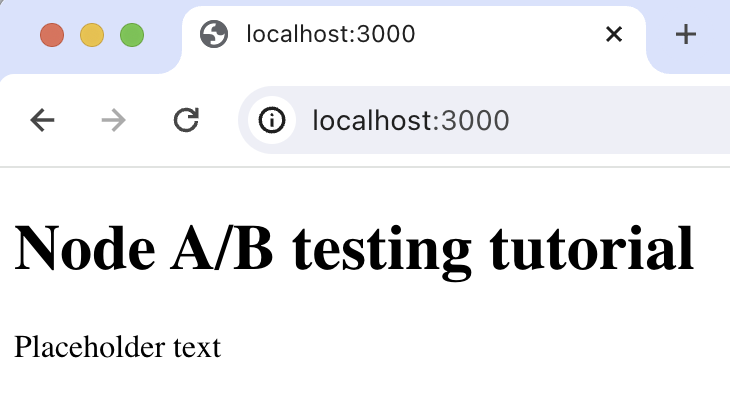
Run `node server.js` and navigate to `http://localhost:3000` to see your app in action.
|
||
|
||
|
||
|
||
## 2. Add PostHog to your app
|
||
|
||
With our app set up, it’s time to install and set up PostHog. If you don't have a PostHog instance, you can [sign up for free](https://us.posthog.com/signup).
|
||
|
||
To start, install [PostHog’s Node library](/docs/libraries/node):
|
||
|
||
```bash
|
||
npm install posthog-node
|
||
```
|
||
|
||
Next, we initialize our PostHog client in `server.js` using our project API key and instance address. You can find these in [your project settings](https://us.posthog.com/settings/project).
|
||
|
||
```js file=server.js
|
||
const express = require('express');
|
||
const app = express();
|
||
const port = 3000;
|
||
const { PostHog } = require('posthog-node');
|
||
|
||
const posthogClient = new PostHog('<ph_project_api_key>', {
|
||
host: '<ph_client_api_host>',
|
||
});
|
||
|
||
// rest of your code
|
||
```
|
||
|
||
Our PostHog client is now ready to go.
|
||
|
||
## 3. Capture a custom event
|
||
|
||
The first part of setting up our A/B test in PostHog is setting up the goal metric. We'll use the number of requests made to our endpoint as our goal (although in a production app you'll likely use something like `number of user sign ups` or `number of conversions` as your goal).
|
||
|
||
To measure this, we [capture a custom event](/docs/product-analytics/capture-events) called `endpoint_called` whenever we receive a request. To do this, update the `app.get` function in your code:
|
||
|
||
```js file=server.js
|
||
// rest of your code
|
||
|
||
app.get('/', (req, res) => {
|
||
const distinctId = 'placeholder-user-id'
|
||
posthogClient.capture({
|
||
distinctId,
|
||
event: 'endpoint_called',
|
||
});
|
||
|
||
// rest of your code
|
||
})
|
||
```
|
||
|
||
With this set up, restart your app and then refresh your browser a few times. You should now see the event captured in PostHog.
|
||
|
||
<ProductScreenshot
|
||
imageLight={EventsInPostHogLight}
|
||
imageDark={EventsInPostHogDark}
|
||
alt="Events captured in PostHog"
|
||
classes="rounded"
|
||
/>
|
||
|
||
## 4. Create an A/B test in PostHog
|
||
|
||
Next, go to the [A/B testing tab](https://us.posthog.com/experiments) and create an A/B test by clicking the **New experiment** button. Add the following details to your experiment:
|
||
|
||
1. Name it "My cool experiment".
|
||
2. Set "Feature flag key" to `my-cool-experiment`.
|
||
3. Use the default values for all other fields.
|
||
4. Click **Save as draft**.
|
||
|
||
<ProductScreenshot
|
||
imageLight="https://res.cloudinary.com/dmukukwp6/image/upload/Clean_Shot_2025_01_16_at_09_53_57_2x_2b998be1a8.png"
|
||
imageDark="https://res.cloudinary.com/dmukukwp6/image/upload/Clean_Shot_2025_01_16_at_09_20_55_2x_4be4106819.png"
|
||
alt="Experiment setup in PostHog"
|
||
classes="rounded"
|
||
/>
|
||
|
||
Once created, set the primary metric to a trend of `endpoint_called` and then click **Launch**.
|
||
|
||
## 5. Implement the A/B test code
|
||
|
||
To implement the A/B test, we:
|
||
|
||
1. Change our request handler to `async`.
|
||
2. Fetch the `my-cool-experiment` flag using [`posthog.getFeatureFlag()`](/docs/libraries/node#feature-flags).
|
||
3. Update the paragraph text based on whether the user is in the `control` or `test` variant of the experiment.
|
||
|
||
|
||
```js file=server.js
|
||
// rest of your code
|
||
|
||
app.get('/', async (req, res) => {
|
||
const distinctId = 'placeholder-user-id'
|
||
const enabledVariant = await posthogClient.getFeatureFlag('my-cool-experiment', distinctId);
|
||
let paragraphText = 'Placeholder text';
|
||
if (enabledVariant === 'control') {
|
||
paragraphText = 'Control variant!';
|
||
} else if (enabledVariant === 'test') {
|
||
paragraphText = 'Test variant!';
|
||
}
|
||
|
||
posthogClient.capture({
|
||
distinctId,
|
||
event: 'endpoint_called',
|
||
});
|
||
|
||
const htmlContent = `
|
||
<!DOCTYPE html>
|
||
<html>
|
||
<body>
|
||
<h1>Node A/B testing tutorial</h1>
|
||
<p>${paragraphText}</p>
|
||
</body>
|
||
</html>
|
||
`;
|
||
|
||
res.send(htmlContent);
|
||
})
|
||
|
||
// rest of your code
|
||
```
|
||
|
||
When you restart your app and refresh the page, you should see the text updated to either `Control variant!` or `Test variant!`.
|
||
|
||
> **💡 Setting the correct `distinctId`:**
|
||
>
|
||
> You may notice that we set `distinctId = 'placeholder-user-id'` in our flag call above. In production apps, to ensure you fetch the correct flag value for your user, `distinctId` should be set to their unique ID.
|
||
>
|
||
> For logged-in users, you typically use their email or user ID as their `distinctId`. For logged-out users, assuming they made their request from a browser, you can use values from their request cookies. See an example of this in the [server side section of our Remix tutorial](/tutorials/remix-ab-tests#setting-the-correct-distinctid)
|
||
|
||
|
||
## 6. Include the feature flag when capturing your event
|
||
|
||
To ensure our goal metric is correctly calculated for each experiment variant, we need to include our feature flag information when capturing our `endpoint_called` event.
|
||
|
||
To do this, we add the [`$feature/my-cool-experiment`](/docs/libraries/node#step-2-include-feature-flag-information-when-capturing-events) key to our event properties:
|
||
|
||
```js file=server.js
|
||
app.get('/', async (req, res) => {
|
||
// rest of your code
|
||
|
||
// update your posthogClient.capture call to include the feature flag information
|
||
posthogClient.capture({
|
||
distinctId,
|
||
event: 'endpoint_called',
|
||
properties: {
|
||
'$feature/my-cool-experiment': enabledVariant
|
||
}
|
||
});
|
||
|
||
// rest of your code
|
||
});
|
||
```
|
||
|
||
Now PostHog is able to calculate our goal metric for our experiment results.
|
||
|
||
<ProductScreenshot
|
||
imageLight={ResultsLight}
|
||
imageDark={ResultsDark}
|
||
alt="Experiment results in PostHog"
|
||
classes="rounded"
|
||
/>
|
||
|
||
## Further reading
|
||
|
||
- [How to set up Node.js (Express) analytics, feature flags, and more](/tutorials/node-express-analytics)
|
||
- [A software engineer's guide to A/B testing](/product-engineers/ab-testing-guide-for-engineers)
|
||
|
||
<NewsletterForm /> |